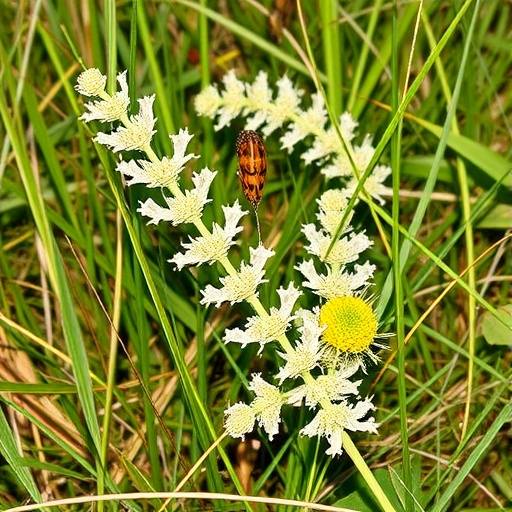
Elevational gradients in grassland ecosystems have long piqued the interest of ecologists seeking to unveil the complex interactions interlaced within these biodiverse communities. Recent research led by Mugnai et al. has brought to light the intricate relationships among vascular plants, bryophytes, and lichens along these gradients. This study, published in the journal “Scientific Naturalist,” offers an engaging exploration of how species at varying elevations interact, influence one another, and ultimately contribute to the overall dynamics of grassland communities. As climate change continues to alter these ecosystems, understanding these interactions becomes increasingly critical.
The study delves into the cascading effects that elevation has on species distribution. Vascular plants, known for their structural complexity, form the backbone of grassland ecosystems. They provide essential habitat for various organisms and serve as primary producers, converting sunlight into usable energy through photosynthesis. Through comparative analysis at different altitudes, Mulligan et al. assess how variations in temperature and moisture influence these plants’ physiological and ecological roles.
Bryophytes—mosses, liverworts, and hornworts—typically thrive in moist, shaded environments. They play a crucial role in nutrient cycling and soil formation, often serving as indicators of environmental health. The research highlights that, in certain elevations, bryophytes may exhibit competitive inhibition on vascular plants, particularly in scenarios where condensation and moisture are more prevalent. This could indicate that bryophyte communities, often overlooked, are key regulators in shaping grassland plant diversity.
Lichens, another subject of study, are remarkable symbiotic organisms that comprise fungi and algae or cyanobacteria. Their presence is often indicative of air quality and ecological stability, making them essential bioindicators. The study reveals, however, that while lichens may benefit from elevated humid conditions at higher altitudes, they remain vulnerable to the harsher climatic fluctuations than vascular plants and bryophytes. This nuanced interplay signifies the delicate balance within these ecological networks.
At higher elevations, researchers identified a distinct delineation in community composition. The shift resulted not merely from direct competition but rather from the adaptations these organisms had to make in response to adaptive pressures. Such adaptive strategies underscore the dynamic nature of these ecosystems. For instance, vascular plants at higher altitudes may evolve specific traits that promote resilience against harsh climatic conditions, whereas bryophytes utilize their moisture-absorbing capabilities to thrive in otherwise inhospitable environments.
The implications of these interactions extend beyond mere ecological curiosity. Given the challenges posed by climate change, understanding these relationships presents a path to better conservation strategies. As species migrate in response to shifting climatic zones, ecosystems may be forced to adapt or face irreversible decline. Therefore, the insights from Mugnai et al.’s research lay groundwork for future studies aimed at understanding how best to manage and conserve these vital community interactions.
Experiments within the study also examined nutrient availability across different elevations. Nutrient cycling is crucial for sustaining plant growth, with variations affecting species diversity and ecosystem resilience. Bryophytes, often forming dense mats, can increase water retention and facilitate nutrient availability in soils, thereby bolstering vascular plants’ growth. This interdependence emphasizes the importance of maintaining a multi-species approach in conservation efforts.
The findings of the study raise vital questions regarding how ecoregions adapt over time and the potential consequences of diminished biodiversity. Each organism within this grassland paradigm contributes unique attributes that yield resilience against perturbations. Losing a single species could unravel complex interactions and destabilize entire communities, leading to decreased biodiversity and ecosystem health.
Furthermore, the visibility of lichens as bioindicators brings attention to broader environmental concerns, particularly air pollution and climate impact. By monitoring lichen diversity across elevations, researchers can glean insights into the health of not only grassland ecosystems but also the larger environmental landscape. This ability to reflect climatic stressors positions lichens as vital subjects for ongoing ecological research.
Scientific understanding also has profound implications for land management practices. Effective agricultural land use can benefit from embracing the principles identified in this study. By considering the ecological roles of vascular plants, bryophytes, and lichens, land managers can adopt practices that preserve ecosystem health while bolstering agricultural outputs. Implementing strategies that prioritize biodiversity could pave the way for sustainable land use in changing climate scenarios.
The research thus contributes to a burgeoning field intersecting ecology and climate science. As we advance into an era of unpredictable environmental shifts, understanding how diverse organism interactions shift with elevation becomes critical. The insights derived from this work underscore the need for interdisciplinary approaches to address the challenges of biodiversity loss exacerbated by climate change.
In conclusion, the exploration of these inter-ecosystem dynamics, focusing on vascular plants, bryophytes, and lichens across elevational gradients, illuminates intricate patterns of interdependence. The findings from Mugnai et al. represent not only a significant contribution to ecological literature, but they also serve as a clarion call for conservation strategies that embrace complexity. Understanding these relationships will be paramount in navigating the future of ecological management amid the climate crises we face today. As such, ongoing research will continue to unravel the many layers of the biological tapestry that constitutes grassland ecosystems.
This study stands at the intersection of fundamental ecological research and practical applications, indicating the critical role of basic scientific inquiry in informing conservation actions that aim to protect fragile ecosystems. As colleagues and collaborators digest these findings, their work will encourage dialogues that may ultimately lead to innovative solutions characterizing how we interface with our changing world.
Subject of Research: Interactions among vascular plants, bryophytes, and lichens in grassland communities along elevational gradients.
Article Title: Interactions among vascular plants, bryophytes, and lichens in grassland communities along elevational gradients.
Article References:
Mugnai, M., Di Nuzzo, L., Beltramini, A. et al. Interactions among vascular plants, bryophytes, and lichens in grassland communities along elevational gradients.
Sci Nat 113, 2 (2026). https://doi.org/10.1007/s00114-025-02049-0
Image Credits: AI Generated
DOI: 10.1007/s00114-025-02049-0
Keywords: elevational gradients, vascular plants, bryophytes, lichens, ecological interactions, biodiversity, climate change, conservation strategies, bioindicators.
Tags: climate change effects on grassland biodiversitycompetitive interactions in grasslandsecological dynamics of lichens and plantsecological roles of bryophytes in ecosystemselevational gradients in grasslandshabitat relationships among plant speciesimportance of bryophytes in environmental healthinteractions between vascular plants and lichensmoisture influence on plant physiologynutrient cycling in grassland ecosystemsspecies distribution along elevationstructural complexity of grassland ecosystems