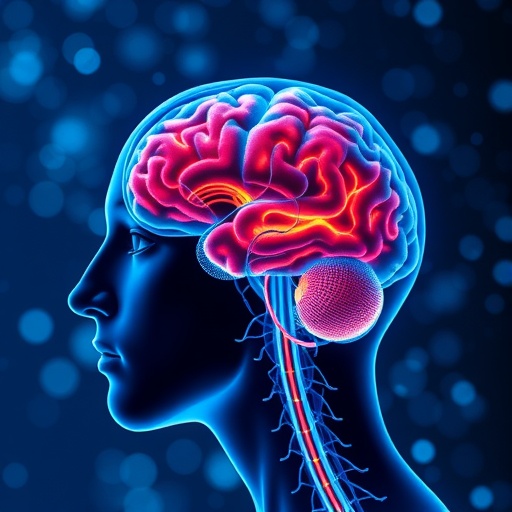
In a groundbreaking study published in BMC Neuroscience, researchers led by X. Wang and Y. Liu have made significant inroads into understanding the neural correlates of social stress, particularly focusing on altered theta oscillations observed in the basolateral amygdala and ventral hippocampus. The implications of these findings extend beyond basic neuroscience, touching on the broader themes of emotional regulation and mental health, particularly in conditions such as anxiety and depression that stem from social defeat.
Social defeat, a phenomenon often described as the psychological consequence of a domination experience, is known to trigger mood disorders in both humans and animal models. The study explored how such experiences modify brain activity, specifically examining the theta wave frequency in the basolateral amygdala and ventral hippocampus. These brain regions are well-known for their roles in emotional processing, memory function, and the regulation of stress responses. The theta frequency band, specifically, has been implicated in cognitive processes, emotional regulation, and the integration of new memories.
The researchers utilized a sophisticated animal model to simulate the effects of social defeat. Mice were subjected to stressors designed to mimic real-world social challenges, allowing scientists to observe the consequential changes in brain activity. Through advanced electrophysiological techniques, the research team recorded the neuronal activity and identified distinct patterns of altered theta oscillations. These findings provide substantial evidence that social defeat doesn’t just affect psychological states; it results in measurable changes in brain function.
Interestingly, the specific alterations in theta oscillation patterns observed in this study may serve as biomarkers for stress-related disorders. When theta oscillations in the basolateral amygdala and ventral hippocampus were disrupted, the study participants exhibited behaviors consistent with anxiety and depression, reinforcing the notion that these neural changes have profound effects on emotional states and behavior. The ability to identify these electrophysiological markers could ultimately lead to better diagnostics and targeted therapeutic strategies for individuals suffering from anxiety-related disorders.
The implications of this research extend to our understanding of how chronic stressors can alter brain function over time. The study highlights the potential for theta oscillation-driven neurophysiology to provide insights into the etiology of various affective disorders. With chronic social stress being a prevalent issue in contemporary society, there is an urgency to understand the underlying mechanisms that govern human emotional and psychological resilience.
Scientists have long theorized about the connection between brain oscillations and behavior, yet the precise mechanisms remain elusive. By linking altered theta oscillations to experiences of social defeat, this study paves the way for further exploration into how altered neural activity shapes behavioral outcomes. Moreover, it suggests a critical intersection of neural circuits involved in emotion, cognition, and social behavior.
One of the intriguing aspects of this research is its potential applicability to human clinical settings. Understanding how theta oscillations can become dysregulated in response to social defeat opens the door for developing interventions aimed at recalibrating these oscillatory patterns. This could take the form of non-invasive brain stimulation techniques, or even behavioral therapies aimed at reshaping individuals’ responses to social stimuli.
Furthermore, this research provides fertile ground for investigating how different types of social interactions might yield varying effects on theta oscillations. By expanding the scope of the current study, future research could examine factors such as hierarchy within social groups or the experience of social exclusion. It begs the question: do different kinds of social failures induce distinct patterns of neural response, and can these responses predict emotional outcomes?
As the authors delve deeper into the neurological underpinnings of social defeat, they also emphasize the importance of interpersonal relationships in psychological health. The findings underscore the need for societal awareness about the impact that social environments can wield on mental health. Increased attention to fostering supportive communities could serve as a preventive measure against these debilitating social stressors.
Ultimately, the study is a testament to the continuous unraveling of the intricate relationship between social experiences and brain function. The work of Wang, Liu, and He et al. aims to enhance our understanding not just of the mechanisms of stress but also of the complex interplay between external social factors and internal physiological responses. There is a pressing need to bridge the gap between neurological research and psychological practice to translate these findings into effective interventions for mental health.
Emerging studies will likely expand upon these findings, examining how interventions can specifically target theta oscillations to restore balance in affected individuals. These endeavors could revolutionize mental health treatment, offering newly validated strategies that incorporate a biological understanding of social stress into practical therapeutic applications.
The implications of understanding the transformative impact of social defeat on human neurophysiology are profound. Society needs to become increasingly aware of how social dynamics shape not only individual well-being but also collective mental health. By integrating neuroscience with social psychology, we may gain valuable tools needed to address the challenges posed by today’s rapidly evolving social landscape.
The study highlights the necessity of interdisciplinary collaboration between neuroscientists, psychologists, and social scientists to explore the multifaceted dimensions of human experience and its neural correlates. As research continues to intersect various fields of inquiry, a holistic understanding of social stress and its implications for mental health will emerge.
Given the current mental health crisis compounded by social media and societal pressures, this research could not be more timely. Better identification and understanding of theta oscillation patterns may well unlock new frontiers in how we grasp the nexus between social experiences and emotional outcomes.
In summary, Wang, Liu, and He et al.’s findings bring to light the important relationship between social defeat, emotional well-being, and brain function. Their research offers not only a glimpse into the impact of social experiences on neural oscillations but also an opportunity to explore innovative approaches to mitigate the psychological toll of social stress in humans.
Subject of Research: Impact of social defeat on theta oscillations in the brain
Article Title: Altered theta oscillations in basolateral amygdala and ventral hippocampus related to social defeat
Article References: Wang, X., Liu, Y., He, F. et al. Altered theta oscillations in basolateral amygdala and ventral hippocampus related to social defeat. BMC Neurosci 26, 53 (2025). https://doi.org/10.1186/s12868-025-00972-6
Image Credits: AI Generated
DOI: https://doi.org/10.1186/s12868-025-00972-6
Keywords: Social defeat, theta oscillations, basolateral amygdala, ventral hippocampus, emotional regulation, anxiety, depression.
Tags: advanced electrophysiological techniques in neuroscienceanimal models of social defeatbasolateral amygdala functioncognitive processes related to theta waveseffects of social stress on brain activityemotional regulation and anxietyimplications for depression researchneural correlates of social stresssocial defeat and mental healthstress responses and brain activitytheta oscillations in brain regionsventral hippocampus and emotion