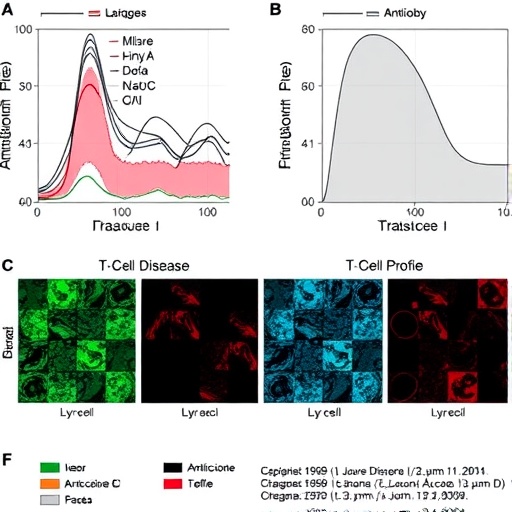
In a groundbreaking study led by researchers including Clear, Tu, and Goff, the intricate relationship between antibody and T cell receptor repertoires in rhesus macaques infected with the protozoan parasite Trypanosoma cruzi has been meticulously examined. The research, published in the Journal of Biomedical Science, sheds light on the host immune response to this pathogen, known to cause Chagas disease. As one of the most debilitating infections impacting millions of people worldwide, understanding the immune mechanisms involved could significantly influence therapeutic strategies and vaccine development.
The study meticulously evaluates how the immune system of rhesus macaques reacts at both the humoral and cellular levels upon exposure to T. cruzi. By analyzing the antibody responses and T cell receptor diversity, the researchers were able to unveil insights into the adaptive immune landscape that characterizes the infection. This dual approach not only enhances our understanding of the immune response but also opens avenues for innovative interventions against Chagas disease.
One of the most striking aspects of the study is the demonstration of a complex interplay between various immune components. The researchers discovered that the breadth and specificity of antibody responses correlate with the distinct T cell receptor profiles. This correlation suggests an intricate communication between B cells, which produce antibodies, and T cells, which are crucial for mounting a robust immune defense. Such findings underscore the necessity of investigating both arms of the immune system to comprehensively address infectious diseases.
The mechanisms by which T. cruzi evades immune detection are also critical to the discussion. This parasite has evolved sophisticated strategies to manipulate the host immune system, making it essential to decipher the immunological narratives that unfold during infection. The study’s findings indicate that certain T cell subsets may play pivotal roles in either the control or exacerbation of the infection, providing a potential target for immunomodulation.
The choice of rhesus macaques as a model organism is particularly significant due to their physiological and immunological similarities to humans. This relevance enhances the translational potential of the findings. The researchers emphasize that elucidating the immune dynamics in these non-human primates can yield valuable insights applicable to human health, especially in regions plagued by Chagas disease.
In light of the findings, the researchers propose that future work should focus on the longitudinal tracking of immune responses. This approach would allow for a more comprehensive understanding of how the immune system evolves in response to T. cruzi infection over time. By identifying the temporal changes in antibody and T cell receptor repertoires, scientists could pinpoint critical windows for intervention.
Moreover, the implications extend beyond T. cruzi infection. The methodologies employed in this study could be adapted for other infectious diseases, facilitating a broader investigation into the immune repertoire dynamics across different pathogens. There is a pressing need for research that bridges fundamental immunology with practical applications in vaccine development and therapeutic interventions.
The implications of this research resonate in the field of vaccine design as well. By identifying the correlates of immunity that effectively confer protection, scientists can tailor vaccine candidates that elicit the desired immune responses. As the search for effective vaccines against Chagas disease continues, incorporating insights from this study could be transformative.
Furthermore, the findings may inform public health strategies, particularly in endemic regions where Chagas disease is prevalent. Understanding the immune response profiles could lead to enhanced surveillance and vaccination programs tailored to the specific immune characteristics of affected populations. This could ultimately help in mitigating the impact of this disease on public health.
In conclusion, the study led by Clear, Tu, and Goff represents a significant leap forward in our understanding of the immune response to Trypanosoma cruzi infections. By detailing the association between antibody and T cell receptor repertoires and their implications for host defense, the researchers not only advance scientific knowledge but also lay the groundwork for future innovations in combating infectious diseases. The quest to unlock the complexities of the immune system continues, with the hope of translating these findings into tangible health solutions for affected populations worldwide.
The pursuit of knowledge surrounding the relationship between infection and immune response is an ongoing endeavor. As research progresses, it is crucial to build upon the foundations laid by studies such as this one. The collaboration between immunologists, epidemiologists, and public health experts will be vital in addressing the multifaceted challenges posed by infectious diseases like Chagas. With concerted efforts, the vision for a healthier global community can become a reality.
As we look to the future, advances in technology, including genomic sequencing and bioinformatics, will undoubtedly play an integral role in shaping the landscape of immunological research. By harnessing these tools, researchers can decipher the complex interactions at play during infections, ultimately leading to the development of targeted therapies and effective vaccines. The journey toward understanding Chagas disease, and similar infections, is far from over, but with studies like this, the path ahead appears promising.
Subject of Research: Immune response to Trypanosoma cruzi infection in rhesus macaques
Article Title: Association of antibody and T cell receptor repertoires in Trypanosoma cruzi infected rhesus macaques and host response to infection.
Article References:
Clear, R.M., Tu, W., Goff, K. et al. Association of antibody and T cell receptor repertoires in Trypanosoma cruzi infected rhesus macaques and host response to infection.
J Biomed Sci 32, 58 (2025). https://doi.org/10.1186/s12929-025-01152-8
Image Credits: AI Generated
DOI: https://doi.org/10.1186/s12929-025-01152-8
Keywords: Trypanosoma cruzi, immune response, antibody repertoires, T cell receptor repertoires, rhesus macaques, Chagas disease, immunology, vaccine development
Tags: adaptive immune landscapeantibody responses in Chagasbiomedical science advancementsChagas disease researchhumoral and cellular immunityimmune component interplayimmune response mechanismsrhesus macaques studyT cell receptor diversitytherapeutic strategies for ChagasTrypanosoma cruzi infectionvaccine development for Chagas