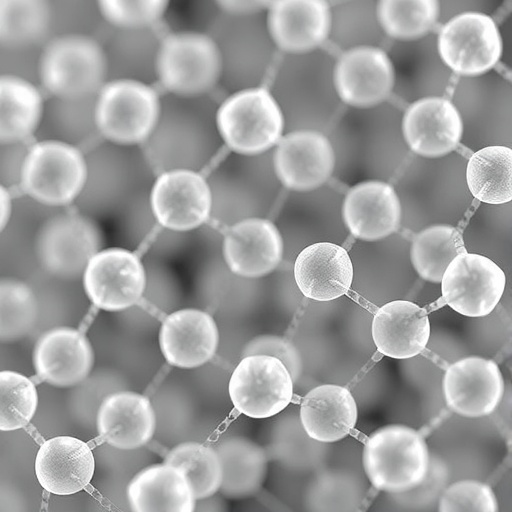
In recent years, the pervasive presence of microplastics and nanoplastics in the environment has escalated from a concerning observation to a critical scientific challenge. As researchers across disciplines scramble to comprehend the multifaceted impact of these minuscule pollutants, the lack of standardized, reliable reference materials for nanoplastics has been a significant obstacle. The groundbreaking study by Pegoraro, Chen, Sakib, and colleagues, published in Microplastics & Nanoplastics in 2025, directly addresses this pivotal gap by developing and characterizing nanoplastic reference materials tailored for biological and methodological assessments. This advancement not only underpins the accuracy and reproducibility of nanoplastic research but also propels the entire scientific community closer to unraveling the true scope of environmental and health implications posed by nanoplastics.
Nanoplastics, defined as plastic particles smaller than 100 nanometers, represent a particularly insidious class of pollutants due to their ability to traverse biological barriers, enter cellular systems, and potentially induce toxic effects at multiple biological levels. However, the scientific exploration of nanoplastics has been hindered by inconsistent materials used in experimental setups—heterogeneity in size, shape, chemical composition, and surface properties among samples introduces significant variability in experimental outcomes. The study led by Pegoraro et al. confronts these issues head-on by meticulously synthesizing nanoplastic particles with well-defined characteristics, providing researchers with a gold standard for experimental calibration and cross-study comparisons.
The significance of developing such reference materials cannot be overstated. Without well-characterized standards, endeavors to assess the biological interactions, toxicity, environmental fate, and analytical detection of nanoplastics suffer from fundamental flaws. These flaws propagate uncertainties throughout the data and impede regulatory decisions and mitigation strategies. Pegoraro and colleagues’ methodical approach involved advanced polymerization techniques and rigorous physicochemical characterization, ensuring that the resultant particles emulate environmental nanoplastics while maintaining consistency indispensable for scientific rigor.
Central to this research is the intersection between methodological precision and biological relevance. Traditional plastic particles often lack the nanoscale features critical for understanding toxicity pathways, such as cellular uptake mechanisms and subcellular localization. By engineering reference nanoplastics with precise size distributions and controlled surface chemistries, the study facilitates accurate investigations into how nanoplastics interact with living organisms at the molecular and cellular levels. These insights are essential as the scientific community intensifies efforts to comprehend the consequences of chronic, low-dose nanoplastic exposures—an area previously marred by contradictory or inconclusive findings.
In parallel with the biological implications, the challenges within analytical chemistry to detect and quantify nanoplastics in environment and biological samples are formidable. Conventional techniques frequently face limitations in sensitivity and specificity when confronted with nanometer-scale plastic particles amidst complex matrices. The reference materials introduced by Pegoraro et al. serve dual roles—not only as biological benchmarks but also as calibration tools for analytical instrumentation. This dual-purpose utility enhances methodological standardization and paves the way for developing robust, validated protocols necessary for accurate environmental monitoring.
Moreover, the creation of these reference nanoplastics is a leap forward for regulatory science. Regulatory bodies worldwide require reliable evidence on pollutant identity, exposure levels, and biological effects before issuing guidelines or restrictions. Standardized nanoplastic materials enable consistent toxicological testing, improving data reliability and inter-study comparability. Consequently, this work fosters clearer pathways for policy development aimed at addressing the growing environmental and health concerns associated with nanoplastics.
Environmental implications also come sharply into focus through this research. Nanoplastics originate from the fragmentation of larger plastic debris and are ubiquitous across ecosystems—oceans, freshwater bodies, soils, and even the atmosphere. Their minuscule size affords them high mobility and persistence, and their interaction with natural organic matter and biota remains poorly understood. Reference nanoplastics provide tools to systematically dissect these environmental processes, such as aggregation dynamics, bioavailability, and trophic transfer, which are crucial for holistic risk assessment.
Scientific communication and public awareness stand to benefit significantly from these advancements. As nanoplastics continue to capture public concern due to their elusive nature and potential health risks, the availability of validated research tools ensures that the messaging surrounding nanoplastic hazards is grounded in comprehensive, reproducible science. By reducing uncertainties, the research promotes trust and informed discourse among policymakers, stakeholders, and the general population.
Importantly, Pegoraro et al. also addressed the scalability and accessibility aspects of nanoplastic reference materials. Their protocols and synthesis methods are designed to be reproducible and adaptable, permitting wide adoption across laboratories globally. This accessibility dismantles previous barriers where only specialized institutions could produce or utilize such materials, thus democratizing research capabilities and fostering collaborative synergy.
This paper also explores the physicochemical phenomena underpinning nanoplastic behavior, including surface charge dynamics, hydrophobicity, and potential for chemical modification under environmental conditions. Understanding these parameters is vital because surface properties govern interactions with biomolecules, cellular membranes, and even the aggregation behavior in ecological compartments. These detailed characterizations imbue the particles with biological fidelity, distinguishing them from experimental artifacts.
Importantly, the research encapsulates interdisciplinary collaboration—integrating polymer chemistry, toxicology, environmental science, and analytical chemistry. This convergence is indispensable for advancing knowledge about nanoplastics, which transcend single-field study due to their complex nature and far-reaching effects. Pegoraro and the team exemplify the kind of collaborative science required to transcend existing knowledge boundaries and respond to pressing environmental challenges.
Looking forward, the development of nanoplastic reference materials opens avenues for more nuanced studies including long-term chronic exposure experiments, mechanistic toxicity investigations, and environmental fate modeling. Such research is paramount for anticipating future scenarios related to plastic pollution and human health risks, particularly as nanoplastics make their way through food webs and potentially accumulate in human tissues.
The broader scientific community is poised to leverage these advancements in tackling outstanding questions related to nanoplastic biodegradation and interaction with emerging contaminants. The standardized particles provide a consistent baseline for evaluating how nanoplastics may adsorb or release other harmful chemicals, influencing their combined environmental and health impact.
This work also signals a pivotal moment in methodological rigor akin to the establishment of reference materials in other pollutant fields—metal nanoparticles, carbon nanotubes, and biological reagents. Establishing the same standards for nanoplastics ensures that ensuing research will be conducted within a framework of reproducibility and reliability, by extension accelerating innovation and solution implementation.
Ultimately, the pioneering work by Pegoraro, Chen, Sakib, and colleagues embodies a critical leap toward resolving one of the most challenging dimensions of modern pollution science. Through meticulous development and deployment of nanoplastic reference materials, this research strengthens the infrastructure of nanoplastic science, empowering researchers, regulators, and society to grapple more effectively with the emerging nanoplastic threat.
Their findings not only spotlight the urgent necessity for standardized tools but also demonstrate that advancing technological methodologies is central to confronting global environmental challenges. The blend of sophisticated polymer chemistry and a resolute focus on biological relevance charts an encouraging course for future research—that of enhanced precision, collaborative inquiry, and impactful solutions in the era of micro- and nanoplastic pollution.
Subject of Research: Nanoplastic reference materials designed for biological and methodological assessment in environmental and toxicological studies.
Article Title: Nanoplastic reference materials for biological and methodological assessment.
Article References:
Pegoraro, A.F., Chen, M., Sakib, S. et al. Nanoplastic reference materials for biological and methodological assessment. Micropl.&Nanopl. (2025). https://doi.org/10.1186/s43591-025-00157-2
Image Credits: AI Generated
Tags: biological effects of nanoplasticschallenges in microplastics researchcharacterization of nanoplastic materialsenvironmental health implications of nanoplasticsinterdisciplinary approaches to nanoplastic studiesmethodological advancements in nanoplastic researchmicroplastics environmental impactnanoplastic pollution in ecosystemsnanoplastic reference materialsreproducibility in scientific researchstandardization in nanoplastic studiestoxicological assessment of nanoplastics