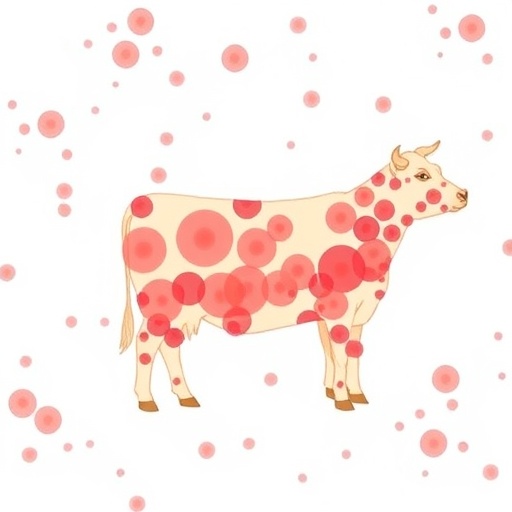
Recent advancements in the field of genomics have turned the spotlight on the intricate biology of adipose tissues, especially in livestock such as cattle. A compelling study conducted by a team led by Zhaohui Tan, along with co-authors Ping Lyu and Haichao Jiang, delves into the nuanced differences that exist between intramuscular and subcutaneous fat in bovine species. Published in BMC Genomics, their work harnesses the power of single-cell transcriptomic analysis to reveal insights that could reshape agricultural practices and enhance meat quality.
Understanding the developmental stages of adipose progenitor cells is vital in both agricultural and biomedical research. The study highlights how these progenitor cells are fundamental for fat development and distribution. By utilizing single-cell transcriptomic profiling, the authors have provided a fine-grained view of cellular dynamics within bovine fat tissues. This approach allows for the investigation of cellular heterogeneity, which is often obscured by bulk tissue analyses. The findings could have significant implications for selective breeding and enhancing the growth characteristics of cattle.
Intramuscular fat, commonly regarded as marbling, is a key determinant of meat quality. In contrast, subcutaneous fat serves primarily as an energy reserve. It is crucial to understand how these fat depots differ beyond external appearances. The research elucidates the varying developmental stages of adipose progenitor cells, which may influence nutritional properties, taste, and palatability of the beef. Furthermore, the identification of differences in quantity and quality of these progenitor cells can lead to innovative interventions aimed at improving meat quality and animal health.
One of the standout features of this study is its application of advanced single-cell sequencing techniques. This technology enables scientists to analyze individual cells rather than relying on averaged data from a bulk tissue sample. The researchers isolated adipose progenitor cells from both intramuscular and subcutaneous fat depots, comparing their transcriptomic profiles. The results uncovered a treasure trove of information regarding gene expression patterns, revealing significant differences that contribute to the unique characteristics of each fat type.
In their findings, Tan and colleagues provide compelling evidence suggesting that intramuscular and subcutaneous adipose tissues arise from distinct developmental pathways. The study identified specific genes that are enriched in either fat type, opening new avenues for genetic selection aimed at optimizing beef quality. For instance, certain transcription factors known to govern adipogenesis were found to be differentially expressed in the two fat depots, indicating potential targets for biotechnological enhancements.
Moreover, the research reveals how hormonal and environmental factors may play crucial roles in the development of these adipose tissues. By decoding the transcriptomic landscape, the study unravels the complexities of how different factors influence the quantity of progenitor cells. This information is vital for animal husbandry practices, particularly in creating optimal breeding programs designed to enhance desirable traits in cattle.
Another fascinating aspect of the study is its implication for understanding obesity and metabolic disorders in humans. Investigating the molecular underpinnings of fat composition in cattle could yield insights that are applicable to human health. The evolutionary and developmental biology shared between species can provide valuable data for tackling obesity, particularly considering that similar pathways govern adipocyte behavior in both humans and livestock.
In addition, the implications extend beyond just animal agriculture; they spill into the realm of sustainable practices. Understanding how fat distribution affects livestock productivity can inform feeding strategies and breeding decisions that align with sustainable agricultural principles. Enhanced understanding of bovine fat can lead to lower emissions of greenhouse gases by optimizing feed conversion ratios, thereby reducing the environmental footprint of meat production.
The study methodologically stands out due to its rigorous approach to data analysis. The combination of bioinformatics tools utilized allows for a comprehensive understanding of transcriptomic changes associated with adipose differentiation. Such methodologies can be adopted by other researchers in the field, fostering a collaborative environment to push the boundaries of cellular biology further.
As the agriculture sector continues to grapple with challenges posed by climate change and shifting consumer preferences, studies like Tan and colleagues’ offer a beacon of hope. By focusing on genomics and livestock enhancement, there lies potential for not just improved meat quality but also a means to secure food resources for the future. The trajectory of this research may well influence regulatory frameworks concerning livestock production and animal welfare, showing a commitment to both quality and ethics in meat production processes.
In conclusion, the findings from this comprehensive study shed light on the sophisticated biology underlying bovine fat development. As we push forward into an era defined by genetic insights and precision agriculture, the importance of studies that bridge molecular biology with practical applications cannot be overstated. The unraveling of these complex cellular mechanisms is just the beginning; it paves the way for innovations in livestock management and improvements in human health. The journey from scientific discovery to practical application is a vital one, and research like this will undoubtedly continue to be at the forefront of our understanding of adipose biology and its applications in food science.
This pivotal research not only advances our scientific understanding but also creates tangible pathways towards more sustainable and productive agricultural systems. As the world continues to evolve, the interplay between science and agriculture will shape the future of livestock farming. The work of Tan, Lyu, and Jiang encapsulates this dynamic interaction, offering profound insights into a field that sits at the intersection of science and society.
Subject of Research: Differences in the developmental stage and quantity of adipose progenitor cells between bovine intramuscular and subcutaneous fat.
Article Title: Single-cell transcriptomic analysis suggests potential differences in the developmental stage and quantity of adipose progenitor cells between bovine intramuscular and subcutaneous fat.
Article References:
Tan, Z., Lyu, P. & Jiang, H. Single-cell transcriptomic analysis suggests potential differences in the developmental stage and quantity of adipose progenitor cells between bovine intramuscular and subcutaneous fat.
BMC Genomics (2025). https://doi.org/10.1186/s12864-025-12312-3
Image Credits: AI Generated
DOI: 10.1186/s12864-025-12312-3
Keywords: bovine fat, adipogenic differentiation, single-cell transcriptomics, intramuscular fat, subcutaneous fat, progenitor cells, meat quality, sustainable agriculture, genetic selection, obesity research.
Tags: adipose progenitor cell variationsagricultural practices in livestockbovine fat tissue analysiscattle meat quality enhancementcellular heterogeneity in adipose tissuesenergy reserves in bovine fatfat development and distribution in cattlegenomics in livestock researchintramuscular versus subcutaneous fatmarbling in bovine meatselective breeding for meat qualitysingle-cell transcriptomic profiling