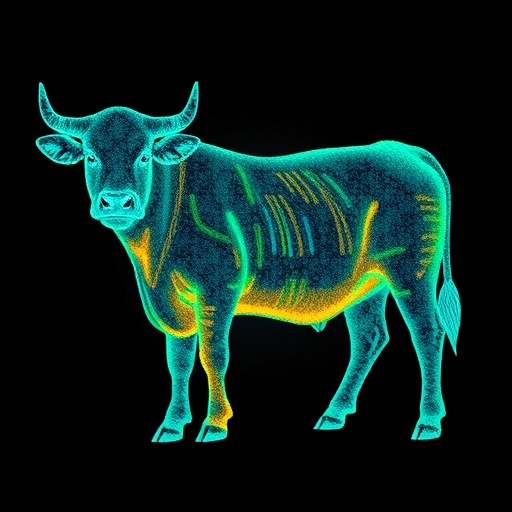
In a groundbreaking study, researchers Khilji et al. have illuminated the complexities of gene expression and isoform usage in cattle by leveraging both RNA sequencing (RNA-seq) and Assay for Transposase-Accessible Chromatin using sequencing (ATAC-seq). This comprehensive analysis focuses on the developmental stages of cattle, unraveling the intricate tapestry of genetic regulation that underpins tissue-specific functions. As the agricultural sector increasingly looks towards genomics for improving livestock health and productivity, the insights presented in this study promise to have a transformative impact on cattle breeding and management practices.
The motivation behind this pivotal research stems from the need to understand not just the “what” of gene expression, but the “how.” While RNA-seq has offered an unprecedented view of transcriptomic landscapes, ATAC-seq provides crucial context by detailing which regions of the genome are accessible and potentially regulatory. By combining these two powerful techniques, the authors present a dual analysis that not only catalogs the mRNA isoforms expressed in different tissues but also sheds light on the regulatory mechanisms at play during development.
Cattle, as one of the most economically significant livestock species globally, present unique biological models. The development of specific tissues, such as muscle, adipose, and liver, is integral to their growth and productivity. The research team’s approach provides a roadmap for identifying which genes and their isoforms are active in these tissues at various developmental stages. This knowledge is critical not just for basic biological understanding but for practical applications in breeding programs aimed at enhancing desirable traits such as meat quality, growth rate, and disease resistance.
Through the application of RNA-seq, the researchers identified a diverse array of mRNA isoforms, some of which show significant variability across different tissues. This isoform diversity reflects the complex post-transcriptional regulation that allows a single gene to produce multiple proteins, each potentially serving different functions. Additionally, the study highlights how specific isoforms may be upregulated or downregulated in response to the unique requirements of each tissue type during development.
In parallel, the implementation of ATAC-seq revealed critical information about chromatin accessibility, which is a key indicator of gene regulatory potential. The data allowed the researchers to identify active regulatory elements in the genome, thereby pinpointing regions that influence the expression of the identified isoforms. By mapping the interplay between chromatin structure and gene expression, the study lays the foundation for future investigations into the mechanisms driving gene regulation in cattle.
The implications of the findings extend beyond academic curiosity; they offer tangible benefits to the livestock industry. Farmers and breeders can leverage this information to selectively breed cattle that not only grow faster or produce better quality meat but also resist diseases more effectively. By understanding the genetic basis of these traits, stakeholders can make informed decisions, ultimately leading to enhanced animal welfare and sustainability in agricultural practices.
Additionally, the study contributes to the growing body of literature that supports the idea of precision agriculture, where genomics plays a functional role in shaping livestock production systems. The integration of genomics with traditional breeding approaches could lead to customized breeding strategies that target specific traits, thereby improving overall herd performance and efficiency.
Moreover, the research underscores the necessity of genomic resources tailored specifically for cattle. As genomic technologies advance, we increasingly recognize that cattle are not merely models for other livestock but unique organisms with their own evolutionary histories and genetic complexities. The precise characterization of isoform usage is a step toward harnessing the full genetic potential within cattle breeds, ensuring that innovations in breeding and management are underpinned by solid scientific research.
By fostering a greater understanding of tissue-specific gene expression, the findings have broader implications in evolutionary biology as well. Cattle, like all species, have adapted to their environments over millennia. Understanding the genetic variations and expressions that arise in different tissues could give insights into how animals respond to various environmental pressures, such as climate change or disease outbreaks. This research may inform conservation strategies for preserving genetic diversity within cattle populations, ensuring resilience in the face of challenges.
The study’s insights may also open avenues for therapeutic research, particularly in understanding the implications of isoform usage in relation to genetic diseases. Just as variations in gene expression can affect phenotypic traits in cattle, similar mechanisms in human genetics can lead to a plethora of conditions. The methodologies developed in this study could inform cross-species investigations, providing a framework for understanding the genetic underpinnings of complex traits and diseases in humans as well.
In conclusion, Khilji et al.’s research represents a significant leap forward in our understanding of gene expression in developing cattle. By employing both RNA-seq and ATAC-seq, this study highlights the intricate connections between isoform usage and chromatin accessibility, providing critical insights that could revolutionize cattle breeding and management practices. With its far-reaching implications, this study serves as a crucial reminder of the power of genomics to drive not only scientific discovery but also practical advancements in agriculture and beyond.
As the study is set to be published in BMC Genomics in 2025, it stands as a testament to the evolving landscape of genomic research and its role in addressing the pressing needs of a growing global population. The findings discussed herein serve as a beacon for future research endeavors aimed at unlocking the genetic potential of cattle and enhancing the agricultural sector as a whole.
Subject of Research: Gene expression and isoform usage in developing cattle
Article Title: Tissue-specific isoform usage and gene expression revealed through RNA-seq and ATAC-seq in developing cattle.
Article References: Khilji, S.F., Xie, S., Becker, G.M. et al. Tissue-specific isoform usage and gene expression revealed through RNA-seq and ATAC-seq in developing cattle. BMC Genomics (2025). https://doi.org/10.1186/s12864-025-12252-y
Image Credits: AI Generated
DOI:
Keywords: Gene expression, isoform usage, RNA-seq, ATAC-seq, cattle, agriculture, genomics, precision breeding.
Tags: ATAC-seq applications in livestockcattle breeding and management practicesdevelopmental stages of cattleeconomic significance of cattle genomicsgene expression analysis in cattlegenomic insights for livestock healthisoform usage in cattle geneticslivestock productivity through genomicsregulatory mechanisms in gene expressionRNA sequencing in cattletissue-specific gene regulation in cattletranscriptomic landscapes in agriculture