• HOME
  • NEWS
  • EXPLORE
    • CAREER
      • Companies
      • Jobs
    • EVENTS
    • iGEM
      • News
      • Team
    • PHOTOS
    • VIDEO
    • WIKI
  • BLOG
  • COMMUNITY
    • FACEBOOK
    • INSTAGRAM
    • TWITTER
Tuesday, August 11, 2026
BIOENGINEER.ORG
No Result
View All Result
  • Login
  • HOME
  • NEWS
  • EXPLORE
    • CAREER
      • Companies
      • Jobs
        • Lecturer
        • PhD Studentship
        • Postdoc
        • Research Assistant
    • EVENTS
    • iGEM
      • News
      • Team
    • PHOTOS
    • VIDEO
    • WIKI
  • BLOG
  • COMMUNITY
    • FACEBOOK
    • INSTAGRAM
    • TWITTER
  • HOME
  • NEWS
  • EXPLORE
    • CAREER
      • Companies
      • Jobs
        • Lecturer
        • PhD Studentship
        • Postdoc
        • Research Assistant
    • EVENTS
    • iGEM
      • News
      • Team
    • PHOTOS
    • VIDEO
    • WIKI
  • BLOG
  • COMMUNITY
    • FACEBOOK
    • INSTAGRAM
    • TWITTER
No Result
View All Result
Bioengineer.org
No Result
View All Result
Home NEWS Science News

Device allows users to manipulate 3-D virtual objects more quickly

Bioengineer by Bioengineer
May 1, 2017
in Science News
Reading Time: 2 mins read
1
Share on FacebookShare on TwitterShare on LinkedinShare on RedditShare on Telegram
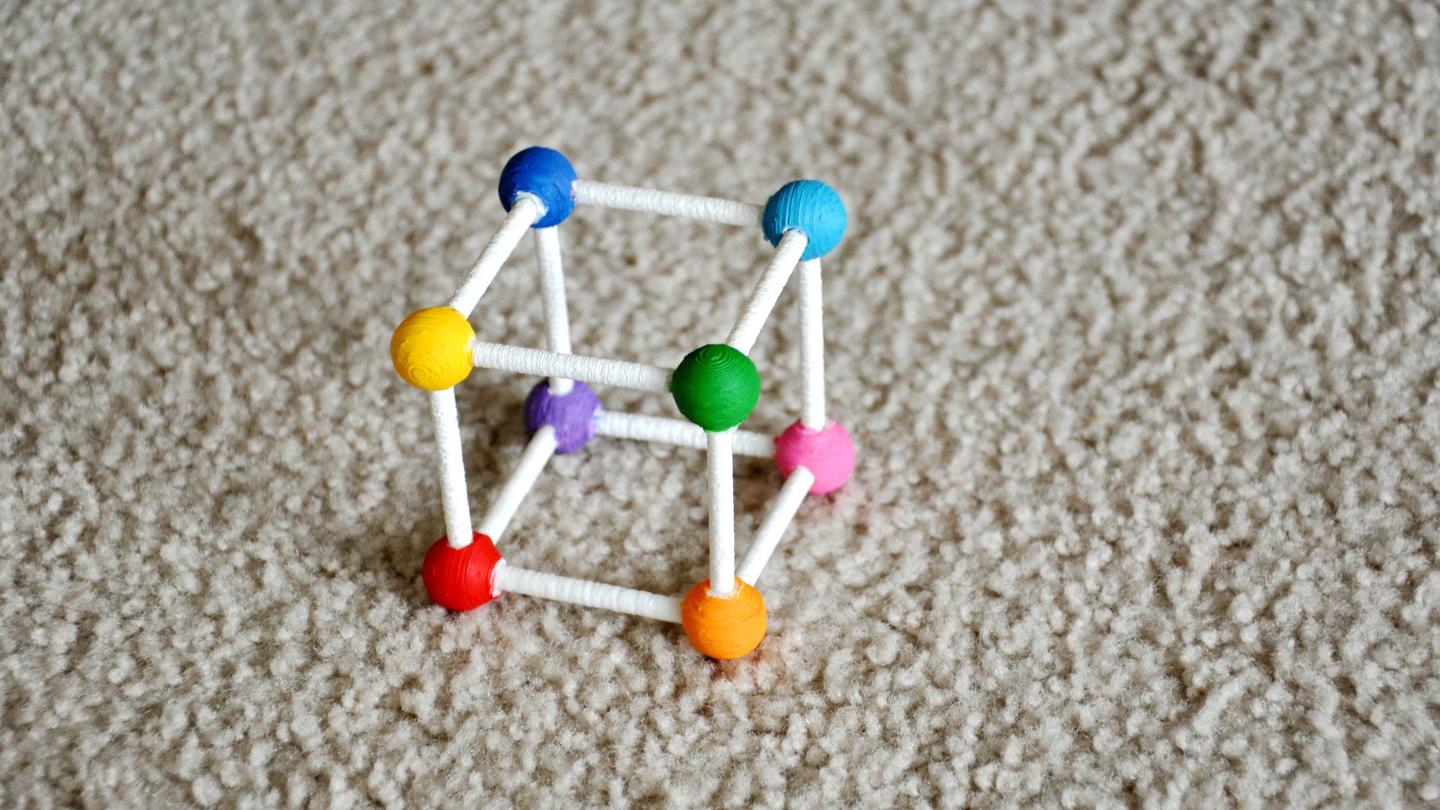
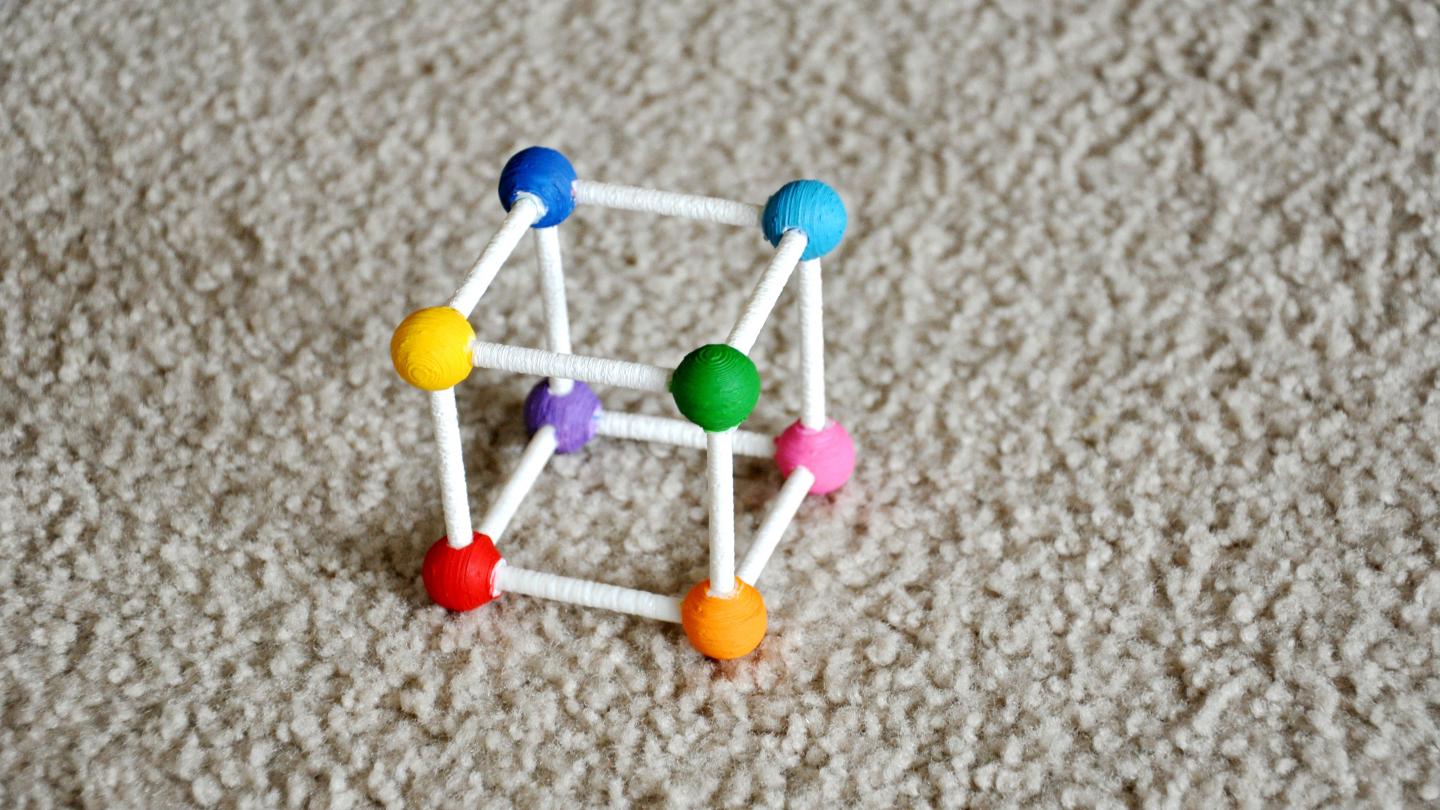
IMAGE

Credit: Zeyuan Chen

Researchers at North Carolina State University have developed a user-friendly, inexpensive controller for manipulating virtual objects in a computer program in three dimensions. The device allows users to manipulate objects more quickly – with less lag time – than existing technologies.

The device, called CAPTIVE, offers six degrees of freedom (6DoF) for users – with applications ranging from video gaming to medical diagnostics to design tools. And CAPTIVE makes use of only three components: a simple cube, the webcam already found on most smartphones and laptops, and custom software.

The cube is plastic, with differently colored balls at each corner. It resembles a Tinkertoy, but is made using a 3-D printer. When users manipulate the cube, the image is captured by the webcam. Video recognition software tracks the movement of the cube in three dimensions by tracking how each of the colored balls moves in relation to the others. Video demonstrating CAPTIVE can be seen here: https://youtu.be/gRN5bYtYe3M.

"The primary advantage of CAPTIVE is that it is efficient," says Zeyuan Chen, lead author of a paper on the work and a Ph.D. student in NC State's Department of Computer Science. "There are a number of tools on the market that can be used to manipulate 3-D virtual objects, but CAPTIVE allows users to perform these tasks much more quickly."

To test CAPTIVE's efficiency, researchers performed a suite of standard experiments designed to determine how quickly users can complete a series of tasks.

The researchers found, for example, that CAPTIVE allowed users to rotate objects in three dimensions almost twice as fast as what is possible with competing technologies.

"Basically, there's no latency; no detectable lag time between what the user is doing and what they see on screen," Chen says.

CAPTIVE is also inexpensive compared to other 6DoF input devices.

"There are no electronic components in the system that aren't already on your smartphone, tablet or laptop, and 3-D printing the cube is not costly," Chen says. "That really leaves only the cost of our software."

The paper, "Performance Characteristics of a Camera-Based Tangible Input Device for Manipulation of 3D Information," will be presented at the Graphics Interface conference being held in Edmonton, Alberta, May 16-19. The paper was co-authored by Christopher Healey, a professor of computer science at NC State and in the university's Institute for Advanced Analytics; and Robert St. Amant, an associate professor of computer science at NC State. The work was done with support from the National Science Foundation under grant number 1420159.

###

Media Contact

Matt Shipman
[email protected]
919-515-6386
@NCStateNews

Why Not Us?

############

Story Source: Materials provided by Scienmag

Share12Tweet8Share2ShareShareShare2

Related Posts

Gene Family Reveals How Tropical Crops Adapt to Heat

Gene Family Reveals How Tropical Crops Adapt to Heat

August 11, 2026
Fungal Necrotizing Otitis Externa: Three Key Clinical Questions Answered

Fungal Necrotizing Otitis Externa: Three Key Clinical Questions Answered

August 11, 2026

More Electrons, Fewer Interfaces: Halide Cathodes Raise All-Solid-State Battery Energy Density

August 11, 2026

Recurrence-linked eccDNA patterns offer new prognostic insights for lung adenocarcinoma

August 11, 2026
Please login to join discussion

POPULAR NEWS

  • Gene Family Reveals How Tropical Crops Adapt to Heat

    29 shares
    Share 12 Tweet 7
  • Fungal Necrotizing Otitis Externa: Three Key Clinical Questions Answered

    29 shares
    Share 12 Tweet 7
  • More Electrons, Fewer Interfaces: Halide Cathodes Raise All-Solid-State Battery Energy Density

    29 shares
    Share 12 Tweet 7
  • Recurrence-linked eccDNA patterns offer new prognostic insights for lung adenocarcinoma

    29 shares
    Share 12 Tweet 7

About

We bring you the latest biotechnology news from best research centers and universities around the world. Check our website.

Follow us

Recent News

Gene Family Reveals How Tropical Crops Adapt to Heat

Fungal Necrotizing Otitis Externa: Three Key Clinical Questions Answered

More Electrons, Fewer Interfaces: Halide Cathodes Raise All-Solid-State Battery Energy Density

Subscribe to Blog via Email

Enter your email address to subscribe to this blog and receive notifications of new posts by email.

Join 86 other subscribers
  • Contact Us

Bioengineer.org © Copyright 2023 All Rights Reserved.

Welcome Back!

Login to your account below

Forgotten Password?

Retrieve your password

Please enter your username or email address to reset your password.

Log In
No Result
View All Result
  • Homepages
    • Home Page 1
    • Home Page 2
  • News
  • National
  • Business
  • Health
  • Lifestyle
  • Science

Bioengineer.org © Copyright 2023 All Rights Reserved.