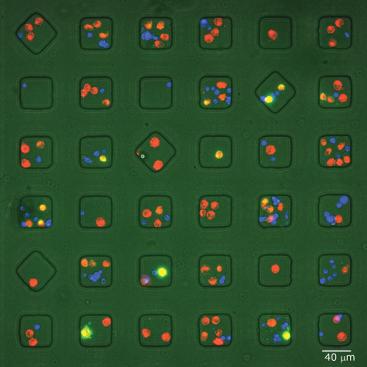
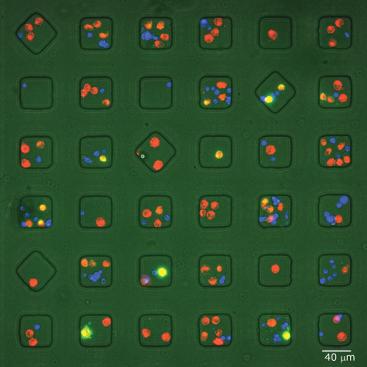
Credit: University of Houston
Immunotherapy, in which cells from the human immune system are unleashed to fight disease, has been the big story in cancer treatment over the past few years. When it works, it can spur long-lasting remission in patients for whom other treatments have failed. But most patients don't benefit, and there is still no good way to predict who will respond.
A team of researchers led by an engineer from the University of Houston is trying another tack – designing immune system cells that can survive within a tumor even when the nutrients needed to sustain them aren't available. That should allow the cells to work more efficiently in more people.
Navin Varadarajan, associate professor of chemical and biomolecular engineering at UH, works with T cells, immune cells that can recognize and attack disease cells. But all cells need nutrients to survive, and tumors harbor areas of nutrient limited zones, meaning T cells often die before completing their task, Varadarajan said.
"We know once they get to the tumor, nutrients are limited," he said. "If they are not able to cope and compete effectively for these nutrients, they're going to die. The question is, can you engineer the T cells to survive and persist?"
To further the work, Varadarajan has received a $375,000, three-year grant from the Melanoma Research Alliance, part of $8.5 million in new funding awarded to researchers at 28 institutions in six countries.
"These awards will further our ability to improve melanoma outcomes, support the next generation of melanoma researchers and help draw us ever closer to a cure," said Debra Black, chair and co-founder of the Melanoma Research Alliance.
Varadarajan's work will use a novel research platform he developed to allow researchers to study T cells at a single-cell level, as well as single cell T cell-tumor cell interactions. The proprietary chip-based platform works by co-incubating T cells and tumor cells in dense arrays of nanoliter wells, or nanowells, and monitoring the functional interaction between the cells. The goal is to engineer T cells that retain their anti-cancer properties in the inhospitable environment of a tumor.
The platform will allow researchers to track thousands of interactions and hone in on the traits that predict success. The engineered T cells will then be tested in mice at the University of Texas MD Anderson Cancer Center. This work builds on existing research conducted by Melisa Martinez, a postdoctoral researcher in Varadarajan's lab, in collaboration with an MD Anderson team headed by Chantale Bernatchez.
Varadarajan began working on immunotherapy after arriving at UH about seven years ago. Since then, the therapy has taken off.
"It's amazing how well it's done," he said. "It's become a major player in clinical oncology. All of our work now is going toward getting it to work for more people."
He said the treatment is effective for about 20 percent of patients who receive it.
"For now, we don't have good biomarkers to tell who is a good candidate for immunotherapy," he said. Engineering T cells to work more broadly could be another way to increase the therapy's effectiveness. "It's a complementary approach."
###
Media Contact
Jeannie Kever
[email protected]
713-743-0778
@UH_News
http://www.uh.edu/news-events
############
Story Source: Materials provided by Scienmag