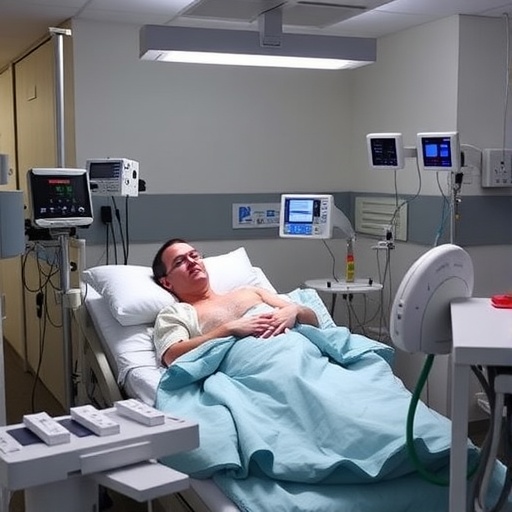
In an age where artificial intelligence and machine learning are increasingly making significant strides in healthcare, a recent study published by Liu et al. in BMC Endocrine Disorders brings a wave of optimism for managing diabetes. Researchers took on the challenge of predicting hypoglycemic events in hospitalized patients with type 2 diabetes—a population particularly vulnerable to sudden dips in blood sugar levels. The study revolves around the development and rigorous validation of a novel hypoglycemia risk prediction model, potentially marking a turning point in how diabetes care is approached in clinical settings.
Hypoglycemia, a condition characterized by abnormally low blood sugar levels, is a common and dangerous complication for individuals with diabetes, particularly those requiring insulin therapy. For hospitalized patients, hypoglycemia not only poses a risk to their immediate health, leading to symptoms such as confusion, seizures, or even loss of consciousness, but may also trigger longer-term hospital stays and increased healthcare costs. The urgency for preventive strategies has never been more critical, as traditional methods of monitoring glucose levels can fall short, relying on reactive rather than proactive measures.
The innovative approach in this study highlights the power of machine learning algorithms in predicting adverse medical events like hypoglycemia. Machine learning, a subset of artificial intelligence, enables the analysis of vast amounts of data to identify patterns and make predictions far beyond the capacity of human analysis. By training an algorithm on extensive datasets comprising both clinical and operational factors—such as patient demographics, medical history, and laboratory results—the researchers managed to construct a model that accurately predicts the risk of hypoglycemic episodes among hospitalized type 2 diabetes patients.
One of the standout features of the study is its robust validation process. The researchers employed a comprehensive methodology that not only assessed the model’s predictive performance using statistical metrics like sensitivity, specificity, and area under the curve (AUC) but also ensured real-world applicability. This dual focus is crucial, as it bridges the gap between theoretical model performance and practical healthcare delivery. With this model, healthcare professionals can potentially preemptively identify patients at high risk for hypoglycemia, enabling timely interventions such as adjusting medication dosages or providing additional monitoring.
Importantly, this research does not just offer a theoretical framework; it provides a case for integration into clinical practice. The model’s user-friendly interface allows physicians and healthcare staff to access risk assessments quickly, informing decision-making processes in real-time. This is particularly essential in high-pressure environments like hospitals, where every minute counts, and rapid decision-making can significantly alter patient outcomes. The findings from Liu et al. suggest that by utilizing this predictive model, healthcare providers can streamline care protocols tailored to individual patient needs, thus enhancing safety and optimizing resource usage.
In tandem with the model’s development, the researchers also undertook a comprehensive review of existing literature on diabetes management and hypoglycemia risks. By contextualizing their findings within broader healthcare paradigms, they accentuate the relevance of their work, showing how machine learning can transform not only diabetes management but potentially other chronic health conditions. This sets a precedent for future research in different illnesses, proving that the methodologies can be replicated and adapted across various domains of medicine.
The implications of this research extend beyond immediate healthcare enhancements. By reducing incidents of hospital-acquired hypoglycemia, patient trust and satisfaction are likely to increase. When patients feel safe and assured that their conditions are being actively monitored and managed, they are more inclined to have positive experiences within the healthcare system. This could, in turn, lead to increased adherence to treatment regimens, improved health outcomes, and decreased long-term complications.
Furthermore, as healthcare systems globally continue to grapple with resource allocation and efficiency challenges, predictive models like the one studied by Liu et al. can serve as critical tools. By preventing preventable complications, hospitals can alleviate the strain on services, thereby optimizing care delivery and reducing costs. This becomes particularly salient in the context of an aging population, comprising increasingly complex health issues, where efficient, predictive healthcare solutions are becoming ever more essential.
However, challenges remain in the full-scale implementation of such models across the healthcare spectrum. Factors such as training staff, ensuring patient data privacy, and integrating AI solutions into existing healthcare infrastructure must be addressed. Healthcare administrators, policymakers, and IT professionals must collaborate to facilitate this integration, ensuring that the benefits of predictive analytics are realized while protecting patient safety and privacy.
In conclusion, the study by Liu et al. represents a meaningful advancement in the endeavor to predict and prevent hypoglycemic events in hospitalized type 2 diabetes patients. Through the innovative application of machine learning and a patient-centric approach, this research paves the way for enhanced patient safety and improved clinical outcomes. As healthcare continues to evolve, such technological advancements will play a pivotal role in addressing current challenges and shaping the future of chronic disease management.
As this groundbreaking research gains traction in the medical community, it inspires hope—and raises expectations—for the integration of cutting-edge technologies in healthcare. The positive ramifications for diabetes treatment could be profound, impacting countless lives by shifting the paradigm from reactive care towards a more proactive and targeted approach. Consequently, the journey for implementing and refining machine learning models is just beginning, but their potential to redefine healthcare delivery is unmistakable.
With the utilization of data-driven insights to enhance clinical decision-making, the study highlights the invaluable role of technology in modern medicine. As we setup towards a smarter and data-centric healthcare future, the work of Liu et al. serves as a clarion call for further innovation and collaboration, urging the medical community to embrace the possibilities inherent in machine learning while reinforcing the commitment to ensuring patients receive the safest and most effective care available.
Subject of Research: Hypoglycemia risk prediction model for hospitalized type 2 diabetes patients using machine learning.
Article Title: Construction and validation of a hypoglycemia risk prediction model for hospitalized type 2 diabetes patients based on machine learning.
Article References: Liu, C., Huang, Z., Liu, T. et al. Construction and validation of a hypoglycemia risk prediction model for hospitalized type 2 diabetes patients based on machine learning. BMC Endocr Disord (2025). https://doi.org/10.1186/s12902-025-02104-x
Image Credits: AI Generated
DOI: 10.1186/s12902-025-02104-x
Keywords: hypoglycemia, diabetes, machine learning, predictive model, healthcare innovation, patient safety.
Tags: artificial intelligence in diabetes carecomplications of insulin therapyhealthcare cost reduction strategieshospitalized patients and hypoglycemiaimproving patient outcomes in diabetesmachine learning in healthcarenovel predictive algorithms in medicinepredicting hypoglycemia in diabeticsproactive diabetes monitoring strategiesrisk prediction models for hypoglycemiatype 2 diabetes management