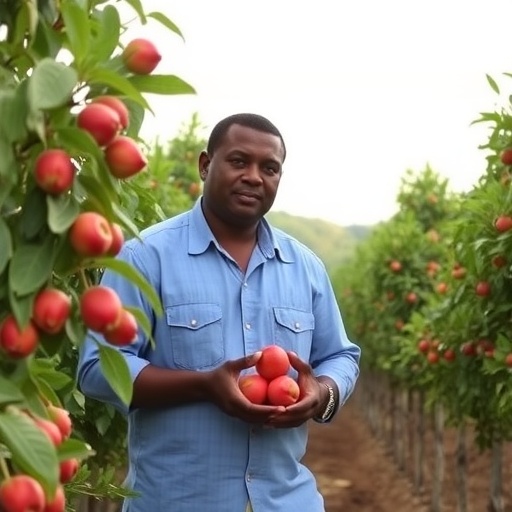
The deciduous fruit industry in South Africa holds a significant place in both the nation’s economy and the broader agricultural landscape. In a recent study published in “Discover Agriculture,” researcher M. LW delves into the intricate analysis of input efficiency within this pivotal sector. The aim is to shed light on the operational dynamics that dictate productivity and sustainability in the agricultural practices tied to fruit production.
Understanding input efficiency is paramount for growers, stakeholders, and policymakers alike, as it can inform strategies for resource optimization amid rising global economic pressures. Given the rapidly evolving agricultural technologies and methodologies, embracing efficiency is not merely beneficial but critical to the survival and prosperity of the deciduous fruit industry.
The research highlights an era where traditional farming practices must be reevaluated in the context of modern agricultural demands. With increasing competition on the global stage, South African deciduous fruit producers are urged to optimize not only the quantity but also the quality of their outputs. The relationship between input effectiveness and overall production efficiency is nuanced; therefore, a comprehensive assessment of current farming practices is essential.
M. LW’s study proposes a multi-faceted approach to estimating input efficiency, involving various factors such as labor, land, water, and technological investments. The research utilizes quantitative methods to analyze data from farms across different regions of South Africa, enabling a broader understanding of the challenges and opportunities present within the industry. It systematically evaluates how inputs are converted into outputs, offering insights into best practices and highlighting areas demanding focused interventions.
At the core of the paper is a framework that categorizes input efficiencies, which can aid farmers in identifying resource wastage. This categorization allows for benchmarking, enabling farmers to compare their operational effectiveness against industry standards. Moreover, it presents a method of quantification that can lead to improved policy formulations aimed at enhancing the industry’s overall output.
In this era of climate change and resource constraints, gaining insights into which inputs yield the highest returns is vital. The study explores various cultivation techniques and their respective efficiencies, examining the impact of environmental conditions on what is feasible for producers. As M. LW points out, climate variability poses a formidable hurdle, yet it also ignites the potential for innovative adaptations in farming strategies that could lead to more resilient practices.
Furthermore, the paper touches on the socio-economic implications of input efficiencies in the deciduous fruit sector. By increasing operational efficiency, farmers can not only lower production costs but also enhance their competitiveness in global markets. This could potentially translate into greater job security for farmworkers and improved livelihoods for those dependent on agricultural income.
Attention is given to technological advancements, which play a pivotal role in achieving input efficiencies. The integration of precision agriculture tools — from drones to data analytics — is explored as an avenue to streamline operations. This technological evolution is enabling farmers to make informed decisions that optimize water usage, minimize chemical application, and enhance yield predictions.
As M. LW articulates, the enthusiasm for technology must be matched with accessible training and support for farmers. Bridging the knowledge gap is essential for ensuring that innovative tools are utilized effectively, particularly for small and medium-sized enterprises that may lack the necessary resources or expertise. The involvement of universities and research institutions is critical in this educational endeavor, laying the groundwork for a well-informed agricultural workforce.
The ultimate goal of processes designed to enhance input efficiency is not merely to streamline production; it also encompasses the sustainability aspect of agriculture. Consumers are growing increasingly conscious of the environmental impacts of food production. Thus, practices that emphasize efficiency can contribute to lower carbon footprints and foster greater ecological balance.
However, the findings of M. LW’s research underscore that challenges remain. Input efficiencies may fluctuate based on various external economic variables, including market demand and input costs. The research serves as a clarion call for continuous assessment and adaptation strategies, which must be integral to the operational mindset of South African fruit producers going forward.
The future of the deciduous fruit industry in South Africa hinges on the collective efforts of farmers, researchers, and policymakers to harness the insights from studies like these. By improving input efficiencies, stakeholders can increase their resilience against market setbacks and environmental threats, making strides toward long-term sustainability.
Educational outreach and investment are pivotal in transitioning from traditional practices to more efficient, technology-driven approaches. As the industry evolves, it is imperative to maintain academic and practical dialogues among all players in the agricultural chain to ensure that strategies are responsive to both economic conditions and the realities of climate change.
In conclusion, the research conducted by M. LW on the estimation of input efficiency provides not just valuable insights, but it serves as a foundation for transformative practices in the deciduous fruit industry. The implications are far-reaching, extending beyond optimizing production to enhancing overall sustainability and addressing the economic realities faced by growers in South Africa.
Subject of Research: Input efficiency estimation in the deciduous fruit industry in South Africa
Article Title: Estimation of input efficiency for deciduous fruit industry in South Africa
Article References:
LW, M. Estimation of input efficiency for deciduous fruit industry in South Africa.
Discov Agric 3, 255 (2025). https://doi.org/10.1007/s44279-025-00436-9
Image Credits: AI Generated
DOI: https://doi.org/10.1007/s44279-025-00436-9
Keywords: Input efficiency, Deciduous fruit industry, South Africa, Agricultural sustainability, Technological advancements, Climate change impacts.
Tags: agricultural productivity analysisagricultural technology advancementseconomic pressures on agricultureglobal competition in fruit marketsinput efficiency in fruit productionmodern farming practicesmulti-faceted approach to efficiencyoperational dynamics in agriculturequality and quantity in farming outputsresource optimization strategiesSouth Africa deciduous fruit industrysustainability in agriculture