In a groundbreaking prospective cohort study, a team of researchers led by Jiang et al. has unveiled a critical link between ovarian maldescent and infertility. This pressing health issue, which remains underexplored in medical literature, offers a new narrative on female reproductive health by shedding light on how positioning of the ovaries can significantly influence fertility outcomes. The findings of this investigation are poised to redefine current understandings of reproductive disorders among women, opening new pathways for diagnostic assessment and treatment interventions.
Infertility affects millions of women worldwide, with studies indicating that one in six couples may experience challenges in conceiving. Traditionally, causes of female infertility have been attributed to factors such as age, hormonal irregularities, and anatomical anomalies, but the role of ovarian positioning has only recently emerged into scientific focus. Through meticulous observation and data collection, Jiang and her colleagues have positioned this maldescent of the ovaries as an integral factor in the fertility equation that could transform the approaches to addressing infertility.
The research involved a diverse cohort of participants, meticulously selected to represent a wide demographic spectrum of women experiencing fertility issues. By tracking their fertility treatments and outcomes over an extended period, Jiang et al. gathered compelling evidence that links improper ovarian positioning to significant challenges in conception. The study’s methodology was robust, employing advanced imaging techniques to visualize ovarian placement, coupled with hormonal profiling to understand the physiological implications of maldescent.
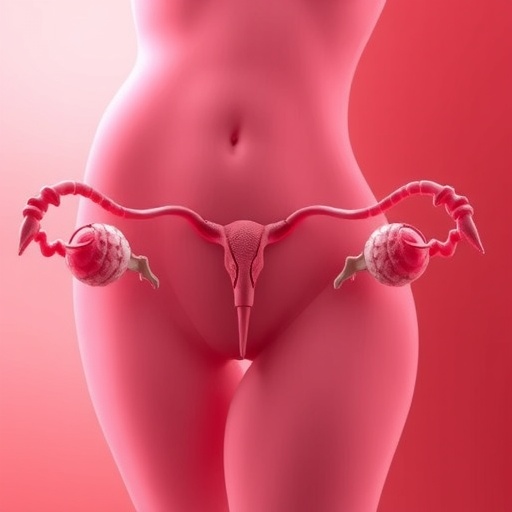
Ovarian maldescent is characterized by the abnormal descent of ovaries from their typical anatomical position in the pelvic cavity. This condition can complicate not only natural conception but also assisted reproductive technologies. For example, the research indicated that women with maldescent experienced altered hormonal environments, possibly leading to anovulation or suboptimal egg quality. Such insights provide a fresh perspective on the intricate biology of reproduction, urging caregivers to consider ovarian positioning during evaluations of fertility.
The implications of this study extend beyond academic interest; they underscore the need for clinicians to integrate assessments of ovarian positioning into standard fertility evaluations. The researchers argue that by identifying maldescent early, healthcare providers can tailor treatment strategies, thereby enhancing the likelihood of successful conception. These findings hold promise for women who have been previously categorized as having unexplained infertility, suggesting that a solution may lie in the orientation of their reproductive anatomy.
Moreover, intervention strategies may evolve from this research. Should further studies corroborate the link between ovarian maldescent and infertility, minimally invasive surgical procedures could be developed to reposition the ovaries. These interventions might offer hope to those who have exhausted other fertility treatments, leading to an increase in successful pregnancy rates among affected women.
This study also raises substantive questions around public health messaging regarding fertility. With growing awareness of reproductive health among younger populations, education around the implications of ovarian maldescent could empower women to seek help earlier in their reproductive journeys. An informed public can better navigate fertility issues, understanding that anatomical anomalies need not be a standalone diagnosis when considering their options.
In terms of feasibility, the research team supports the notion that routine imaging practices could be integrated into fertility assessments. Utilizing ultrasound or MRI techniques, clinicians can identify and address maldescent, potentially allowing couples to conceive naturally without resorting to more invasive fertility treatments. The research advocates for the integration of interdisciplinary approaches—combining gynecology, endocrinology, and imaging technology to foster holistic reproductive care.
Further downstream, the research paves the way for larger-scale studies that might investigate the relationship between ovarian positioning and other reproductive health disorders, such as endometriosis and polycystic ovary syndrome (PCOS). As the scientific community seeks to unravel the complexities of female infertility, Jiang et al.’s study serves as both a beacon of hope and a call to action for deeper inquiry into female reproductive health issues.
Importantly, the publication will catalyze discussion within both academic circles and clinical practices. As the findings gain traction, medical professionals will need to stay abreast of the emerging evidence linking ovarian anatomy to fertility. Collaborative efforts between researchers and clinicians will be essential in translating these findings into real-world applications that can support women in their reproductive aspirations.
In conclusion, Jiang et al.’s prospective cohort study elucidates an underappreciated factor—ovarian maldescent—in the landscape of infertility. Their research paves the way for future investigations and more effective clinical practices that prioritize the anatomical nuances of reproductive health. As the scientific community embarks on this new frontier, the potential for improving fertility outcomes for countless women is profound, fundamentally shifting the paradigm of infertility treatment.
The journey from research to clinical practice may be lengthy, but the resolve to address ovarian maldescent’s role in infertility is a significant step forward. With the continued pursuit of knowledge and understanding, the dream of family can become a more attainable reality for many. The future of reproductive health lies in the intricacies of the female anatomy, and illuminating these pathways will surely benefit generations to come.
Subject of Research: Ovarian Maldescent and Infertility
Article Title: Association between ovarian maldescent and infertility: a prospective cohort study
Article References:
Jiang, Z., Shi, W., Zhou, Z. et al. Association between ovarian maldescent and infertility: a prospective cohort study.
J Ovarian Res 18, 264 (2025). https://doi.org/10.1186/s13048-025-01853-6
Image Credits: AI Generated
DOI: https://doi.org/10.1186/s13048-025-01853-6
Keywords: Ovarian maldescent, infertility, reproductive health, women’s health, fertility treatments.
Tags: anatomical anomalies in reproductive healthcauses of female infertilitydiagnostic assessment for infertilityfemale reproductive health researchimpact of ovarian positioning on fertilityimportance of ovarian location in conceptioninfertility challenges among womennew insights into reproductive disordersovarian maldescent and infertilityprospective cohort study on infertilitytransformative approaches to infertility treatmenttreatment interventions for infertility