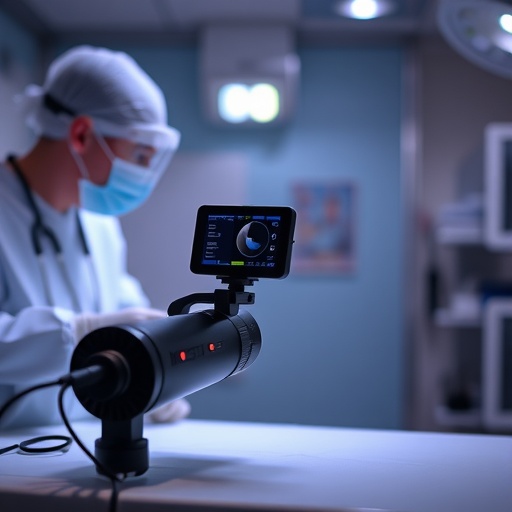
In the rapidly evolving landscape of medical technology, portable field endoscopy has emerged as a revolutionary approach to enhancing patient care in both civilian and military settings. The innovative study by He, Wang, and Ren expands upon the numerous challenges and opportunities posed by these portable systems, paving the way for future explorations in this essential field of medicine. This remarkable advancement speaks to the intersection of technology and healthcare, particularly in environments where traditional medical facilities are not readily accessible.
Endoscopy, a procedure that allows physicians to view internal organs through minimally invasive techniques, has been invaluable in diagnosing and treating various gastrointestinal and respiratory conditions. However, traditional endoscopic practices often rely on bulky equipment and extensive infrastructure, making them unsuitable for field operations or remote locations. This is where portable field endoscopy systems come into play, offering a streamlined and effective alternative that can lead to faster diagnosis and treatment in pressing situations.
The authors of the study articulate the multifaceted challenges that these portable systems face. One major challenge is the need for high-quality imaging in a compact design that does not sacrifice performance. Portable endoscopes must not only be lightweight and easy to transport but also capable of providing clear, high-resolution images that assist physicians in making informed decisions. The complexity of achieving this balance poses a substantial hurdle for manufacturers and researchers alike.
Another significant hurdle is the necessity of ensuring these devices are user-friendly, especially in emergency situations where time is critical. Medical personnel may be operating in less-than-ideal conditions, and any delay in diagnosis could lead to deteriorating patient outcomes. The design and functionality of portable field endoscopes must accommodate various skill levels among users, from seasoned surgeons to less experienced medical staff. As such, training and support systems become paramount elements of successful implementation.
In addition to these challenges, the authors delve into technological opportunities that arise from the development of portable endoscopy systems. For instance, advancements in telemedicine could enhance these devices, creating opportunities for remote diagnostic collaborations with specialists who might be hundreds or even thousands of miles away. This synergy between portable endoscopy and telehealth could bridge the gap between isolated patients and expert medical advice, providing essential interventions even in the most adverse conditions.
Furthermore, the integration of artificial intelligence (AI) within portable endoscopy systems presents exciting possibilities for improving diagnostic accuracy. AI algorithms can assist in identifying anomalies during procedures, potentially increasing the likelihood of early detection of diseases. The real-time analysis capabilities that AI introduces could transform how healthcare professionals interpret findings, making them not just observers but active interpreters of data supported by powerful machine-learning tools.
As for the future perspectives highlighted in the study, the authors propose that ongoing research and development will spearhead innovations in materials science, miniaturization, and imaging technology. These innovations could lead to even more portable and efficient systems, enabling healthcare delivery in scenarios such as disaster response, military operations, and humanitarian aid missions. As research continues, it is crucial for stakeholders to engage in collaborative efforts, combining efforts from academia, industry, and healthcare policy to maximize the potential impact of these technologies.
The implications extend beyond mere convenience; the introduction of portable field endoscopy may represent a paradigm shift in how healthcare is delivered in resource-limited settings. The accessibility of such technology could significantly reduce healthcare disparities, particularly in rural or underserved urban areas where patients might otherwise be unable to receive timely diagnoses or treatments. This democratization of medical technology could foster healthier communities and empower patients with life-saving interventions that were previously out of reach.
The study underlines the importance of ongoing clinical trials and real-world studies to validate the effectiveness and safety of portable endoscopy systems. Researchers and clinicians must continue to gather data on an array of factors, including patient outcomes, economic evaluations, and user satisfaction. The establishment of standardized protocols and guidelines will be vital in harmonizing use across different medical disciplines and environments.
As this technology reaches maturity, ethical considerations will also come to the forefront. The potential for widespread usage of portable endoscopes raises questions regarding the training of non-specialist personnel in their operation and the adjustments required to handle complex cases. As medical technology becomes more accessible, it is of the utmost importance to ensure that ethical standards are maintained, and patient safety remains paramount.
In conclusion, the study by He, Wang, and Ren paints a compelling picture of a future where portable field endoscopy not only exists but thrives. The challenges remain significant, yet the opportunities present a landscape ripe for innovation driven by technology. As research continues to evolve in this dynamic field, it holds the promise to reshape how medical professionals interact with emerging technologies, ultimately offering improved healthcare outcomes across the globe.
Subject of Research: Portable field endoscopy and its challenges and opportunities.
Article Title: Challenges, opportunities, and future perspectives of portable field endoscopy.
Article References:
He, K., Wang, SY. & Ren, J. Challenges, opportunities, and future perspectives of portable field endoscopy.
Military Med Res 12, 80 (2025). https://doi.org/10.1186/s40779-025-00666-4
Image Credits: AI Generated
DOI: https://doi.org/10.1186/s40779-025-00666-4
Keywords: Portable endoscopy, telemedicine, artificial intelligence, healthcare technology, diagnostics, patient care, medical innovation.
Tags: advancements in patient careadvantages of portable endoscopeschallenges in portable endoscopycompact imaging systemsfield endoscopy applicationsfuture of medical technologygastrointestinal diagnosticshealthcare in remote locationsinnovative medical solutionsminimally invasive proceduresportable endoscopy technologyrespiratory condition treatment