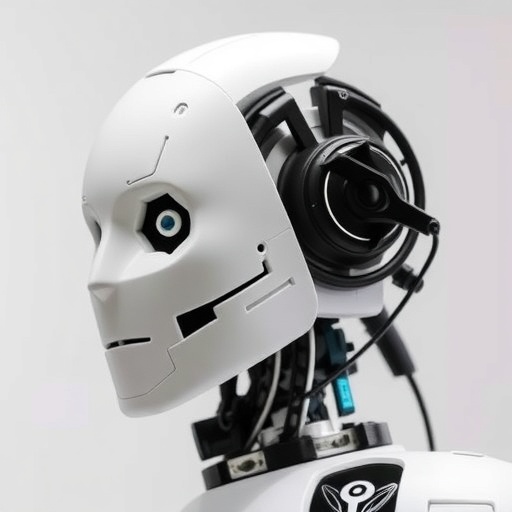
In a groundbreaking study, researchers Chen, Zou, and Zou have delved into the burgeoning field of humanoid robotics, presenting a novel framework for motion generation and real-time trajectory optimization. Their research, focusing on a sparse attention mechanism in deep reinforcement learning, promises to revolutionize how humanoid robots interact with their environments. The implications of such advancements are vast, opening pathways for more sophisticated robotic systems that can operate with increased efficiency and autonomy in real-world scenarios.
The foundation of this research lies in the ongoing quest for more naturalistic and adaptive humanoid robot movements. Traditional trajectory planning methods often fall short of achieving real-time responsiveness, primarily due to their reliance on fixed algorithms that can be rigid in dynamic settings. The authors propose a new approach that leverages deep reinforcement learning’s strengths, enabling robots to learn from experience and adapt their motions based on feedback from their surroundings. This shift from statically programmed behaviors to dynamically learned actions sets the stage for a new era in robotic motion generation.
At the core of their findings is the sparse attention mechanism, which allows for more efficient processing of relevant sensory data. Unlike conventional attention models that require exhaustive data inputs, the sparse attention mechanism filters out noise, focusing only on the most pertinent information. This efficient data handling not only speeds up decision-making processes within the humanoid robots but also enhances their ability to react in real-time to unexpected changes in their environment, a critical capability for tasks that demand agility and precision.
The integration of deep reinforcement learning into this framework is vital. By simulating various scenarios and learning optimal responses through trial and error, humanoid robots can develop a vast repertoire of motions suited for different tasks. This self-learning capability is crucial for applications ranging from manufacturing environments, where robots must navigate complex assemblies, to healthcare settings, where they may assist with patient care. As robots gain more autonomy, their ability to interact fluidly with humans and other machines becomes increasingly important.
The researchers conducted extensive experiments to validate their approach, comparing their model’s performance against traditional methods. The results were promising; robots employing the sparse attention mechanism demonstrated significant improvements in both motion generation and trajectory execution. They exhibited smoother movements, reduced latency in responding to stimuli, and more effective path planning. These advances mark a significant leap forward in addressing the limitations of previous generations of humanoid robots, which often appeared clumsy or uncoordinated.
Moreover, the potential applications of this technology are broad and transformative. In the field of eldercare, for instance, humanoid robots equipped with these advanced motion generation capabilities could provide much-needed support and companionship to senior citizens. By responding intuitively to the needs and behaviors of their human counterparts, these robots can foster a more engaging and interactive experience, improving the quality of life for many.
In the realm of education, robots that can seamlessly integrate into classroom settings could serve as teaching assistants, demonstrating concepts and adapting their teaching styles to best fit the needs of individual students. Such tools could provide personalized education, allowing for tailored learning experiences that can scale with students’ progress.
However, the researchers emphasize that the road to widespread implementation is not without challenges. Ensuring safety in environments where robots and humans coexist is paramount. The authors underlined the importance of ongoing research into ethical considerations and safety protocols as humanoid robotics become an integral part of daily life. Developing robust systems that can interpret human emotions and intentions would be crucial in mitigating the risk of accidents and fostering trust in these advanced machines.
Furthermore, there is a significant emphasis on refining the algorithms that drive these robotic systems. Achieving an even finer balance between learning efficiency and computational load will be essential. The implementation of the sparse attention mechanism is but a step; optimizing these technological features for real-world applications requires continued innovation and testing.
This research contributes significantly to the existing body of knowledge in both robotics and artificial intelligence. It lays the groundwork for future studies that could explore even more complex interactions between robots and human environments. As we move further into an age where humanoid robots become commonplace, understanding these dynamics will be critical for their successful integration.
The collaboration between academics and industry practitioners will be vital, ensuring that breakthroughs in research translate into usable technologies. By fostering partnerships, researchers can gain access to real-world scenarios in which to test their findings, while industry players can leverage cutting-edge innovations to enhance their products’ capabilities.
As we stand on the precipice of this new frontier in robotics, the implications of such research extend far beyond merely enhancing mechanical functions. The Emotional Intelligence of robots, their ability to read and respond to human emotions, and their adaptability could fundamentally alter the nature of human-robot relationships. In an increasingly automated world, these advancements highlight the importance of creating robots that not only think but also resonate with the human experience.
In conclusion, the study by Chen, Zou, and Zou signifies a notable advancement in the field of humanoid robotics. Their integration of a sparse attention mechanism with deep reinforcement learning to optimize motion generation and trajectory planning showcases the future trajectory of robotics. As this research gains traction within the scientific community and industry, it hints at a future where humanoid robots seamlessly blend into various aspects of daily life, equipped with the agility and intelligence to engage meaningfully with human users.
As discussions continue to unfold around the societal implications and ethical considerations surrounding these advances, the journey toward ubiquitous humanoid robotics is hardly over. Each step forward brings with it new questions, challenges, and opportunities that will shape the future of artificial intelligence and human interaction.
Subject of Research: Humanoid Robot Motion Generation and Real-Time Trajectory Optimization
Article Title: Research on humanoid robot motion generation and real-time trajectory optimization based on sparse attention mechanism in deep reinforcement learning.
Article References: Chen, F., Zou, L. & Zou, L. Research on humanoid robot motion generation and real-time trajectory optimization based on sparse attention mechanism in deep reinforcement learning. Discov Artif Intell 5, 324 (2025). https://doi.org/10.1007/s44163-025-00603-3
Image Credits: AI Generated
DOI: https://doi.org/10.1007/s44163-025-00603-3
Keywords: Humanoid Robots, Deep Reinforcement Learning, Motion Generation, Sparse Attention Mechanism, Trajectory Optimization, Human-Robot Interaction.
Tags: adaptive humanoid robot movementsbreakthroughs in robotic autonomydeep reinforcement learning applicationsdynamic motion learning for robotsefficiency in robotic systemshumanoid robotics advancementsinnovative robotic control frameworksnaturalistic robot behavior modelingreal-time motion optimization techniquesrobotic interaction with environmentssparse attention mechanisms in AItrajectory generation in robotics