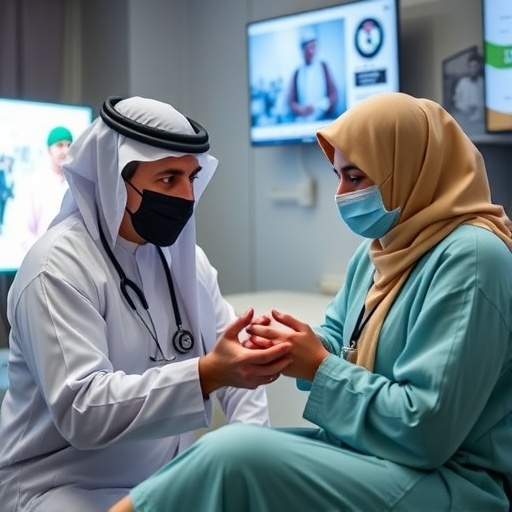
In the evolving landscape of healthcare education, the development of soft skills has never been more crucial, particularly in regards to empathy. A recent study conducted by Almutairi, Alahmedi, and Alodhailah has brought to the forefront the impact of culturally-focused simulation-based education on empathy development among nursing students in Saudi Arabia. This quasi-experimental study investigates a pivotal aspect of nursing education—how cultural context can enhance students’ empathetic capacities in clinical settings.
Empathy, the ability to understand and share the feelings of another, is a core competency in nursing. It fosters more effective communication, improves patient care, and enhances the overall healthcare experience for patients. However, traditional methods of teaching often overlook the cultural nuances that shape patient experiences and interactions. This study emphasizes the significance of contextual learning, a vital component that can bridge the gap between theoretical knowledge and practical application.
The researchers undertook an innovative approach by implementing simulation-based education that was deeply rooted in the cultural contexts of Saudi society. By immersing nursing students in realistic scenarios that reflect their community’s unique values and practices, the educational intervention aimed not only to teach clinical skills but also to enhance the students’ ability to empathize with patients. This culturally-sensitive pedagogical strategy marks a significant shift from conventional generic training.
The quasi-experimental design of the study allowed the researchers to compare the empathy levels of students who participated in this culturally-focused simulation against a control group who received traditional education. This methodological rigor not only bolstered the reliability of the findings but also illustrated tangible differences in empathy levels post-intervention. Evidence from the results demonstrated a clear increase in empathetic responses among those students exposed to culturally relevant scenarios.
In addition to fostering empathy, the study also examined how such educational strategies influenced students’ confidence in interacting with patients from diverse backgrounds. The implications are profound: as nursing students cultivate empathy through culturally-oriented simulations, they also build a more robust confidence in their abilities to manage complex patient interactions. This dual benefit enhances their readiness for real-world clinical environments, potentially leading to better patient outcomes.
A significant aspect of the research was the emphasis on cultural competence within nursing education. The findings suggest that culturally-informed educational practices should become integral to nursing curricula, not just in Saudi Arabia but globally. By addressing the cultural dimensions of health, nursing programs can prepare students to engage more effectively with patients from various backgrounds, thus promoting a more inclusive healthcare setting.
Moreover, the study’s implications extend beyond nursing education alone. They challenge educators across all health disciplines to rethink the integration of cultural perspectives in their teaching methods. As global migration continues to increase, healthcare professionals will inevitably encounter diverse populations. Equipping students with the skills necessary to navigate these complexities is no longer optional; it is essential.
Interestingly, the researchers also noted an increase in student-teacher rapport during the simulation-based exercises. This improvement suggests that culturally-focused training not only enriches the learning experience but also fosters a supportive environment where students feel more comfortable expressing emotions and experiences. Such rapport is vital in nursing education, as it encourages open discussions about complex health scenarios and emotional burdens students may encounter in practice.
The results underscore the pressing need to innovate nursing education through more dynamic teaching methodologies. The shift towards interactive, simulation-based learning is one such avenue. Still, the authors argue that these changes must be systematically integrated into curricula to achieve lasting reforms within the healthcare education sector. It raises an important question: how can institutions best facilitate the development of empathetic nurses through culturally relevant education?
Ultimately, the findings of this quasi-experimental study serve as a vital call to action for nursing educators to adopt a culturally-informed approach within their training programs. The implicit message is clear—it is not enough to teach clinical skills alone; fostering a deep understanding of cultural contexts is critical to nurturing the next generation of empathetic healthcare providers.
The study contributes to a growing body of literature that recognizes the transformative potential of culturally competent education in nursing. By bridging the gap between theory and practice through culturally-focused simulations, educators not only enhance empathy but also prepare students for the diverse realities they will encounter in their professional lives. The ripple effect of this educational approach has the potential to redefine patient care standards.
In conclusion, as the healthcare environment continues to evolve, innovations in education will be key in shaping the future of nursing. Studies like those conducted by Almutairi and colleagues pave the way for an education system that is not only focused on clinical outcomes but also attuned to the emotional and cultural needs of patients. The ultimate goal remains unchanged: to ensure that healthcare professionals can provide compassionate, patient-centered care that respects and honors the diverse experiences of all individuals.
Subject of Research: The effectiveness of culturally-focused simulation-based education on empathy development among Saudi nursing students.
Article Title: The effectiveness of culturally-focused simulation-based education on empathy development among Saudi nursing students: a quasi-experimental study.
Article References:
Almutairi, A.A., Alahmedi, S.H. & Alodhailah, A.M. The effectiveness of culturally-focused simulation-based education on empathy development among Saudi nursing students: a quasi-experimental study. BMC Nurs 24, 1390 (2025). https://doi.org/10.1186/s12912-025-04031-7
Image Credits: AI Generated
DOI: https://doi.org/10.1186/s12912-025-04031-7
Keywords: Empathy, Simulation-based education, Nursing students, Cultural competence, Quasi-experimental study.
Tags: contextual learning in healthcarecultural context in nursingculturally-focused simulationsculturally-sensitive pedagogyeffective communication in nursingempathy development in nursinghealthcare education innovationsnursing student empathy trainingpatient care improvement strategiesSaudi nursing educationsimulation-based learningsoft skills in healthcare