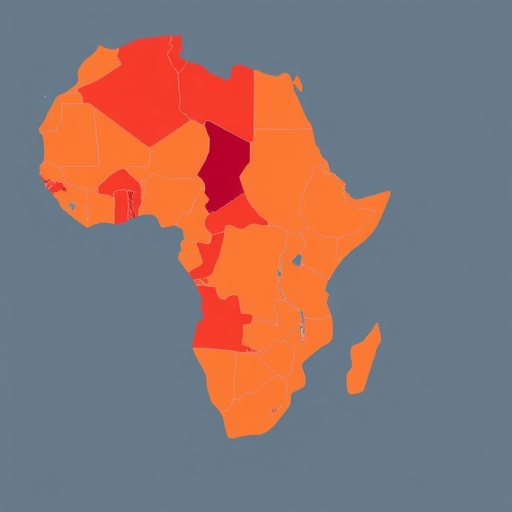
Groundbreaking research reveals the transformative power of government-led cash transfer programs on maternal and child health across low- and middle-income countries. Published in The Lancet and spearheaded by investigators from the University of Pennsylvania Perelman School of Medicine, this extensive study linked large-scale financial assistance initiatives to substantial improvements in health outcomes that reverberate through entire populations. By analyzing data encompassing millions of births and young children born between 2000 and 2019 across 37 countries, the researchers illuminated how economic support mechanisms directly correlate with healthier pregnancies, improved birth practices, and enhanced child wellness.
Central to this study was the remarkable observation that cash transfer programs enable women to exercise greater reproductive autonomy, which manifests as increased intentionality in pregnancy planning and higher usage of contraception. When governments directed monetary assistance to families, women women experienced fewer unintended pregnancies, and access to reproductive health services became more feasible and widespread. Notably, programs with broader population coverage yielded the strongest effects, reinforcing the value of expansive social safety nets in promoting public health.
This investigation builds on previous work by the same team published in Nature, which established a link between cash transfers and reductions in maternal and child mortality rates. The current findings deepen our understanding by identifying specific behavioral and health service utilization shifts that underpin these survival improvements. For example, more births occurred in health facilities staffed by trained personnel following program introductions, heightening the safety of delivery and postpartum care. Increased prenatal care engagement ensured that expectant mothers received timely medical interventions, enhancing health trajectories for both mothers and newborns.
Child health and nutrition also saw marked advancements attributed to cash transfer implementations. The study documented higher exclusive breastfeeding rates, essential for infant immunity and development. Moreover, greater proportions of children received adequate nutrition, indicated by reduced incidences of underweight status and childhood diarrhea—a significant cause of morbidity in resource-poor settings. Vaccination coverage, specifically measles immunization, increased systemically, offering protection against a preventable yet deadly disease that remains pervasive in many low-income contexts.
Methodologically, the researchers utilized a robust combination of national survey datasets and a comprehensive cash transfer program database to evaluate seventeen distinct health indicators related to maternal behavior, reproductive decision-making, and child health outcomes. This rigorous analytical framework enabled the isolation of population-wide effects, including benefits observed beyond direct program recipients. Such spillover effects underscore the programs’ potential to elevate community health standards broadly rather than solely for targeted beneficiaries.
The urgency of this research cannot be overstated, particularly as more than one-fifth of the global population subsists on less than $3.65 per day, with 700 million living below the $2.15 extreme poverty threshold. These figures have deteriorated post-pandemic, with projections estimating that COVID-19 has plunged an additional 50 million people into extreme poverty by 2030. In this context, cash transfer programs emerge as powerful tools to reverse these downward economic and health trends.
The implications for policy are profound. The findings argue compellingly for the expansion and sustainability of such financial support initiatives both in LMICs and potentially in high-income nations. Within the United States, for instance, the ongoing contraction of social safety net programs like the Supplemental Nutrition Assistance Program (SNAP) risks exacerbating food insecurity and child health disparities. Evidence from the University of Pennsylvania team, published in 2023, already indicated that SNAP benefit reductions precipitated a rise in food insufficiency, highlighting the critical connection between economic aid and health stability.
Innovative pilot programs such as Flint, Michigan’s Rx Kids initiative, which guarantees $1,500 to expectant mothers during pregnancy and monthly payments to families in the first year of their child’s life regardless of income, embody this research’s principles and showcase the potential for scalable models that foster health equity. These interventions exemplify how guaranteed income frameworks can offer foundational health and nutrition benefits from the earliest stages of life.
The broad spectrum of health improvements cataloged—including better maternal healthcare utilization, enhanced reproductive control, and strengthened child nutrition and disease resistance—illustrates that cash transfers operate as multifaceted public health instruments. They improve determinants of health at individual, family, and societal levels simultaneously. These findings bolster calls for policymakers globally to integrate financial support mechanisms into comprehensive health strategies aimed at eradicating poverty-linked health disparities.
Dr. Aaron Richterman, an infectious diseases specialist and study co-lead, emphasized the expansive benefits of these cash programs. He noted that as countries deliberate the structure of emerging financial support policies, including universal basic income proposals, this evidence base provides critical insight. Similarly, Harsha Thirumurthy, a health policy professor and study co-author, reinforced the significance of extending coverage to maximize impacts, highlighting that the health gains encompassed both mothers and their children—indicating wide-reaching and lasting societal benefits.
This pivotal research was funded by the Eunice Kennedy Shriver National Institute of Child Health and Human Development alongside the National Institute of Mental Health, underscoring the strategic priority of integrating economic interventions within global health frameworks. By providing compelling, large-scale evidence of the health dividends yielded through cash transfers, this work sets the stage for transformative policy innovation worldwide.
In sum, this landmark study harnesses extensive population data to demonstrate that cash transfer programs are not merely economic relief measures but essential health investments. They catalyze enhanced reproductive autonomy, safer pregnancies, improved child nutrition, and broader immunization coverage. The insights resonate beyond the countries studied, inviting a reexamination of how social protection policies can be leveraged to break cycles of poverty and disease, ultimately building healthier and more equitable societies globally.
Subject of Research: Impact of government-led cash transfer programs on maternal and child health outcomes in low- and middle-income countries.
Article Title: Large-scale cash transfer programs drive significant health improvements in LMICs
News Publication Date: 10-Nov-2025
Web References:
The Lancet article: https://www.thelancet.com/journals/lancet/article/PIIS0140-6736(25)01437-0/fulltext
Prior Nature paper: https://www.nature.com/articles/s41586-023-06116-2
Brookings report on poverty post-COVID: https://www.brookings.edu/articles/long-run-impacts-of-covid-19-on-extreme-poverty/
Flint Rx Kids program coverage: https://www.theguardian.com/us-news/2025/sep/15/rx-kids-flint-michigan-pregnancy
References:
Eunice Kennedy Shriver National Institute of Child Health and Human Development
National Institute of Mental Health
Keywords:
Public policy, cash transfer programs, maternal health, child nutrition, reproductive health, low- and middle-income countries, health outcomes, poverty reduction, social safety nets
Tags: cash transfer programschild health outcomescontraception usagefinancial assistance initiativesgovernment-led programslow-income countriesmaternal health improvementsmiddle-income countriespregnancy planningpublic health promotionreproductive autonomysocial safety nets