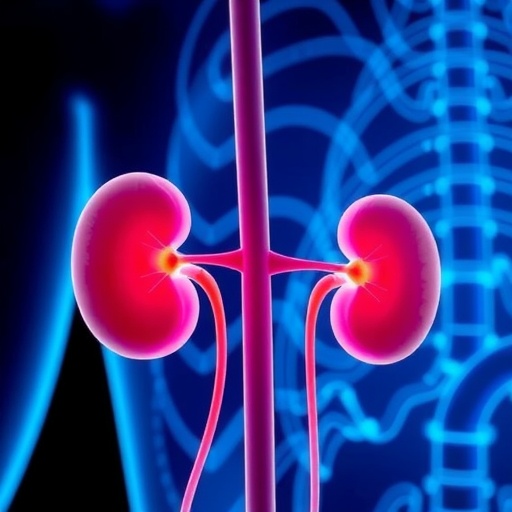
In a groundbreaking advancement for the treatment of type 1 diabetes complicated by chronic kidney disease (CKD), the drug finerenone has emerged as a promising therapeutic agent, offering new hope to a patient population long underserved by pharmaceutical innovation. This development is the culmination of an extensive international study spearheaded by clinical pharmacologist Hiddo Lambers Heerspink from the University Medical Center Groningen (UMCG). Preliminary results, set to be unveiled at the prestigious American Society of Nephrology meeting in Houston, indicate that finerenone substantially reduces urinary protein excretion, a critical biomarker correlated with kidney damage and progression.
Kidney disease linked to type 1 diabetes presents a significant clinical challenge, especially since treatment options have stagnated over the past three decades. While considerable progress has been achieved in managing kidney complications in patients with type 2 diabetes through novel pharmaceuticals, type 1 diabetics have largely been excluded from these advances due to historical concerns over adverse effects. As a result, the current standard of care remains tied to antihypertensive drugs whose efficacy and safety profiles were established many years ago. The introduction of finerenone represents a meaningful shift—a drug that uniquely addresses this gap with both efficacy and a tolerable safety profile, poised to redefine treatment guidelines for individuals with type 1 diabetes.
Central to this study’s design is the utilization of albuminuria, or protein loss through urine, as the primary endpoint. This innovative methodological approach stems from prior insights by Dr. Lambers Heerspink, who demonstrated that albuminuria serves as the most sensitive and early biomarker reflecting renal protection. Contrastingly, traditional endpoints such as the initiation of dialysis or renal transplantation emerge only in advanced stages of disease, necessitating prohibitively large and extended trials that are particularly difficult with the relatively smaller type 1 diabetic population. By focusing on proteinuria reduction, the study not only achieved feasibility but also delivered relevant and timely indicators of therapeutic benefit.
Finerenone functions as a selective nonsteroidal mineralocorticoid receptor antagonist, blocking the receptor for aldosterone—a hormone integral to sodium retention and blood pressure regulation. Aldosterone’s pathological overactivation is implicated in promoting renal inflammation, fibrosis, and cardiovascular complications. Previous clinical investigations had already established finerenone’s protective effects against kidney function decline and cardiovascular events in patients with type 2 diabetes; however, its role in type 1 diabetes remained unexplored until now.
The multinational phase of this rigorous trial included 242 participants with documented type 1 diabetes and chronic kidney disease, drawn from 82 hospitals across nine countries spanning Asia, Europe, and North America. Over the six-month study period, patients receiving finerenone exhibited a remarkable approximate one-quarter decrease in urinary protein excretion compared to baseline measurements. This quantifiable reduction holds immense clinical relevance, as it suggests a deceleration of the pathological processes driving renal deterioration, thereby potentially delaying or preventing the onset of end-stage kidney failure.
Equally noteworthy was the safety profile observed during the clinical investigation. Finerenone was well tolerated among the study cohort, with side effects limited predominantly to a minor, manageable elevation in serum potassium levels—a known pharmacodynamic consequence consistent with mineralocorticoid receptor blockade. This manageable electrolyte disturbance did not necessitate treatment discontinuation, underscoring the drug’s suitability for long-term use in this fragile patient population.
The implications of these findings extend beyond pharmacological advancements. Type 1 diabetes is an autoimmune disorder characterized by insufficient insulin production and resultant chronic hyperglycemia affecting nearly nine million individuals worldwide. Among these patients, 30 to 40 percent develop CKD, confronting them with compounded risks of kidney failure and cardiovascular morbidity. Alarmingly, in patients exhibiting significant albuminuria, over one-third progress to renal failure within 15 years. Despite such dire prognoses, therapeutic options have remained largely static, typically focusing on blood glucose control, lifestyle modification, and blockade of the renin-angiotensin system (RAS). The introduction of finerenone, with its novel mechanism and efficacy, heralds a new era of renal protection in this high-risk group.
This study’s success also highlights the critical need for further targeted research addressing the unique pathophysiology of type 1 diabetes and its complications. Historically, clinical trials have been dominated by investigations in type 2 diabetes, often excluding type 1 patients and thereby limiting therapeutic advancements in this distinct group. By demonstrating the feasibility of employing surrogate endpoints like albuminuria and showcasing the successful deployment of finerenone, the research team calls for intensified efforts to discover and validate treatments that specifically benefit type 1 diabetic patients at risk of end-organ damage.
Additionally, the findings presented at the American Society of Nephrology conference emphasize the growing recognition within the nephrology community of finerenone’s dual cardio-renal protective effects. Chronic kidney disease is not only a precursor to kidney failure but also a significant contributor to cardiovascular mortality. The ability of finerenone to simultaneously mitigate kidney injury and reduce cardiovascular risk factors positions it as a potential cornerstone therapy, bridging molecular pharmacology and clinical outcomes.
The upcoming inclusion of finerenone into clinical guidelines for type 1 diabetes patients with CKD is anticipated to transform current therapeutic paradigms. This approval would mark a pivotal moment—introducing the first new pharmacological agent endorsed after more than 30 years, validated for efficacy and safety in this underserved population. Such milestones not only improve patient prognosis but also expand clinicians’ armamentarium for managing complex metabolic and renal interrelations characteristic of type 1 diabetes.
As the scientific community digests these encouraging findings, the outlook for patients living with type 1 diabetes and chronic kidney disease grows increasingly optimistic. Finerenone’s mechanism offers a precise intervention targeting neurohormonal pathways exacerbating renal injury. The reduction in albuminuria observed signals a tangible shift toward slowing or halting the relentless decline in kidney function that has long eluded effective modulation.
In summary, the innovative international study led by Hiddo Lambers Heerspink brings to light finerenone’s groundbreaking efficacy in reducing urinary protein loss and its well-tolerated safety profile in patients with type 1 diabetes and CKD. These results illuminate a path forward, promising an era where the burden of renal complications in this vulnerable population can be considerably alleviated. The clinical community now eagerly awaits final peer-reviewed publication and guideline integration, hopeful that this advancement will translate into meaningful improvements in longevity and quality of life for millions worldwide.
Subject of Research: The efficacy and safety of finerenone in reducing urinary protein excretion in patients with type 1 diabetes and chronic kidney disease.
Article Title: Finerenone: A Breakthrough in Kidney Protection for Type 1 Diabetes after Three Decades
News Publication Date: November 6, 2023
Web References: Information based on presentations at the American Society of Nephrology conference and research led by the University Medical Center Groningen.
Keywords: finerenone, type 1 diabetes, chronic kidney disease, albuminuria, mineralocorticoid receptor antagonist, kidney protection, proteinuria, aldosterone receptor, renal fibrosis, cardiovascular risk, renal outcomes, clinical pharmacology
Tags: American Society of Nephrology findingsantihypertensive drug limitationschronic kidney disease advancementsclinical pharmacology innovationsfinerenone drug benefitskidney disease management strategiesnephrology research breakthroughspharmaceutical innovations in diabetessafety profile of new medicationsType 1 diabetes treatmentunderserved patient populationsurinary protein excretion reduction