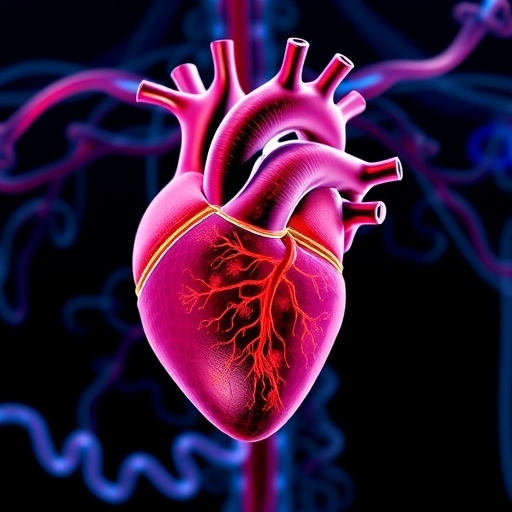
Recent groundbreaking research has unveiled a potentially transformative approach to cardiac regeneration using a naturally occurring gene known as Cyclin A2 (CCNA2). This gene, which is typically silenced after birth in humans, has shown promise in stimulating the regeneration of heart cells after injury. A study published in the prestigious journal, Nature Portfolio Journals Regenerative Medicine, demonstrates the capability of reactivating CCNA2 to prompt heart muscle cells to divide, thereby opening a new pathway for approaches that could circumvent the need for heart transplants or mechanical devices.
Historically, heart tissue has been perceived as a largely non-regenerative tissue that cannot recover adequately from injury. Heart attacks and heart failure result in the loss of heart muscle cells, significantly diminishing cardiac function. This revolutionary study, led by Dr. Hina Chaudhry and her team from the Icahn School of Medicine at Mount Sinai, provides compelling evidence suggesting that even mature human heart cells may harbor the intrinsic ability to regenerate when prompted under the right circumstances.
The research builds upon Dr. Chaudhry’s earlier pioneering work in 2014, where her team established the first-ever regeneration of a large mammalian heart model after injury through the reactivation of CCNA2. This previous research set the foundation for establishing that the regeneration of heart tissue could be achieved in mammals closely resembling humans. The new findings represent not only a continuation of this research but an essential bridge toward therapeutic applications in human populations.
Rather than exclusively treating symptoms of heart disease, this study represents a paradigm shift: it suggests that we could enable the heart to heal itself. With heart disease being the leading cause of mortality globally, Dr. Chaudhry’s work underscores a critical turning point in our understanding of cardiac biology. By taking advantage of the body’s innate regenerative capabilities, doctors may one day be able to facilitate healing processes that maximize recovery after cardiac events.
The researchers employed a sophisticated method, utilizing a replication-deficient human-compatible virus to deliver the CCNA2 gene to cultured human heart muscle cells obtained from healthy human donors. A keen analysis using time-lapse imaging revealed that heart cells treated with Cyclin A2 not only divided successfully but also maintained their essential structural integrity and functionality.
This study investigated heart cells from donors of varying ages, specifically examining samples from individuals aged 21, 41, and 55. Remarkably, stimulation with the CCNA2 therapy prompted a successful cell division response in the cells from the older donors, while the younger donor cells did not exhibit the same response. This observation aligns with previous research suggesting that younger hearts inherently possess greater regenerative potential, able to divide autonomously without external stimulation.
The essential takeaway from this research is that the produced daughter cells, resulting from the induced cell division, retained their normal calcium homeostasis and structural proteins. This finding is paramount as it indicates that the reawakening of CCNA2 does not render these cells immature or induce pathological changes like hypertrophy commonly seen in heart disease. Significantly, the work demonstrates that CCNA2 can temporarily “turn back the clock,” activating specific growth genes to facilitate division and repair.
Dr. Chaudhry has articulated the repercussions of this research, stating that it encapsulates nearly two decades of endeavor toward redefining cardiac regeneration. She envisions a therapy that may empower the heart’s innate healing mechanisms following a heart attack or during heart failure, potentially reducing dependency on transplants or mechanical aid devices.
In moving forward, the research team intends to pursue FDA approval for initiating clinical trials of the CCNA2 therapy in patients suffering from heart disease. This critical next stage involves ensuring that the promising results observed in vitro translate effectively into vivo applications in human subjects.
This essential advancement was made possible by funding from significant entities like the National Institutes of Health and the New York Stem Cell Board, emphasizing the collaborative efforts in pushing the frontiers of science. The implications of this research are profound, as it paints a hopeful picture of cardiac treatment strategies aimed at repairing rather than merely managing heart disease.
In conclusion, this study heralds a new epoch in the realm of cardiology. By reviving the innate regenerative capabilities of heart cells through the reactivation of Cyclin A2, the potential trajectory of heart disease management could transform drastically. The outcomes could shape a future where patients are not only treated but can regain functional heart cell populations capable of sustaining their cardiac health. Researchers continue to investigate this exciting new frontier, as it holds incredible promise for reimagining heart health on both individual and societal levels.
Subject of Research: Cells
Article Title: Cyclin A2 Induces Cytokinesis in Human Adult Cardiomyocytes and Drives Reprogramming in Mice
News Publication Date: 3-Nov-2025
Web References: [Link to Article]
References: [Link to Previous Studies]
Image Credits: Mount Sinai Health System
Keywords
Tags: alternatives to heart transplantscardiac muscle cell divisioncardiac regeneration pathwaysCyclin A2 gene reactivationDr. Hina Chaudhry findingsgene therapy for heart regenerationheart attack recovery mechanismsheart failure treatment innovationsIcahn School of Medicine researchintrinsic heart cell regenerationnon-regenerative heart tissueregenerative medicine breakthroughs