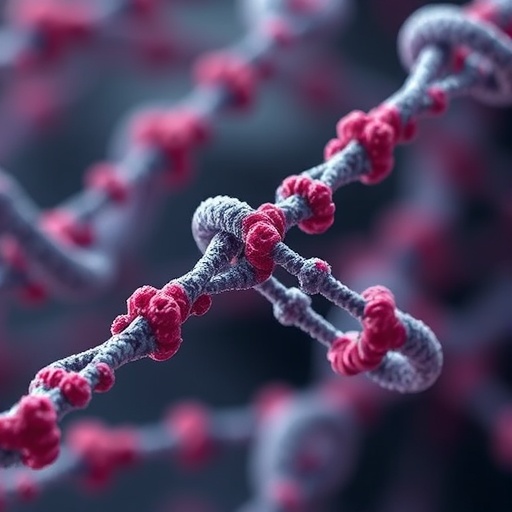
In a groundbreaking study that may redefine our understanding of chromosome stability and its link to certain devastating diseases, researchers at the University of Wisconsin–Madison have identified a critical new role for the human replication protein A (RPA). This protein, long known for its involvement in DNA replication and repair, has now been revealed to be essential for stimulating telomerase, the enzyme responsible for maintaining the protective caps known as telomeres at the ends of our chromosomes. This discovery sheds light on previously unexplained mutations linked to shortened telomeres, opening new avenues for diagnosing and potentially treating diseases rooted in telomere dysfunction.
Telomeres serve as a biological clock for cells, protecting chromosome ends from deterioration and preventing unwanted fusion with neighboring chromosomes. These repetitive DNA sequences and their associated proteins gradually shorten with age, a process tightly linked to cellular aging and death. However, when telomere maintenance falters prematurely, it results in genomic instability that can precipitate conditions such as cancer, bone marrow failure syndromes, and other degenerative diseases. The enzyme telomerase has the unique ability to extend these sequences, but the mechanisms governing its activity in human cells remain incompletely understood.
The research team, led by Professor Ci Ji Lim of the UW–Madison biochemistry department, employed cutting-edge computational biology tools to probe these mechanisms. Leveraging AlphaFold, a sophisticated machine learning platform designed to predict protein structures and interactions with remarkable accuracy, the team sought to discover novel proteins that interface with human telomerase. This computational prediction yielded a surprising candidate: human replication protein A (RPA), a protein complex historically characterized as a key player in DNA replication and repair pathways but not previously confirmed to have a direct impact on telomerase activity.
RPA is known to bind single-stranded DNA during replication and maintain genome integrity by stabilizing DNA structures and recruiting repair proteins. The current study postulated that RPA’s ability to interact with telomerase could be fundamental to sustaining telomere length in human cells. Guided by the AlphaFold predictions, experimental assays were conducted to verify the physical and functional interactions between RPA and the telomerase enzyme complex. The results unequivocally demonstrated that RPA is indispensable for the processivity of telomerase, effectively enabling telomerase to elongate telomeres efficiently.
Perhaps most significantly, the region where RPA docks onto the telomerase complex correlates precisely with structural variants of telomerase found in patients suffering from disorders that include aplastic anemia, myelodysplastic syndrome, and acute myeloid leukemia. These diseases, often linked to critically shortened telomeres, have perplexed clinicians due to the absence of identifiable mutations in the telomerase subunits themselves. The team’s findings suggest that mutations interfering with the interaction between RPA and telomerase could be the unseen culprits behind these clinical presentations.
The clinical implications of this research are immediate and profound. For years, there have been patients with shortened telomere syndromes without a clear genetic diagnosis, impeding targeted treatment strategies. Now, mutations disrupting RPA’s telomerase-stimulating function provide a molecular explanation for some of these enigmatic cases. Testing for mutations in RPA or its interaction interfaces could become a new standard in genetic panels for diagnosing telomere biology disorders, thus facilitating precision medicine tailored to the underlying molecular defects.
Moreover, the study underscores the broader potential of integrating artificial intelligence-driven structural predictions with biochemical validation to uncover hidden layers of cellular regulation. As lab-based experiments confirmed AlphaFold’s computational insights, this synergistic approach may accelerate the discovery of other critical protein interactions involved in genome maintenance and disease pathology. This integration of AI and bench science heralds a new era in molecular biology research, where in silico models guide high-impact discovery pipelines.
Over 12 months following their publication, Lim and his colleagues have received an influx of inquiries from international clinicians and scientists eager to investigate whether their patients’ unresolved telomere disorders can be traced to compromised RPA-telomerase interactions. The global response attests to the urgent demand for novel diagnostic markers and mechanistic understanding in telomere biology diseases, emphasizing the transformative nature of this research for patients and families.
Beyond its direct clinical relevance, the study expands the fundamental biological understanding of telomere maintenance. It places RPA at the heart of telomerase regulation, linking two essential arms of DNA metabolism: replication and telomere elongation. This finding invites further exploration of how disruptions in these tightly coordinated processes contribute to genomic instability, aging, and malignant transformation, potentially revealing new targets for therapeutic intervention.
The work, supported by the National Institutes of Health and multiple UW–Madison research centers, represents a multidisciplinary collaboration encompassing molecular biochemistry, chemistry, structural biology, and computational modeling. Such collaborative efforts exemplify the integrative approach required to tackle complex biological questions and translate them into meaningful clinical advances.
Lastly, this discovery paves the way for future research into how other known DNA repair and replication proteins might influence telomerase function. It raises fundamental questions about the network of protein interactions that safeguard chromosome ends and the molecular basis by which their dysfunction leads to disease. As scientists dissect these intricate relationships, new strategies to manipulate telomerase activity therapeutically may emerge, offering hope for patients afflicted with telomere-related disorders.
Subject of Research: The critical role of human Replication Protein A (RPA) as a telomerase processivity factor in telomere maintenance and its implications in telomere-related diseases.
Article Title: Human RPA is an essential telomerase processivity factor for maintaining telomeres
News Publication Date: 30-Oct-2025
Web References: https://doi.org/10.1126/science.ads5297
Image Credits: Ci Ji Lim
Keywords: telomerase, telomeres, replication protein A, RPA, DNA repair, chromosome stability, telomere maintenance, telomere diseases, aplastic anemia, myelodysplastic syndrome, acute myeloid leukemia, AlphaFold, protein-protein interaction, genome integrity, molecular biology, chromosome aging
Tags: cellular aging and telomereschromosome stability in diseasesdiagnosing telomere-related diseasesgenomic instability and aginggroundbreaking discoveries in molecular biologyhuman replication protein A functionprotein binding to fraying DNAtelomerase activity and regulationtelomere dysfunction and cancertelomere maintenance mechanismstelomeres and degenerative diseasesUniversity of Wisconsin–Madison research