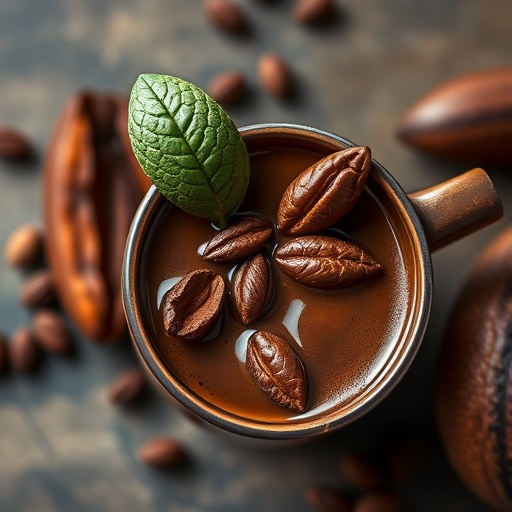
In a groundbreaking study from the University of Birmingham, compelling evidence emerges revealing that dietary intake of flavanol-rich foods can markedly safeguard vascular function against the adverse impacts associated with prolonged periods of sitting. This research sheds light on a readily accessible nutritional intervention that could prove pivotal in mitigating risks linked to sedentary lifestyles, particularly in young men.
Sedentarism has become a ubiquitous feature of contemporary societies, with epidemiological data indicating that young adults average nearly six hours daily in seated postures. Prolonged immobility during these periods triggers a decline in vascular function, exacerbating risk factors associated with cardiovascular disease. The particular metric of concern in vascular health, brachial Flow-Mediated Dilation (FMD), quantifies endothelial-dependent arterial elasticity and has been correlated with future cardiovascular risk. Prior investigations have indicated that a seemingly marginal 1% decrement in FMD correlates with a staggering 13% heightened risk for cardiovascular events such as myocardial infarctions and cerebrovascular accidents.
The investigative team led by Dr. Catarina Rendeiro sought to explore whether preemptive dietary strategies could avert such vascular impairments attendant with uninterrupted sitting bouts. Their focus centered on flavanols—a subclass of polyphenols naturally present in tea, berries, apples, nuts, and especially cocoa beans. Flavanols are known to exert endothelial benefits by enhancing nitric oxide bioavailability, reducing oxidative stress, and promoting vasodilation, which collectively support cardiovascular integrity. Notably, previous studies have demonstrated flavanols’ protective vascular effects under acute mental stress conditions, prompting consideration for support during physical inactivity.
This research, published in the Journal of Physiology on October 29, 2025, stands as the first to clearly demonstrate flavanols’ efficacy in preventing sitting-induced vascular dysfunction in a controlled experimental setting involving human participants. Forty healthy young men stratified by fitness levels participated in the trial; each consumed beverages differing only in flavanol content prior to a two-hour sitting session. The high-flavanol beverage contained approximately 695 mg of total flavanols, whereas the low-flavanol version contained a mere 5.6 mg.
Physiological assessments conducted before and after the sitting period included meticulous measurements of FMD at the brachial and superficial femoral arteries, indices of arterial shear rate, resting blood flow, blood pressure parameters, and leg muscle oxygenation. The data revealed that those who ingested the low-flavanol beverage experienced significant decrements in FMD across both arterial sites regardless of their cardiorespiratory fitness. Concomitant increases in diastolic blood pressure and decreases in shear stress and muscle oxygenation were observed, underscoring the detrimental effect of uninterrupted sitting.
Conversely, participants consuming the high-flavanol beverage exhibited remarkable preservation of endothelial function, with no observable decline in FMD in the arteries of both arms and legs. This finding underscores the potent vascular protective properties of flavanols during sedentary behavior. Intriguingly, the research elucidated that baseline fitness levels did not modulate this protective effect, illustrating flavanols’ universality in supporting vascular health across different physical fitness spectrums.
The molecular mechanisms underlying this protective effect likely involve flavanols’ ability to enhance endothelial nitric oxide synthase activity, thereby promoting vasodilation and preserving endothelial responsiveness despite the hemodynamic disturbances caused by inactivity. These compounds may also exhibit antioxidant properties, mitigating oxidative stress-induced endothelial damage during prolonged sitting.
Lead researcher Dr. Rendeiro emphasized the societal ramifications of these findings given the pervasive nature of sedentary lifestyles and escalating cardiovascular disease morbidity and mortality worldwide. She highlighted that integrating flavanol-rich foods into daily diets, especially during extended seated activities, offers a pragmatic strategy to attenuate the vascular risks associated with inactivity. This approach becomes increasingly pertinent when considering the considerable economic burden cardiovascular diseases represent, with estimated costs reaching £29 billion in the UK alone.
Despite the study’s robust design, it was limited to male subjects to avoid confounding effects of sex hormones such as estrogen on vascular responses to flavanols. Future research is warranted to assess how hormonal fluctuations across the female menstrual cycle might influence these effects, thereby broadening the generalizability of these findings.
From a practical nutrition standpoint, increasing flavanol intake is both feasible and accessible. Cocoa products processed to preserve flavanol content are readily available commercially, and common dietary staples like black and green tea, berries, and apples inherently provide these polyphenols. Public health interventions could capitalize on these easily implementable dietary modifications alongside physical activity promotion to substantially mitigate cardiovascular risk burden.
In conclusion, this pioneering study definitively illustrates that the vascular impairments induced by sedentary behavior are not an inevitable consequence but can be effectively counteracted by nutritionally driven enhancements in endothelial resilience. As sedentary lifestyles remain entrenched globally, flavanol-rich nutritional interventions offer a promising, scalable pathway toward fortifying cardiovascular health in the modern age.
Subject of Research: People
Article Title: Flavanol-rich dietary intake preserves vascular function during prolonged sitting in young healthy men
News Publication Date: 29-Oct-2025
Web References: DOI:10.1113/JP289038
References: Journal of Physiology, University of Birmingham research publication
Keywords: Flavonoids, Legs, Arms, Circulatory system, Blood vessels, Cardiovascular disorders, Physical exercise, Public health, Physiology, Nutrition, Vascular biology, Dietetics
Tags: blood vessel function preservationcardiovascular disease prevention strategiescocoa beans nutritioncocoa flavanols benefitscombating sedentarism with dietdietary interventions for sedentary lifestylesendothelial health improvementflavanol-rich foodsFlow-Mediated Dilation significancepolyphenols and vascular functionprolonged sitting cardiovascular risksyoung men vascular health