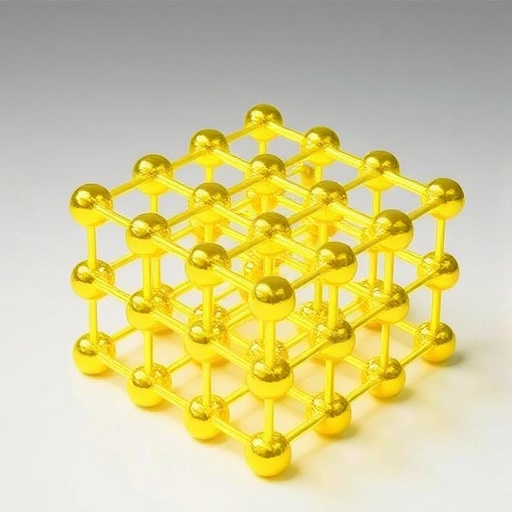
In a groundbreaking advancement that could redefine sustainable chemical manufacturing, researchers at Lanzhou University have developed a pioneering method to enhance the photocatalytic generation of hydrogen peroxide (H2O2) using novel thiophene-doped covalent organic frameworks (COFs). This innovative strategy employs a mixed ligand approach, ingeniously manipulating molecular building blocks to surmount long-standing obstacles in photocatalytic efficiency, culminating in an unprecedented photocatalyst with remarkable activity under ambient conditions.
Hydrogen peroxide is an essential oxidant in numerous industrial domains, ranging from bleaching in papermaking to sterilization in medical fields. Traditional production routes, predominantly the anthraquinone process, are energy-intensive and environmentally problematic, motivating the scientific community to seek greener, more sustainable synthetic methods. Photocatalytic synthesis utilizing sunlight, water, and oxygen promises a transformative path but is hindered by intrinsic material limitations that compromise efficiency. Achieving a harmonious balance among light absorption, charge separation, migration, and surface catalytic reactions has remained a herculean challenge due to conflicting mechanistic requirements within a single photocatalyst.
The Lanzhou University team, led by Professors Yu Tang and Fengjuan Chen, has introduced a cleverly orchestrated mixed ligand methodology to address these constraints. By fine-tuning the ratio between two complementing aldehyde monomers—terephthalaldehyde (TA) and 2,5-di(thiophen-2-yl)terephthalaldehyde (DTTA)—in conjunction with 2,4,6-trimethyl-1,3,5-triazine (TMT), their approach achieves a synergistic enhancement across all critical stages of photocatalysis. This rational design not only broadens the spectral absorption capabilities of the COFs but also fortifies charge carrier dynamics and hydrophilicity, all while maintaining robust crystallinity.
The inclusion of the DTTA unit notably extends the light-harvesting range of the photocatalyst, engaging a broader swath of the solar spectrum and effectively generating higher densities of excited charge carriers. Concurrently, the TA unit contributes significantly to the framework’s structural order and improves surface hydrophilicity—facilitating superior charge transport and active site accessibility. The interplay between these two structural motifs embodies a molecular “barrel effect,” wherein complementary functional components collectively produce performance enhancements unattainable by individual constituents.
Experimental characterization, including PXRD patterns and spectroscopy analyses, reveal that the hybrid COFs maintain exceptional crystallinity and porosity, essential features for efficient photocatalytic processes. Moreover, computational modeling substantiates the synergistic charge separation facilitated by the unique molecular architectures, showing suppressed recombination rates and enhanced charge mobility. This meticulous balance is critical for driving the surface redox reactions that convert water and oxygen into hydrogen peroxide with high selectivity and yield.
Among the synthesized variants, the sample denoted as TA/DTTA-2-TMT emerged as the optimized configuration, delivering a staggering H2O2 production rate of 3451 micromoles per gram per hour under visible light illumination of 100 milliwatts per square centimeter in pure water and open air conditions. This level of photocatalytic activity not only eclipses that of COFs constructed solely from either TA or DTTA monomers but also outperforms a vast majority of pervious COF-based photocatalysts reported to date.
The implications of this discovery extend far beyond mere numerical advancements. The work encapsulates a fundamental shift towards multi-parameter molecular engineering for photocatalyst design—where competing photocatalytic attributes are harmonized through precise compositional control. This paves the way for fabricating next-generation photocatalytic materials possessing tailor-made properties for energy conversion, environmental remediation, and chemical synthesis.
Furthermore, the research challenges conventional approaches that predominantly target singular aspects like band gap tuning or surface functionalization in isolation. Instead, it exemplifies a systems-level optimization, addressing the intricate trade-offs that typically impede photocatalytic performance. Such a holistic strategy is crucial in accelerating the transition from laboratory breakthroughs to practical, scalable solutions for green and economical hydrogen peroxide production.
In addition to the fundamental science, this advancement bears notable practical promise. Photocatalytic production of H2O2 directly from water and oxygen under mild conditions significantly reduces reliance on fossil fuel-derived raw materials and complex industrial setups. It opens avenues for decentralized, on-demand generation of this versatile chemical, potentially revolutionizing sectors that demand sustainable oxidants and disinfectants.
Looking ahead, the Lanzhou team’s methodology sets a precedent for future explorations into covalent organic frameworks and other molecularly engineered materials. The modularity inherent in COF chemistry combined with mixed linker strategies provides vast compositional freedom to finesse optoelectronic and catalytic properties. This work thus inspires further efforts to explore novel monomer combinations, doping elements, and framework topologies—all aimed at harnessing sunlight with maximal efficiency.
This research was published in CCS Chemistry, the flagship journal of the Chinese Chemical Society, highlighting the institution’s commitment to advancing frontier chemistry research. The corresponding authors Prof. Yu Tang and Prof. Fengjuan Chen, alongside their team, have showcased exemplary multidisciplinary collaboration, integrating synthetic chemistry, material characterization, theoretical computation, and photocatalytic evaluation to deliver this impactful discovery.
Funded by significant grants from the National Natural Science Foundation of China and provincial science initiatives, this work stands as a testament to the fruitful intersection of strategic funding and innovative scientific inquiry. It underscores the pivotal role of molecular precision in addressing sustainable energy and chemical production challenges, exemplifying how fundamental chemistry continues to lead the charge toward a greener future.
With this transformative advance, the field edges closer to realizing the full potential of photocatalytic H2O2 synthesis as an industrially viable and environmentally benign technology. The Lanzhou University research heralds a promising horizon where solar-driven chemical manufacturing could dramatically reduce humanity’s ecological footprint, achieving multiple societal benefits including cleaner water, safer disinfection, and greener industrial processes.
Subject of Research: Not applicable
Article Title: Thiophene-Doped Fully Conjugated Covalent Organic Frameworks for Efficient Photocatalytic Hydrogen Peroxide Generation
News Publication Date: 21-Oct-2025
Web References:
https://www.chinesechemsoc.org/journal/ccschem
http://dx.doi.org/10.31635/ccschem.025.202506161
Image Credits: CCS Chemistry
Keywords
Covalent organic frameworks
Tags: charge separation in photocatalystsenhancing photocatalytic efficiencygreen chemistry innovationshydrogen peroxide synthesis methodsindustrial applications of hydrogen peroxideLanzhou University researchmixed ligand approach in photocatalysisovercoming photocatalytic limitationsphotocatalytic hydrogen peroxide productionsunlight-driven chemical processessustainable chemical manufacturingthiophene-doped covalent organic frameworks