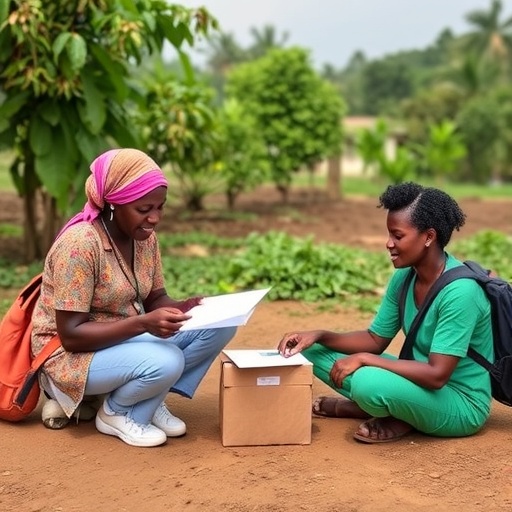
In the realm of global health, universal health coverage (UHC) has emerged as a critical vision for transformative healthcare systems worldwide. The recent study conducted in Souza, Cameroon, sheds light on the significance of enrollment in UHC and elucidates the associated factors that influence individuals’ participation. The findings of this research are pivotal for policymakers, health practitioners, and sociologists who aim to improve healthcare accessibility and address disparities in health services.
As populations grow and the prevalence of diseases rises, ensuring everyone has access to essential health services becomes a vital public health goal. Universal health coverage ensures that individuals can receive necessary medical care without facing financial hardship. However, achieving this goal involves understanding the barriers and facilitators of enrollment, as evidenced by the innovative research conducted by Mounchili and colleagues.
In Souza, researchers adopted a multifaceted approach to exploring UHC enrollment. They utilized both qualitative and quantitative methodologies to gather data from diverse demographics, aiming to uncover insights into the motivations and obstacles faced by residents when joining health programs. These insights not only illuminate local dynamics but also provide a template for other regions aiming to enhance their UHC strategies.
The study outlines various sociodemographic factors that play a crucial role in determining enrollment rates. Age, gender, education level, and socioeconomic status were significant variables influencing individuals’ decisions to enroll in UHC initiatives. The data suggests that younger individuals and those with higher educational attainment are more likely to participate in health coverage programs. This correlation raises important questions about how information dissemination and health literacy affect enrollment behaviors.
Another fascinating aspect of the research pertains to the perceived quality and accessibility of health services. Many residents harbor concerns regarding the adequacy of healthcare facilities and the professionalism of the staff. Such perceptions can deter enrollment in UHC programs, as individuals often seek assurance that their health needs will be adequately managed. Ensuring quality services and instilling trust in health systems is paramount for encouraging enrollment.
The integration of local customs and values in health promotion strategies emerged as a crucial theme in the study. In Souza, cultural beliefs and practices significantly influence health decisions. Researchers found that community engagement and culturally sensitive communication strategies enhance enrollment rates. When health services align with the community’s values and address traditional beliefs, individuals are more likely to partake in available programs.
Equitable access to information regarding UHC is essential for increasing enrollment rates. The study highlights a gap in knowledge among certain demographics, particularly those in rural areas or with limited education. By leveraging community leaders and local influencers, public health officials can bridge these information gaps, thus fostering a more informed populace that is aware of their rights and the benefits of enrollment.
Economic factors also played a dominant role in shaping enrollment decisions. For many individuals in Souza, the cost of healthcare represents a potential barrier to accessing necessary services. The study illustrates that perceived financial burdens heavily influence enrollment, with many residents hesitating to participate due to fears about indirect costs associated with healthcare access. Programs aimed at reducing these financial barriers are crucial for ensuring that UHC reaches its intended recipients.
Political stability and governance issues have also been identified as critical factors affecting enrollment in Souza. The research highlighted how mistrust in government institutions could lead to reluctance in engaging with health programs. Residents expressed concerns regarding resource allocation and the efficiency of healthcare providers, which impacted their willingness to enroll in UHC. Addressing these governance issues is essential to rebuild trust and encourage participation.
Improving enrollment in UHC necessitates a collaborative effort from various stakeholders, including government entities, non-governmental organizations, health professionals, and community groups. The study advocates for an integrative approach that combines resources, expertise, and community engagement. Through collaborative initiatives, stakeholders can create comprehensive strategies to enhance outreach and address specific barriers to enrollment.
The researchers’ findings underline the need for continuous monitoring and evaluation of ongoing UHC programs. Implementing feedback mechanisms enables health officials to adapt strategies based on community needs and experiences. This adaptability is vital for ensuring that health programs remain relevant and accessible, thereby fostering sustained enrollment and improved health outcomes.
Looking ahead, the implications of this research extend beyond the borders of Souza. As nations grapple with the complexities of healthcare delivery, the insights derived from this study can serve as a valuable resource. By embracing a comprehensive understanding of the factors influencing UHC enrollment, policymakers can implement targeted solutions that ultimately strive for equitable health access for all.
In conclusion, this groundbreaking research illuminates the complexities surrounding universal health coverage in Souza, Cameroon. The interplay of demographic, economic, sociocultural, and political factors reveal critical barriers and facilitators to enrollment. As the world continues to strive for health equity, the lessons drawn from Souza may play an instrumental role in informing practices and policies in other regions. The journey towards achieving sustainable health for all is fraught with challenges, yet the collective mission remains clear: health is a human right that must be upheld for every individual.
Subject of Research: Universal health coverage and factors associated with enrollment in the town of Souza-Cameroon.
Article Title: Universal health coverage and factors associated with enrolment in the town of Souza-Cameroon.
Article References:
Mounchili, M., Ketchaji, A., Tchogang, K.C.F. et al. Universal health coverage and factors associated with enrolment in the town of Souza-Cameroon.
BMC Health Serv Res 25, 1376 (2025). https://doi.org/10.1186/s12913-025-13493-z
Image Credits: AI Generated
DOI:
Keywords: Universal health coverage, enrollment, Souza, Cameroon, public health, healthcare access, sociodemographic factors, cultural beliefs, economic barriers, political stability.
Tags: barriers to health program enrollmentdisparities in health servicesfactors influencing UHC participationhealth policy implicationshealthcare accessibility in Cameroonlocal dynamics in UHC strategiesmotivations for joining health programspublic health goals in Africaqualitative and quantitative research methodssociodemographic influences on healthtransformative healthcare systemsuniversal health coverage enrollment