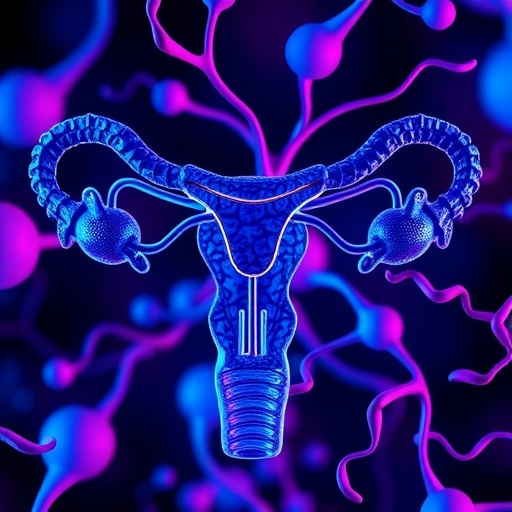
In the ever-evolving landscape of cancer research, the quest for effective biomarkers has garnered significant attention, particularly in understanding complex diseases such as endometrial cancer. A recent study by An, Feng, Jia, and others brings forth innovative insights into the advancements in biomarker discovery through the application of multi-omics approaches. This study showcases an integrative method combining genomic, proteomic, metabolomic, and epigenomic data to unveil potential biomarkers with high specificity and sensitivity for endometrial cancer, which has implications for earlier diagnosis, monitoring, and targeted therapies.
Endometrial cancer, a malignancy of the uterine lining, represents a pressing challenge in women’s health, being one of the most prevalent gynecological cancers globally. The complexity of its pathogenesis—driven by a myriad of genetic and environmental factors—has made traditional methods of diagnosis and treatment inadequate. Therefore, innovative approaches to biomarker discovery have become paramount. The introduction of multi-omics technologies holds the promise of reshaping our understanding and management of endometrial cancer by providing a holistic view of the tumor microenvironment.
Central to the study is the concept of multi-omics, referring to the integrated analysis of various “omics” data, including genomics, proteomics, and metabolomics. This multifaceted approach allows researchers to capture the dynamic interactions within biological systems that contribute to disease progression. Each omic layer provides distinct yet complementary information, enhancing our understanding of the tumor biology and, potentially, leading to the identification of novel biomarkers.
Genomic data remains foundational in the field of cancer research, offering insights into the mutations and alterations that drive oncogenesis. Through whole-exome sequencing and targeted gene panels, researchers can identify specific genetic alterations tied to endometrial cancer. The study by An et al. highlights the importance of these genetic insights, revealing mutations commonly associated with disease initiation and progression, which could serve as targets for therapeutic intervention.
Proteomics complements genomic data by elucidating the functional protein expressions involved in tumorigenesis. The identification of differentially expressed proteins in endometrial cancer tissues compared to normal tissues can illuminate pathways that drive malignancy. Mass spectrometry-based techniques play a crucial role in this realm, allowing for high-throughput proteomic profiling. The findings indicate several protein candidates that could potentially act as biomarkers, thereby aiding in the early detection and diagnosis of endometrial cancer.
Metabolomics, the study of metabolic changes within cells, further enriches the multi-omics landscape by identifying metabolites that may be involved in cancer metabolism. Tumor cells often exhibit altered metabolic pathways that support rapid growth and survival. The research emphasizes how analyzing metabolites in blood and urine samples can provide non-invasive diagnostic alternatives, suitable for early detection methods. This advancement could minimize the need for invasive biopsy procedures, offering a more patient-friendly approach.
Epigenomics adds another layer of complexity, focusing on heritable changes in gene expression that do not involve alterations to the DNA sequence itself. The study explores various epigenetic modifications, such as DNA methylation and histone modifications, that may be involved in cancer progression. These modifications can serve as potential biomarkers, offering insight into tumor behavior and response to treatment. Understanding the epigenetic landscape opens avenues for novel therapeutic strategies, including the use of epigenetic drugs that can reverse maladaptive gene expression patterns.
Biomarkers identified through these multi-omics approaches can bring transformative changes to the clinical management of endometrial cancer. By stratifying patients based on the molecular characteristics of their tumors, personalized treatment regimens can be developed. This precision medicine model aims to enhance treatment efficacy while minimizing side effects associated with traditional therapies. The ability to predict treatment responses based on biomarker profiles represents a significant leap forward in cancer care.
An et al.’s comprehensive study underscores the importance of collaboration among interdisciplinary teams comprising oncologists, molecular biologists, computational biologists, and bioinformaticians. Such collaborations are instrumental in analyzing extensive datasets generated from multi-omics studies. The integration of diverse expertise will facilitate the validation of identified biomarkers and their translation into clinical settings, ensuring that the findings are both robust and applicable.
Moreover, the research reveals the necessity for large-scale, well-characterized biobanks that can provide the biological samples needed for rigorous biomarker analysis. The establishment of such biorepositories will ensure that future research studies have access to high-quality samples, enabling the validation of findings and fostering discoveries in endometrial cancer.
The potential clinical applications of biomarkers derived from multi-omics research are profound. Whether serving as prognostic indicators, aiding in early diagnosis, or guiding therapeutic decisions, the implications for patients are significant. The successful translation of these biomarkers into clinical practice would not only improve patient outcomes but also alleviate the burden of endometrial cancer on healthcare systems.
In conclusion, as the field of cancer research continues to advance, the findings presented by An, Feng, Jia, and colleagues herald a new era in the search for effective biomarkers in endometrial cancer. The implementation of multi-omics approaches in oncology presents a pathway towards more precise, individualized patient care. By embracing the complexity of cancer biology through integrative methodologies, researchers pave the way for innovations that can fundamentally alter the landscape of cancer diagnosis, treatment, and management.
With ongoing research and collaboration in the field, the vision of identifying actionable biomarkers for endometrial cancer is becoming a tangible reality. As these innovative strategies develop, the hope for improved cancer outcomes becomes brighter, promising a future where patients benefit from personalized, data-driven therapeutic approaches and enhanced quality of life.
Subject of Research: Endometrial cancer biomarker discovery
Article Title: Present progress in biomarker discovery of endometrial cancer by multi-omics approaches
Article References:
An, Y., Feng, Q., Jia, L. et al. Present progress in biomarker discovery of endometrial cancer by multi-omics approaches.
Clin Proteom 22, 15 (2025). https://doi.org/10.1186/s12014-025-09528-6
Image Credits: AI Generated
DOI: 10.1186/s12014-025-09528-6
Keywords: Endometrial cancer, biomarkers, multi-omics, genomics, proteomics, metabolomics, epigenomics, precision medicine, personalized therapy.
Tags: advancements in cancer biomarker researchcomplexities of endometrial cancer pathogenesisearly diagnosis of endometrial cancerendometrial cancer biomarkersepigenomic contributions to endometrial cancergenomic and proteomic data integrationinnovative biomarker discovery methodsmetabolomic insights for cancer diagnosismulti-omics approaches in cancer researchtargeted therapies for endometrial cancertumor microenvironment analysiswomen’s health and gynecological cancers