• HOME
  • NEWS
  • EXPLORE
    • CAREER
      • Companies
      • Jobs
    • EVENTS
    • iGEM
      • News
      • Team
    • PHOTOS
    • VIDEO
    • WIKI
  • BLOG
  • COMMUNITY
    • FACEBOOK
    • INSTAGRAM
    • TWITTER
Tuesday, December 23, 2025
BIOENGINEER.ORG
No Result
View All Result
  • Login
  • HOME
  • NEWS
  • EXPLORE
    • CAREER
      • Companies
      • Jobs
        • Lecturer
        • PhD Studentship
        • Postdoc
        • Research Assistant
    • EVENTS
    • iGEM
      • News
      • Team
    • PHOTOS
    • VIDEO
    • WIKI
  • BLOG
  • COMMUNITY
    • FACEBOOK
    • INSTAGRAM
    • TWITTER
  • HOME
  • NEWS
  • EXPLORE
    • CAREER
      • Companies
      • Jobs
        • Lecturer
        • PhD Studentship
        • Postdoc
        • Research Assistant
    • EVENTS
    • iGEM
      • News
      • Team
    • PHOTOS
    • VIDEO
    • WIKI
  • BLOG
  • COMMUNITY
    • FACEBOOK
    • INSTAGRAM
    • TWITTER
No Result
View All Result
Bioengineer.org
No Result
View All Result
Home NEWS Science News

NASA sees new Tropical Cyclone Cook moving past New Caledonia

Bioengineer by Bioengineer
April 10, 2017
in Science News
Reading Time: 2 mins read
0
Share on FacebookShare on TwitterShare on LinkedinShare on RedditShare on Telegram
IMAGE

Credit: Credits: NOAA/NASA Rapid Response Team

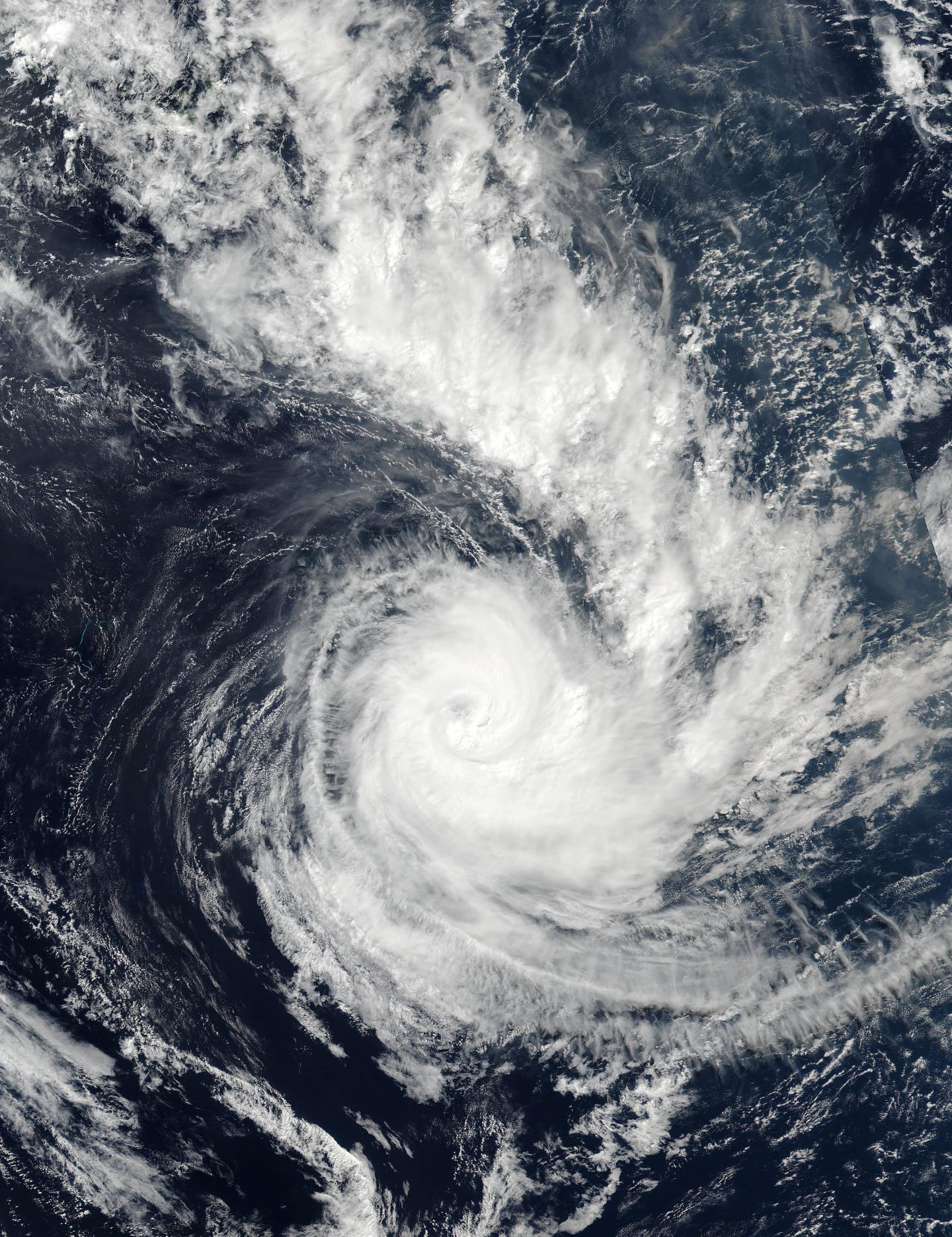
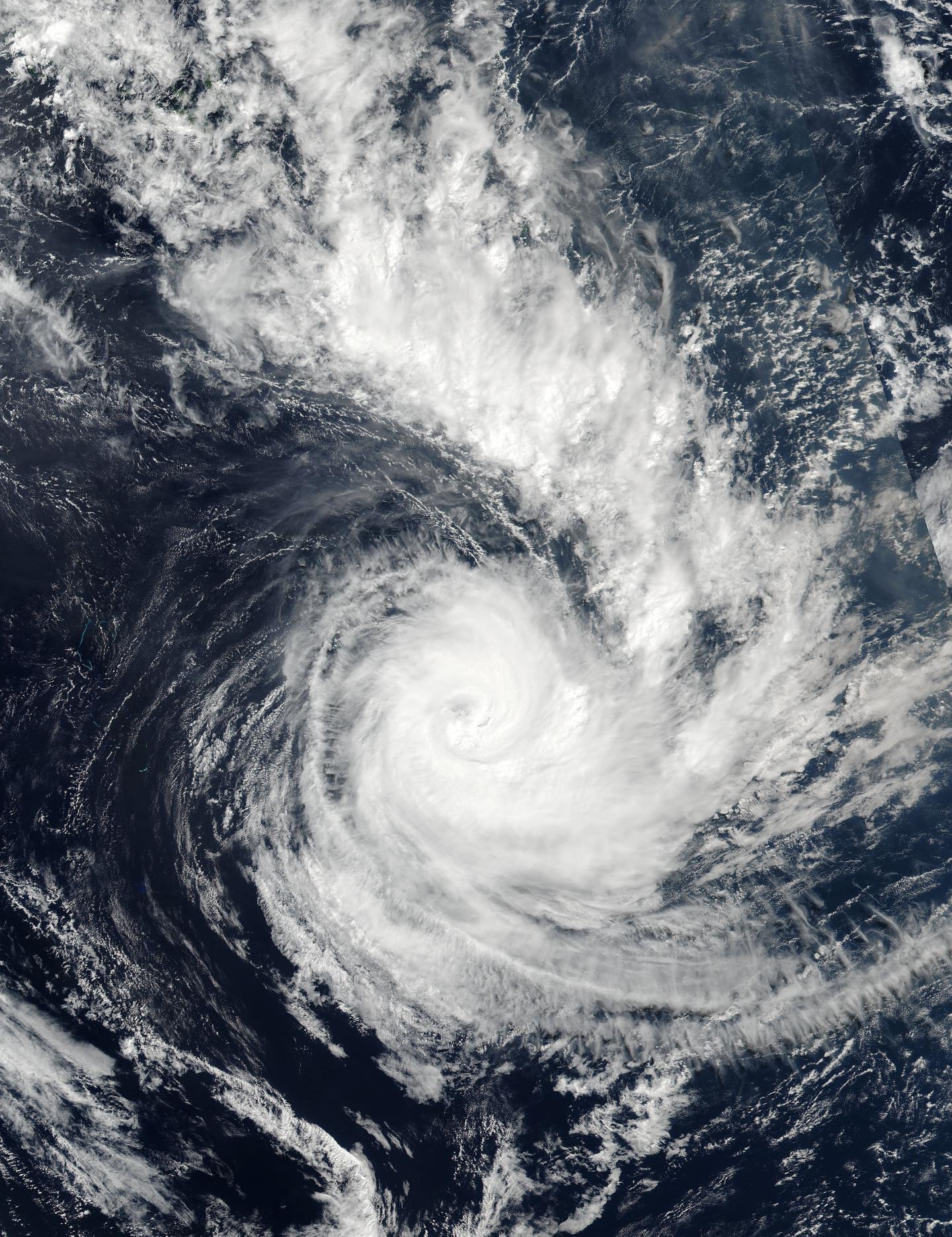
Tropical Cyclone Cook formed in the Southern Pacific Ocean and on Sunday, April 9, 2017 and moved across the island of New Caledonia in the South Pacific Ocean on early on April 10. NASA-NOAA's Suomi NPP Satellite passed over Cook as it was making landfall.

The Visible Infrared Imaging Radiometer Suite (VIIRS) instrument aboard NASA-NOAA's Suomi NPP satellite provided a visible image of Cook on April 10 at 0254 UTC (April 9 at 10:54 p.m. EST). That was about one hour before the storm's center made landfall in central New Caledonia. The image showed a cloud-filled eye surrounded by powerful thunderstorms. A large band of thunderstorms feeding into the center blanketed the islands of Vanuatu.

On April 11 at 1500 UTC (11 a.m. EST) Tropical Cyclone Cook has maximum sustained winds near 70 knots (80.5 mph/129.6 kph) making it a Category 1 hurricane on the Saffir-Simpson Hurricane wind scale. It was located just 47 nautical miles south-southwest of Noumea, New Caledonia near 23.3 degrees south latitude and 166.0 degrees east longitude. It was moving to the south at 12 knots (13.8 mph/22.2 kph).

The Joint Typhoon Warning Center or JTWC noted that animated enhanced infrared satellite imagery showed that there was a decrease in central convection and warming cloud tops over the system since it made landfall over New Caledonia around 0400 UTC (12 a.m. EST).Microwave imagery still showed that bands of thunderstorms were still wrapping into a defined center of circulation.

At 11 a.m. EST (1500 UTC) on April 10, Meteo France in New Caledonia noted that Cyclonic Alert number 2 remained in effect on April 10 for the municipalities of Thio, Bourail, La Foa, Sarraméa, Moindou and Farino, the province of the islands, the Northern Province (with the exception of the communes of Bélep and Maré which remain on cyclonic level 1 alert) . Alert # 1 was also still in effect on the rest of New Caledonia.

JTWC noted that "environmental conditions are no longer supportive of development with vertical wind shear increasing to 20 knots (23 mph/27 kph) and sea surface temperatures decreasing to 27 degrees Celsius (80.6 degrees Fahrenheit)," so it is forecast to weaken over the next two days.

###

Media Contact

Rob Gutro
[email protected]
@NASAGoddard

http://www.nasa.gov/goddard

############

Story Source: Materials provided by Scienmag

Share12Tweet8Share2ShareShareShare2

Related Posts

Ferroptosis Drives FDXR Disease via NRF2 Disruption

December 23, 2025

Neutrophil-Keratinocyte IL-36 Network Drives Psoriasis Inflammation

December 23, 2025

Selenium Intake Linked to Lower Remnant Cholesterol in Women

December 23, 2025

Patient-Centered Innovations in Thermostable Vaccine Formulations

December 23, 2025
Please login to join discussion

POPULAR NEWS

  • Nurses’ Views on Online Learning: Effects on Performance

    Nurses’ Views on Online Learning: Effects on Performance

    70 shares
    Share 28 Tweet 18
  • NSF funds machine-learning research at UNO and UNL to study energy requirements of walking in older adults

    71 shares
    Share 28 Tweet 18
  • Unraveling Levofloxacin’s Impact on Brain Function

    54 shares
    Share 22 Tweet 14
  • Exploring Audiology Accessibility in Johannesburg, South Africa

    51 shares
    Share 20 Tweet 13

About

We bring you the latest biotechnology news from best research centers and universities around the world. Check our website.

Follow us

Recent News

Ferroptosis Drives FDXR Disease via NRF2 Disruption

Neutrophil-Keratinocyte IL-36 Network Drives Psoriasis Inflammation

Selenium Intake Linked to Lower Remnant Cholesterol in Women

Subscribe to Blog via Email

Enter your email address to subscribe to this blog and receive notifications of new posts by email.

Join 70 other subscribers
  • Contact Us

Bioengineer.org © Copyright 2023 All Rights Reserved.

Welcome Back!

Login to your account below

Forgotten Password?

Retrieve your password

Please enter your username or email address to reset your password.

Log In
No Result
View All Result
  • Homepages
    • Home Page 1
    • Home Page 2
  • News
  • National
  • Business
  • Health
  • Lifestyle
  • Science

Bioengineer.org © Copyright 2023 All Rights Reserved.