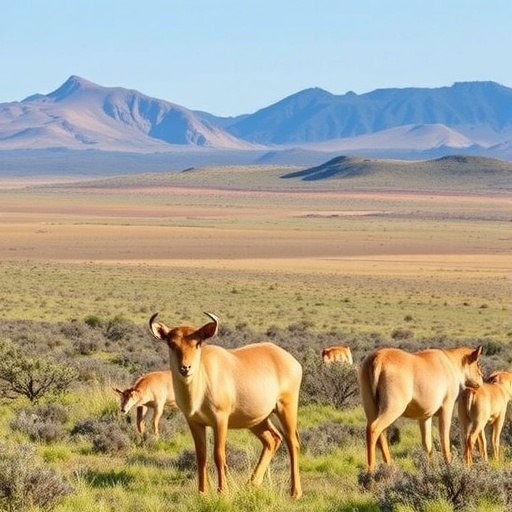
In the realm of ecological research, the push to comprehend the interactions between species and their environments has never been more critical. A recent comprehensive study spearheaded by researchers including J. Rodas-Trejo, S. López, and C. Tejeda Cruz has shed light on how landscape attributes influence medium- and large-sized terrestrial non-volant mammals. Conducted over a span of thirteen years, this systematic review collates data from numerous camera trap studies, offering valuable insights into the factors that shape mammalian habitats.
The methodology employed in this wide-ranging review draws upon a vast array of camera trap studies conducted between 2010 and 2023. Camera traps have become instrumental in wildlife research, allowing for the observation of animal behavior and movement patterns in their natural habitats without human intervention. This unobtrusive method has enabled researchers to gather extensive data on species diversity and habitat use, leading to nuanced understandings of ecosystem dynamics.
One of the central findings of the study is the significant role that habitat structure plays in determining the distribution and abundance of non-volant mammals. The researchers emphasized that attributes such as vegetation density, terrain ruggedness, and the availability of water resources are critical to providing suitable habitats for these species. Their analysis indicates that landscapes exhibiting a mixture of open areas and dense vegetation were particularly favorable for a diverse range of mammals.
Equally important is the impact of anthropogenic factors, including land use change and habitat fragmentation, on mammal populations. The authors noted that as human activities encroach upon natural landscapes, the habitats available to wildlife become increasingly altered. This transformation not only affects the availability of resources but can also disrupt migratory pathways and breeding grounds, leading to diminished populations of sensitive species.
The review also spotlights the need for conservation strategies to be grounded in scientific evidence. The researchers highlighted that most conservation efforts often overlook the intricate relationships between landscape attributes and wildlife needs. By synthesizing extensive camera trap data, this study provides a robust framework for future research and conservation planning, urging stakeholders to prioritize habitat preservation and restoration based on empirically derived insights.
Furthermore, the review discusses how species-specific responses to landscape features vary, complicating the conservation narrative. While some mammals are highly adaptable and can thrive in human-modified environments, others are more sensitive to changes and require pristine habitats to survive. This variability underscores the importance of targeted conservation efforts that take into account the unique ecological requirements of different species.
The study’s findings resonate across various conservation contexts, from urban planning to agricultural practices. By integrating ecological knowledge about landscape attributes into development strategies, it is possible to mitigate adverse effects on wildlife populations. The authors advocate for collaborative approaches that involve ecologists, urban planners, and policymakers to design landscapes that support both human needs and ecological integrity.
Moreover, the implications of this research extend into the realm of climate change. As climate patterns shift, so too does the distribution of flora and fauna. The landscape ecology described in this study could serve as a predictive tool for understanding how climate change might reshape habitats in the future. By identifying key landscape features that support biodiversity, it becomes feasible to develop proactive conservation measures that anticipate future ecological shifts.
Additionally, the systematic review serves as a reminder of the technological advancements in the field of wildlife research. The evolution of camera trap technology, including the development of enhanced motion sensors and infrared capabilities, has revolutionized the way researchers monitor wildlife. These advancements make it possible to gather high-resolution data with minimal disturbance, ensuring that the behaviors and interactions of terrestrial mammals are recorded as authentically as possible.
Through analyzing the pressures that both natural and human-induced changes exert on mammalian populations, this research champions a more holistic understanding of ecological networks. It points to the intricate interplay between species and their environments, reminding readers that the health of ecosystem functions hinges on our ability to recognize and respond to these interactions wisely.
In conclusion, this systematic review elevates the discourse on wildlife conservation by offering a synthesis of empirical evidence that underscores the importance of landscape attributes in shaping mammalian communities. The insights derived from these camera trap studies are not just academic; they have real-world applications that can inform the policies and practices essential for fostering biodiversity amidst growing environmental challenges.
As we move toward an increasingly urbanized and altered planet, the findings of this research signal a clarion call for greater integration of ecological principles into all facets of land management and conservation. The landscape attributes that support medium- and large-sized terrestrial mammals serve not only as vital resources for wildlife but also as indicators of the health of our ecosystems as a whole.
The journey of understanding the complex relationships within ecosystems continues, driven by figures like Rodas-Trejo, López, and Tejeda Cruz, whose contributions provide crucial insights into the evolving narrative of wildlife conservation. Their work underscores the urgent need for a harmonious coexistence between humans and the natural world, anchored in a deeper understanding of the ecological fabric that supports all life on Earth.
Subject of Research: Effects of landscape attributes on medium- and large terrestrial non-volant mammals.
Article Title: Effects of landscape attributes on medium- and large terrestrial non-volant mammals: a systematic review of camera trap studies (2010–2023).
Article References:
Rodas-Trejo, J., López, S., Tejeda Cruz, C. et al. Effects of landscape attributes on medium- and large terrestrial non-volant mammals: a systematic review of camera trap studies (2010–2023).
Discov Anim 2, 79 (2025). https://doi.org/10.1007/s44338-025-00090-x
Image Credits: AI Generated
DOI:
Keywords: Conservation, landscape attributes, non-volant mammals, habitat structure, ecological research, camera traps, biodiversity, human impact, climate change, ecosystem dynamics.
Tags: camera trap studies for wildlife observationecological research on wildlifeecosystem dynamics and mammalian behaviorfactors influencing mammal distributionhabitat structure and species abundanceimpact of landscape on mammalslong-term ecological studiesnon-volant mammals in natural habitatsterrain ruggedness and wildlife distributionterrestrial mammal habitat preferencesvegetation density and mammal habitatswater resources and terrestrial mammals