Credit: Tom Kleindinst
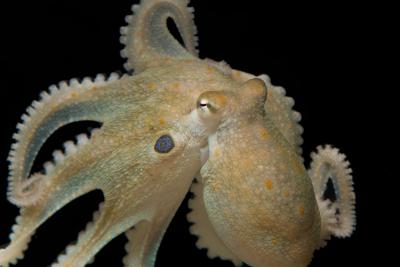
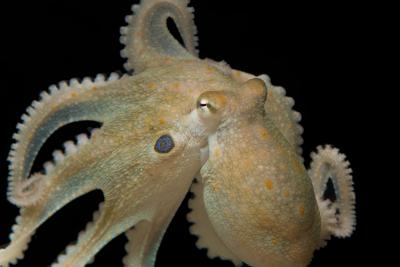
WOODS HOLE, Mass.– Octopus, squid, and cuttlefish are famous for engaging in complex behavior, from unlocking an aquarium tank and escaping to instantaneous skin camouflage to hide from predators. A new study suggests their evolutionary path to neural sophistication includes a novel mechanism: Prolific RNA editing at the expense of evolution in their genomic DNA.
The study, led by Joshua J.C. Rosenthal of the Marine Biological Laboratory (MBL), Woods Hole and Eli Eisenberg and Noa Liscovitch-Brauer of Tel Aviv University, is published this week in Cell.
The research builds on the scientists' prior discovery that squid display an extraordinarily high rate of editing in coding regions of their RNA — particularly in nervous system cells — which has the effect of diversifying the proteins that the cells can produce. (More than 60 percent of RNA transcripts in the squid brain are recoded by editing, while in humans or fruit flies, only a fraction of 1 percent of their RNAs have a recoding event.)
In the present study, the scientists found similarly high levels of RNA editing in three other "smart" cephalopod species (two octopus and one cuttlefish) and identified tens of thousands of evolutionarily conserved RNA recoding sites in this class of cephalopods, called coleoid. Editing is especially enriched in the coleoid nervous system, they found, affecting proteins that are the key players in neural excitability and neuronal morphology.
In contrast, RNA editing in the more primitive cephalopod Nautilus and in the mollusk Aplysia occurs at orders of magnitude lower levels than in the coleoids, they found. "This shows that high levels of RNA editing is not generally a molluscan thing; it's an invention of the coleoid cephalopods," Rosenthal says. In mammals, very few RNA editing sites are conserved; they are not thought to be under natural selection. "There is something fundamentally different going on in these cephalopods where many of the editing events are highly conserved and show clear signs of selection," Rosenthal says.
The scientists also discovered a striking trade-off between high levels of RNA recoding and genomic evolution in these cephalopods. The most common form of RNA editing is carried out by ADAR enzymes, which require large structures (dsRNA) flanking the editing sites. These structures, which can span hundreds of nucleotides, are conserved in the coleoid genome along with the editing sites themselves. The genetic mutation rate in these flanking regions is severely depressed, the team reported.
"The conclusion here is that in order to maintain this flexibility to edit RNA, the coleoids have had to give up the ability to evolve in the surrounding regions – a lot," Rosenthal says. "Mutation is usually thought of as the currency of natural selection, and these animals are suppressing that to maintain recoding flexibility at the RNA level."
Rosenthal and colleagues at the MBL are currently developing genetically tractable cephalopod model systems to explore the mechanisms and functional consequences of their prolific RNA editing. "When do they turn it on, and under what environmental influences? It could be something as simple as temperature changes or as complicated as experience, a form of memory," he says.
###
Citation:
Liscovitch-Brauer et al (2017) Trade-off between transcriptome plasticity and genome evolution in cephalopods. Cell DOI: 10.1016/j.cell.2017.03.025
The Marine Biological Laboratory (MBL) is dedicated to scientific discovery – exploring fundamental biology, understanding marine biodiversity and the environment, and informing the human condition through research and education. Founded in Woods Hole, Massachusetts in 1888, the MBL is a private, nonprofit institution and an affiliate of the University of Chicago.
Media Contact
Diana Kenney
[email protected]
508-289-7139
@mblscience
http://www.mbl.edu
############
Story Source: Materials provided by Scienmag