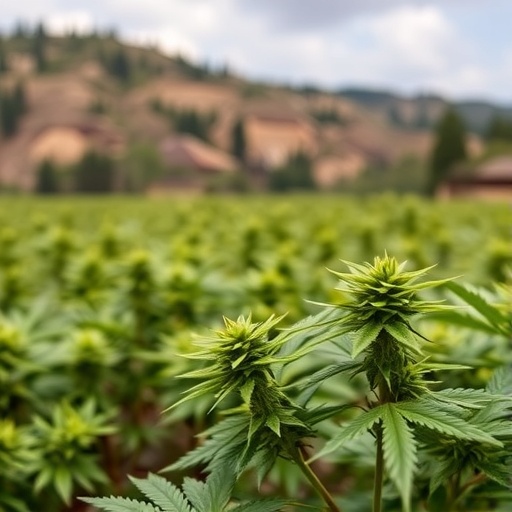
A groundbreaking peer-reviewed study recently published in Science of the Total Environment exposes a troubling, yet understudied, environmental issue stemming from the proliferation of illegal cannabis cultivation, known colloquially as “trespass grows,” on federally managed lands in California. This meticulous investigation, undertaken by scientists from the U.S. Geological Survey (USGS) in collaboration with the Integral Ecology Research Center (IERC), with the invaluable support of the U.S. Forest Service Law Enforcement and Investigations Branch, reveals how these illicit agricultural operations leave a pervasive and persistent chemical legacy long after they have been eradicated by authorities.
The study dives deep into the environmental ramifications of abandoned cannabis cultivation sites hidden within the lush expanses of Six Rivers, Shasta-Trinity, and San Bernardino National Forests. Despite the law enforcement interventions that dismantle these illegal enterprises, chemical contaminants employed during cultivation—intended to protect plants and maximize yields—linger in the surrounding ecosystem for months and sometimes even years. This alarming persistence of toxic residues represents a newly illuminated vector of ecological harm threatening forest health, wildlife populations, and water quality in these already vulnerable federal lands.
One of the most striking findings is the detection of widely used pesticides such as imidacloprid, malathion, and myclobutanil embedded in the topsoil. Each of these chemicals plays a critical role in pest management from an agricultural perspective but carries significant ecological risks. Imidacloprid, a neonicotinoid insecticide, is known for its neurotoxic effects on pollinators and other beneficial insects, while malathion is an organophosphate insecticide with documented toxicity to aquatic life. Myclobutanil, a fungicide, also poses potential harm to both terrestrial and aquatic organisms. Their persistent presence at elevated concentrations, long after cultivation efforts have ceased, suggests a chronic contamination problem that cannot be ignored.
Beyond pesticides, the study brings to light the presence of cannabis-related compounds themselves, notably tetrahydrocannabinol (THC) and cannabidiol (CBD), within soils, stream waters, and sediment deposits. These findings illuminate the complex biochemical footprint left by illicit grows, raising critical questions about the fate and transport of cannabinoids in the environment. The accumulation of these compounds in the natural surroundings not only signals contamination but also suggests potential sub-lethal impacts on aquatic and terrestrial organisms unfamiliar with these novel chemical inputs.
Further complicating the environmental matrix, the research unveils residues of plasticizers, pharmaceuticals, and personal care products tied to the intense irrigation regimes and rudimentary living quarters established by trespass cultivators. The widespread use of plastic mulch, irrigation tubing, and personal hygiene products like sunscreen and soap introduces additional organic pollutants into ecosystems that are ill-equipped to assimilate such anthropogenic stressors. The intricate interplay between these diverse chemical inputs underscores the multifaceted nature of ecological disruption caused by illegal cultivation operations.
The scale of this contamination is daunting. Thousands of trespass grow sites pepper California’s national forestlands, each potentially contributing to regional cumulative effects. The infiltration of these chemicals into soil and water resources jeopardizes critical habitats, threatens drinking water safety, and challenges the viability of fisheries and wildlife populations—including threatened and endangered species that rely on these pristine environments for survival. By evidencing this chemical legacy, the study elevates an urgent concern that transcends illegal cultivation and enters the broader context of public land stewardship and conservation.
The research effort itself exemplifies a successful model of scientific collaboration across governmental and nonprofit sectors. USGS researchers, through rigorous observational methods, partnered closely with the Integral Ecology Research Center—a conservation organization deeply rooted in local ecological advocacy—and leveraged the on-the-ground investigative capabilities of the U.S. Forest Service’s Law Enforcement and Investigations Branch. This multidisciplinary approach ensured accurate site identification, representative sampling, and robust analysis, providing unparalleled insight into an environmental issue fraught with access challenges and data scarcity.
Lead author Gabrielle Black articulated the significance of this research, emphasizing that documenting the enduring presence of these contaminants is a critical first step toward assessing the long-term ecological risks posed by illegal cultivation sites. Such baseline data are indispensable to inform remediation priorities, guide policy development, and design effective interventions that can mitigate ongoing environmental harm.
While illegal cannabis cultivation is often discussed in terms of social justice, law enforcement, and economic impact, its shadow on ecological integrity is now unmistakably clear. Trespass grows degrade fragile ecosystems through deforestation, soil destabilization, and water diversion. The chemical footprint documented by this study adds yet another layer of complexity, revealing that the environmental consequences persist well beyond the physical dismantling of cultivation infrastructure.
The findings also underscore a pressing need for comprehensive remediation protocols tailored to mitigate chemical contamination. Conventional cleanup efforts may inadequately address the embedded pesticides, pharmaceuticals, and cannabinoids that resist rapid degradation in forest soils and aquatic systems. Innovative approaches integrating bioremediation, soil amendment, and long-term monitoring will likely be required to restore ecological function and safeguard public health in affected areas.
Importantly, the study’s revelations will influence policy frameworks governing the management of public lands in California and potentially other states grappling with illegal cultivation. By quantifying the extent and persistence of organic contaminants, regulatory agencies can prioritize interventions, allocate resources more effectively, and collaborate with community stakeholders to protect natural heritage and water resources.
Mourad Gabriel, Co-Director of the Integral Ecology Research Center, eloquently summarized the broader imperative: addressing the legacy of trespass grows is vital to preserving public lands not just for current recreational or resource use but for the wildlife, plants, and future generations who depend on these ecosystems. The chemical traces unearthed by this research remind us that environmental damage is often invisible, cumulative, and enduring, demanding vigilant stewardship and innovative scientific inquiry.
As the legal cannabis market evolves, understanding the environmental aftermath of illegitimate operations is paramount. This study marks a pivotal advancement in environmental science, transforming anecdotal concerns into concrete data that will drive future action to reclaim and rehabilitate federal lands from the silent, toxic residues of illegal cannabis cultivation.
Subject of Research: Not applicable
Article Title: Identifying organic contaminants at trespass cannabis grows on federal land in California, USA
News Publication Date: 25-Sep-2025
Web References: 10.1016/j.scitotenv.2025.180576
Image Credits: Integral Ecology Research Center
Keywords: Environmental sciences, Molecular biology, Environmental methods
Tags: California cannabis cultivationcannabis cultivation regulation challengeschemical residues in public landsecological harm from illegal farmingenvironmental impact of trespass growsfederal lands protectionforest health and wildlife safetyillegal cannabis cultivationpersistent chemical contaminantspesticides in national forestsU.S. Geological Survey studywater quality contamination