• HOME
  • NEWS
  • EXPLORE
    • CAREER
      • Companies
      • Jobs
    • EVENTS
    • iGEM
      • News
      • Team
    • PHOTOS
    • VIDEO
    • WIKI
  • BLOG
  • COMMUNITY
    • FACEBOOK
    • INSTAGRAM
    • TWITTER
Wednesday, September 9, 2026
BIOENGINEER.ORG
No Result
View All Result
  • Login
  • HOME
  • NEWS
  • EXPLORE
    • CAREER
      • Companies
      • Jobs
        • Lecturer
        • PhD Studentship
        • Postdoc
        • Research Assistant
    • EVENTS
    • iGEM
      • News
      • Team
    • PHOTOS
    • VIDEO
    • WIKI
  • BLOG
  • COMMUNITY
    • FACEBOOK
    • INSTAGRAM
    • TWITTER
  • HOME
  • NEWS
  • EXPLORE
    • CAREER
      • Companies
      • Jobs
        • Lecturer
        • PhD Studentship
        • Postdoc
        • Research Assistant
    • EVENTS
    • iGEM
      • News
      • Team
    • PHOTOS
    • VIDEO
    • WIKI
  • BLOG
  • COMMUNITY
    • FACEBOOK
    • INSTAGRAM
    • TWITTER
No Result
View All Result
Bioengineer.org
No Result
View All Result
Home NEWS Science News

Linguistic and cultural knowledge affect whether languages are identified correctly

Bioengineer by Bioengineer
April 5, 2017
in Science News
Reading Time: 2 mins read
0
Share on FacebookShare on TwitterShare on LinkedinShare on RedditShare on Telegram
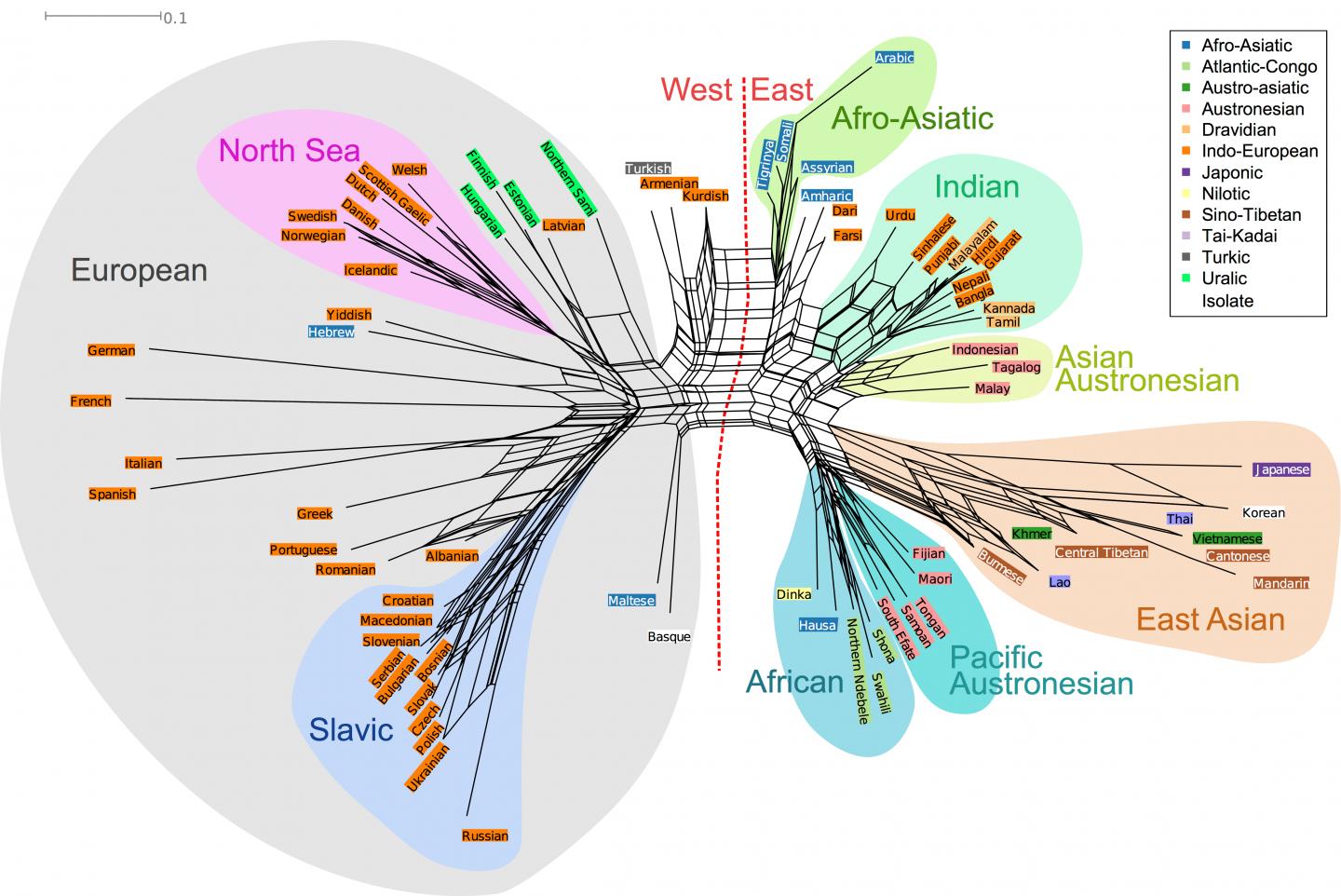
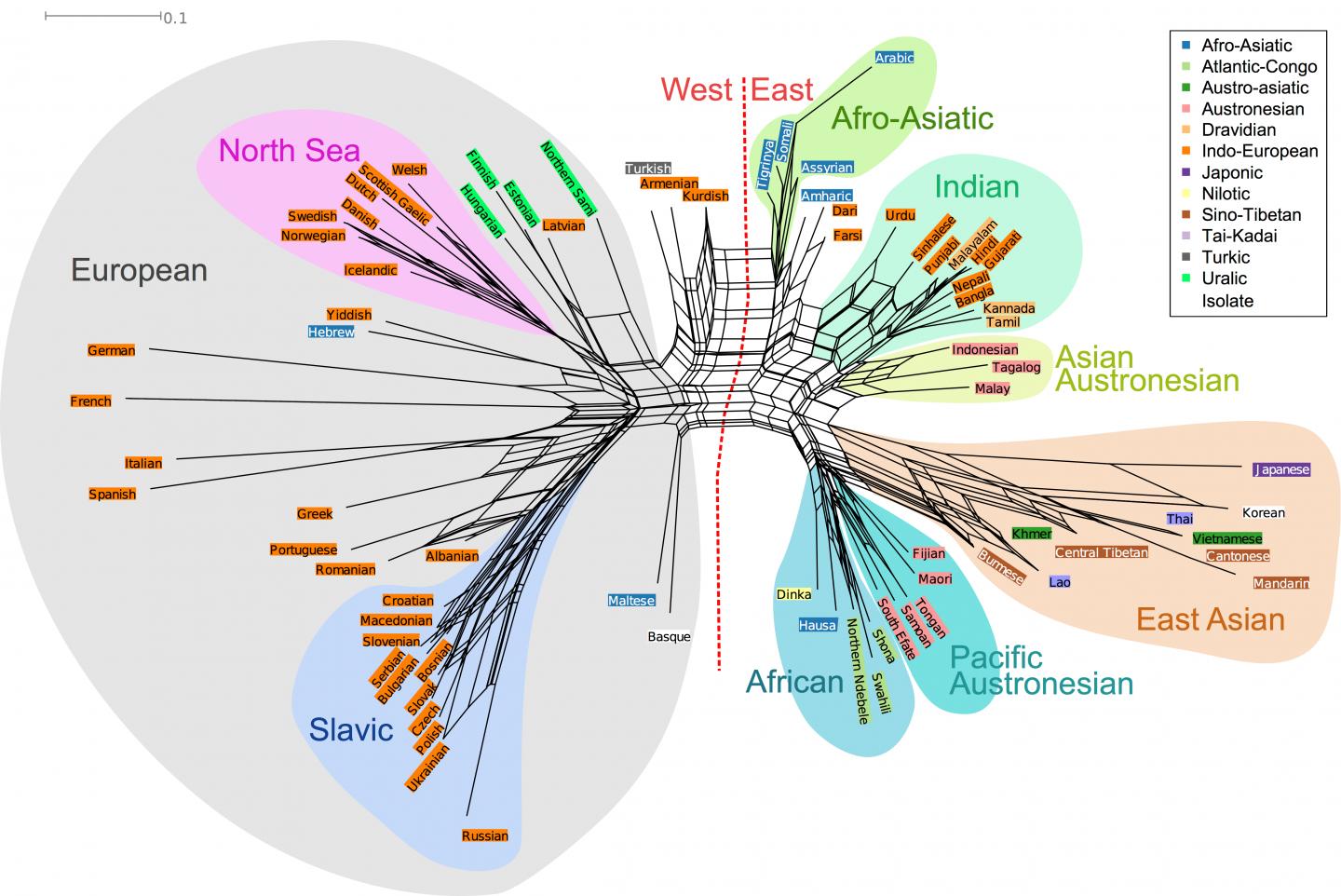
IMAGE

Credit: Skirgård et al (2017)

A popular online game shows how linguistic and cultural knowledge may affect whether players can correctly identify different languages, according to a study published April 5, 2017 in the open-access journal PLOS ONE by Hedvig Skirgård from the Australian National University, Australia and colleagues.

The Great Language Game is a large-scale online game where players listen to an audio speech sample and guess which language that they think they're hearing, selecting from two or more options. Skirgård and colleagues analyzed the data from this game – data from nearly one million participants – to determine which languages were often confused for others, and whether they could find any patterns that would help predict confusion or accuracy when identifying a language.

The researchers found that participants were better able to distinguish between languages that were geographically further apart and had different associated sounds. The researchers also found that cultural factors influenced whether a language was identified correctly. If the language was the official language in more countries, had a name associated with its geographical location, and was spoken by many people, then it would be more likely to be identified correctly.

While the current game only contains 78 languages, and mostly from European countries, it does provide insight into why some languages might be confused for others. In their future research, Skirgård and colleagues hope to expand their analysis to lesser-known languages.

###

In your coverage please use this URL to provide access to the freely available article in PLOS ONE: http://journals.plos.org/plosone/article?id=10.1371/journal.pone.0165934

Citation: Skirgård H, Roberts SG, Yencken L (2017) Why are some languages confused for others? Investigating data from the Great Language Game. PLoS ONE 12(4): e0165934. doi:10.1371/journal.pone.0165934

Funding: SGR is supported by the Max Planck society and an ERC Advanced Grant No. 269484 INTERACT to Stephen Levinson. The funders had no role in study design, data collection and analysis, decision to publish, or preparation of the manuscript.

Competing Interests: The authors have declared that no competing interests exist.

Media Contact

Tessa Gregory
[email protected]

Home

############

Story Source: Materials provided by Scienmag

Share12Tweet8Share2ShareShareShare2

Related Posts

Flower disguises itself as figs to trick pollinating wasps

Flower disguises itself as figs to trick pollinating wasps

September 9, 2026

AI predicts prolonged air leak after lung surgery in elderly patients

September 9, 2026

Open-source software tracks wrist bone motion in 3D and 4D CT scans

September 9, 2026

Locking-enabled multimodal soliton microcombs achieve day-scale stability for precision metrology

September 9, 2026
Please login to join discussion

POPULAR NEWS

  • Flower disguises itself as figs to trick pollinating wasps

    29 shares
    Share 12 Tweet 7
  • AI predicts prolonged air leak after lung surgery in elderly patients

    29 shares
    Share 12 Tweet 7
  • Open-source software tracks wrist bone motion in 3D and 4D CT scans

    29 shares
    Share 12 Tweet 7
  • Locking-enabled multimodal soliton microcombs achieve day-scale stability for precision metrology

    29 shares
    Share 12 Tweet 7

About

We bring you the latest biotechnology news from best research centers and universities around the world. Check our website.

Follow us

Recent News

Flower disguises itself as figs to trick pollinating wasps

AI predicts prolonged air leak after lung surgery in elderly patients

Open-source software tracks wrist bone motion in 3D and 4D CT scans

Subscribe to Blog via Email

Enter your email address to subscribe to this blog and receive notifications of new posts by email.

Join 85 other subscribers
  • Contact Us

Bioengineer.org © Copyright 2023 All Rights Reserved.

Welcome Back!

Login to your account below

Forgotten Password?

Retrieve your password

Please enter your username or email address to reset your password.

Log In
No Result
View All Result
  • Homepages
    • Home Page 1
    • Home Page 2
  • News
  • National
  • Business
  • Health
  • Lifestyle
  • Science

Bioengineer.org © Copyright 2023 All Rights Reserved.