• HOME
  • NEWS
  • EXPLORE
    • CAREER
      • Companies
      • Jobs
    • EVENTS
    • iGEM
      • News
      • Team
    • PHOTOS
    • VIDEO
    • WIKI
  • BLOG
  • COMMUNITY
    • FACEBOOK
    • INSTAGRAM
    • TWITTER
Monday, December 22, 2025
BIOENGINEER.ORG
No Result
View All Result
  • Login
  • HOME
  • NEWS
  • EXPLORE
    • CAREER
      • Companies
      • Jobs
        • Lecturer
        • PhD Studentship
        • Postdoc
        • Research Assistant
    • EVENTS
    • iGEM
      • News
      • Team
    • PHOTOS
    • VIDEO
    • WIKI
  • BLOG
  • COMMUNITY
    • FACEBOOK
    • INSTAGRAM
    • TWITTER
  • HOME
  • NEWS
  • EXPLORE
    • CAREER
      • Companies
      • Jobs
        • Lecturer
        • PhD Studentship
        • Postdoc
        • Research Assistant
    • EVENTS
    • iGEM
      • News
      • Team
    • PHOTOS
    • VIDEO
    • WIKI
  • BLOG
  • COMMUNITY
    • FACEBOOK
    • INSTAGRAM
    • TWITTER
No Result
View All Result
Bioengineer.org
No Result
View All Result
Home NEWS Science News

So sheep may safely graze

Bioengineer by Bioengineer
April 4, 2017
in Science News
Reading Time: 2 mins read
0
Share on FacebookShare on TwitterShare on LinkedinShare on RedditShare on Telegram
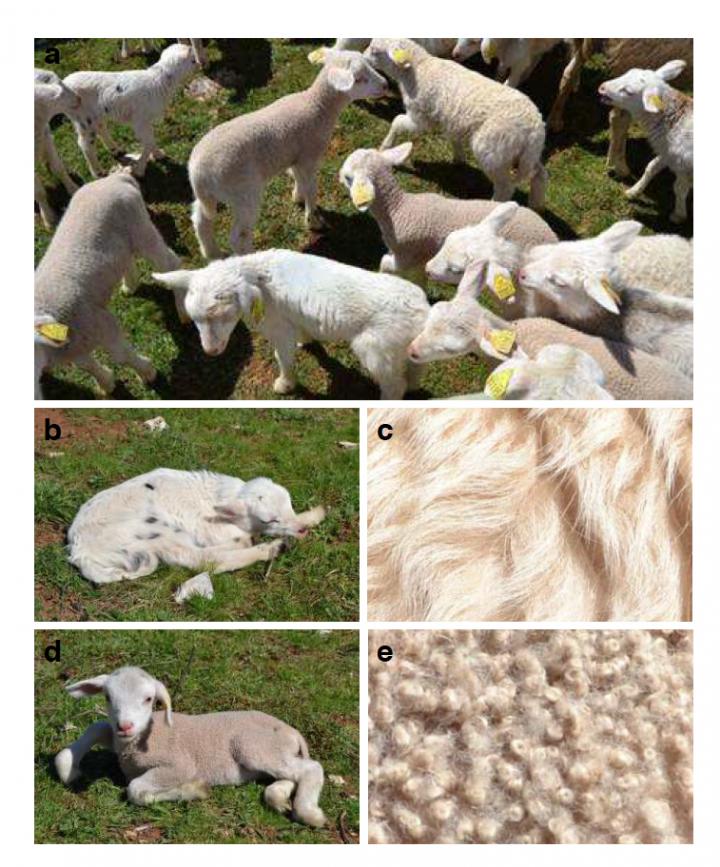
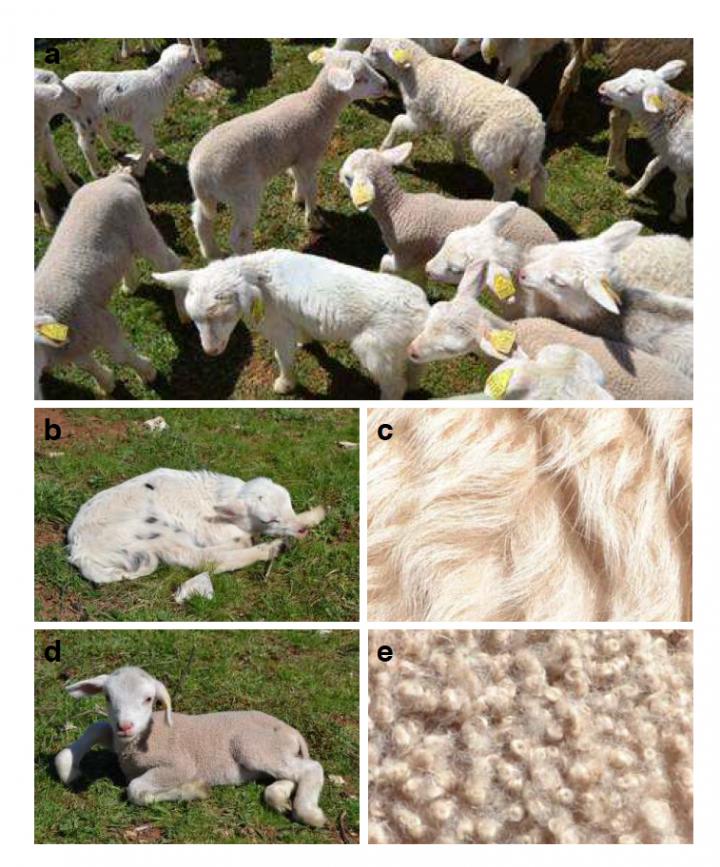
IMAGE

Credit: Julie Demars

In 1713, Johann Sebastian Bach once wrote a delightful cantata, "Sheep May Safely Graze," whose opening lyric boasts of shepherds protecting sheep from the ravages of the hunt.

Fast forward a few centuries, where now, from a large genome study, a team of French and Argentinian scientists may have successfully identified the mutations behind the sheep traits that shepherds began saving from the hunt —for their prized wool.

Corresponding author Julie Demars and her colleagues, from the National Institute of Agronomic Research in France and a researcher from the Instituto de Genetica in Argentina were interested in identifying traits from animals being selected after domestication, and choose sheep, whose breeds are as numerous as dogs.

"Nowadays, fleece variation is actively segregating in the French Romane breed which is a composite breed between the Berrichon du Cher and Romanov," said Demars. "Due to its parental origins, this breed shows large variability in its fleece type. At birth, a highly variable coat type from a short, woolly fleece (typical to Berrichon du Cher and domestic sheep) up to a hairy, long coat (characteristic of Romanov and primitive sheep) is observed in Romane lambs."

A few years ago, researcher Daniel Allain and others showed that the birthcoat type was a very highly heritable trait within this breed.

"Here, we used the Romane breed to map, identify and functionally validated the mutation responsible of fleece variation and various sheep populations representative of both ancestral species and modern sheep breeds to genetically confirm this singular causal mutation," said Demars.

To find their needle in the haystack, their genomic study involved a total of two-thousand lambs produced from 10 unrelated rams, with a little more than half 57 percent) of the lambs presented a hairy and long coat similar to the rustic Romanov breed and the rest comparable to Berrichon du Cher individuals with a short and woolly fleece.

From their genome-wide map and whole genome DNA sequencing, they hypothesize that the identified mutation may have been caused by an ancient, dead gene (called a retrogene, because it can no longer make a functional protein) that jumped nearby a gene loci, called IRF2B2. They performed additional analysis of the IRF2B2 region and speculate on the unique molecular mechanisms for how the mutation may have occurred.

"We believe that these new genes provide intriguing general insights into molecular basis of hair folliculogenesis and might open up new fields of research."

###

The results appear in the advanced online edition of Molecular Biology and Evolution DOI: 10.1093/molbev/msx114).

Media Contact

Joseph Caspermeyer
[email protected]
480-258-8972
@OfficialSMBE

http://mbe.oxfordjournals.org/

############

Story Source: Materials provided by Scienmag

Share12Tweet8Share2ShareShareShare2

Related Posts

Genetic Mapping Reveals Homer1’s Role in Attention Development

December 22, 2025

T-cell Secondary Malignancies Post CAR T-Therapy Evaluated

December 22, 2025

Robotic Hydrogel Fabrication Accelerates Drug Testing

December 22, 2025

Dyslipidemia in Women: A Study from Ethiopia

December 22, 2025
Please login to join discussion

POPULAR NEWS

  • Nurses’ Views on Online Learning: Effects on Performance

    Nurses’ Views on Online Learning: Effects on Performance

    70 shares
    Share 28 Tweet 18
  • NSF funds machine-learning research at UNO and UNL to study energy requirements of walking in older adults

    71 shares
    Share 28 Tweet 18
  • Unraveling Levofloxacin’s Impact on Brain Function

    54 shares
    Share 22 Tweet 14
  • Exploring Audiology Accessibility in Johannesburg, South Africa

    51 shares
    Share 20 Tweet 13

About

We bring you the latest biotechnology news from best research centers and universities around the world. Check our website.

Follow us

Recent News

Genetic Mapping Reveals Homer1’s Role in Attention Development

T-cell Secondary Malignancies Post CAR T-Therapy Evaluated

Robotic Hydrogel Fabrication Accelerates Drug Testing

Subscribe to Blog via Email

Enter your email address to subscribe to this blog and receive notifications of new posts by email.

Join 70 other subscribers
  • Contact Us

Bioengineer.org © Copyright 2023 All Rights Reserved.

Welcome Back!

Login to your account below

Forgotten Password?

Retrieve your password

Please enter your username or email address to reset your password.

Log In
No Result
View All Result
  • Homepages
    • Home Page 1
    • Home Page 2
  • News
  • National
  • Business
  • Health
  • Lifestyle
  • Science

Bioengineer.org © Copyright 2023 All Rights Reserved.