• HOME
  • NEWS
  • EXPLORE
    • CAREER
      • Companies
      • Jobs
    • EVENTS
    • iGEM
      • News
      • Team
    • PHOTOS
    • VIDEO
    • WIKI
  • BLOG
  • COMMUNITY
    • FACEBOOK
    • INSTAGRAM
    • TWITTER
Monday, April 13, 2026
BIOENGINEER.ORG
No Result
View All Result
  • Login
  • HOME
  • NEWS
  • EXPLORE
    • CAREER
      • Companies
      • Jobs
        • Lecturer
        • PhD Studentship
        • Postdoc
        • Research Assistant
    • EVENTS
    • iGEM
      • News
      • Team
    • PHOTOS
    • VIDEO
    • WIKI
  • BLOG
  • COMMUNITY
    • FACEBOOK
    • INSTAGRAM
    • TWITTER
  • HOME
  • NEWS
  • EXPLORE
    • CAREER
      • Companies
      • Jobs
        • Lecturer
        • PhD Studentship
        • Postdoc
        • Research Assistant
    • EVENTS
    • iGEM
      • News
      • Team
    • PHOTOS
    • VIDEO
    • WIKI
  • BLOG
  • COMMUNITY
    • FACEBOOK
    • INSTAGRAM
    • TWITTER
No Result
View All Result
Bioengineer.org
No Result
View All Result
Home NEWS Science News

New research could help speed up the 3-D printing process

Bioengineer by Bioengineer
April 4, 2017
in Science News
Reading Time: 2 mins read
0
Share on FacebookShare on TwitterShare on LinkedinShare on RedditShare on Telegram
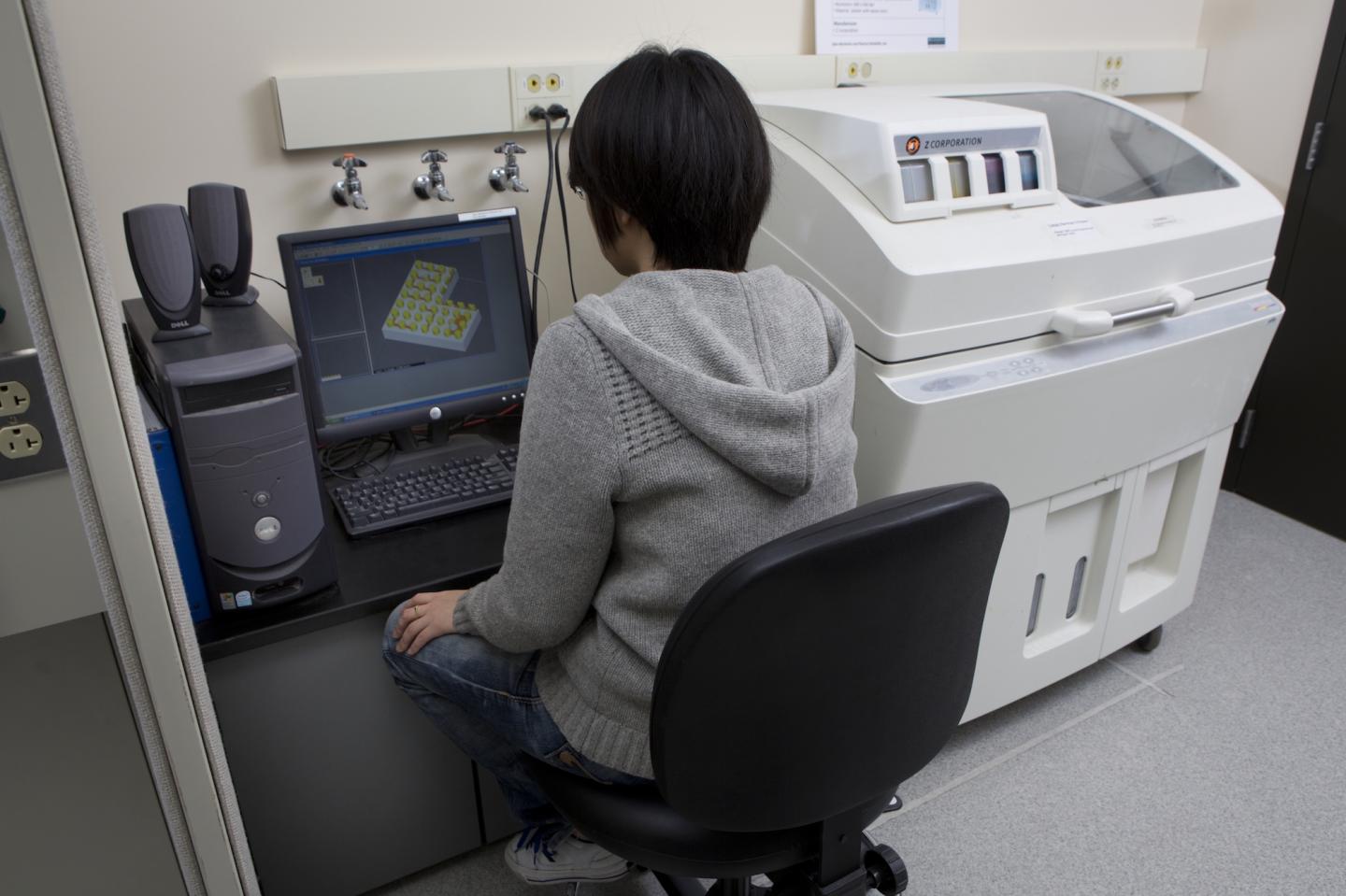
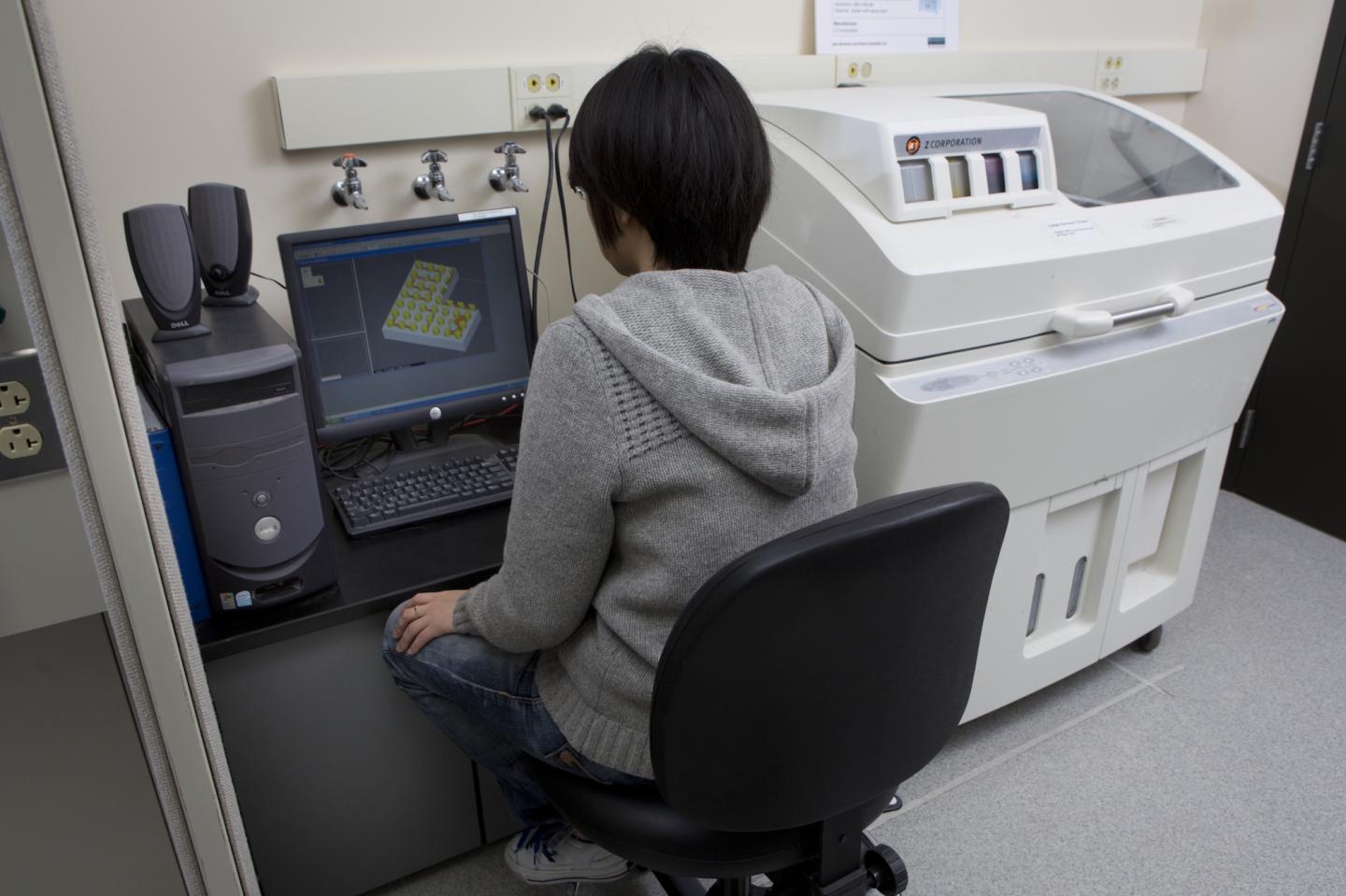
IMAGE

Credit: Binghamton University

BINGHAMTON, NY – A team of researchers from Binghamton University, State University of New York and MIT have identified some bottlenecks in 3D printers, that, if improved, could speed up the entire process.

A research team led by Professor John Hart from the Department of Mechanical Engineering and Laboratory for Manufacturing and Productivity at the Massachusetts Institute of Technology, and including Binghamton Assistant Professor of Mechanical Engineering Scott Schiffres, found that many conventional desktop and professional AM systems build objects at about 10-20 cubic centimeters per hour when printing at a 0.2 millimeter thickness. One limitation of the system is a pinch-wheel mechanism used to feed building material. That wheel is limited in the force it can use (about 60 newtons) and the feed rate (about nine millimeters per second) in order to fully melt building material.

"We found that the rate at which a polymer melts is limiting in many implementations," said Schiffres. "The pressure required to push the polymer through the nozzle is a sharp function of temperature. If the core is not hot enough, the printer will not be able to squeeze the polymer through the nozzle."

"The work has implications for how to scale up additive manufacturing and the trade-off between higher-resolution printing and speed. We hope it will inspire future work to investigate pre-heating of the polymer, and printing with multiple extruders," added Schiffres.

The work was supported by a grant from the Lockheed Martin Corporation, while the Department of Defense, the MIT International Design Centre (IDC) and MIT MakerWorks also supported the project.

MIT graduate students Jamison Go and Adam Stevens are co-authors of the paper.

The paper, titled "Rate Limits of Additive Manufacturing by Fused Filament Fabrication and Guidelines for High-Throughput System Design," is currently available online in Additive Manufacturing.

###

Media Contact

Scott Schiffres
[email protected]
607-777-4983
@binghamtonu

http://www.binghamton.edu

############

Story Source: Materials provided by Scienmag

Share12Tweet8Share2ShareShareShare2

Related Posts

Distinct Heart, Metabolic, and Inflammatory Risk Profiles Found in Men and Women with Obesity

April 12, 2026
Bio-Based Sulfonated Cyclodextrin Catalyzes 5-HMF Synthesis

Bio-Based Sulfonated Cyclodextrin Catalyzes 5-HMF Synthesis

April 12, 2026

Eco-Friendly Geopolymer Bricks Boost Thermal Comfort

April 12, 2026

Prebiotic Xylooligosaccharides Improve Liver Disease via Gut

April 12, 2026
Please login to join discussion

POPULAR NEWS

  • Scientists Investigate Possible Connection Between COVID-19 and Increased Lung Cancer Risk

    58 shares
    Share 23 Tweet 15
  • Boosting Breast Cancer Risk Prediction with Genetics

    47 shares
    Share 19 Tweet 12
  • Popular Anti-Aging Compound Linked to Damage in Corpus Callosum, Study Finds

    45 shares
    Share 18 Tweet 11
  • Imagine a Social Media Feed That Challenges Your Views Instead of Reinforcing Them

    1012 shares
    Share 400 Tweet 250

About

We bring you the latest biotechnology news from best research centers and universities around the world. Check our website.

Follow us

Recent News

Distinct Heart, Metabolic, and Inflammatory Risk Profiles Found in Men and Women with Obesity

Bio-Based Sulfonated Cyclodextrin Catalyzes 5-HMF Synthesis

Eco-Friendly Geopolymer Bricks Boost Thermal Comfort

Subscribe to Blog via Email

Success! An email was just sent to confirm your subscription. Please find the email now and click 'Confirm' to start subscribing.

Join 79 other subscribers
  • Contact Us

Bioengineer.org © Copyright 2023 All Rights Reserved.

Welcome Back!

Login to your account below

Forgotten Password?

Retrieve your password

Please enter your username or email address to reset your password.

Log In
No Result
View All Result
  • Homepages
    • Home Page 1
    • Home Page 2
  • News
  • National
  • Business
  • Health
  • Lifestyle
  • Science

Bioengineer.org © Copyright 2023 All Rights Reserved.