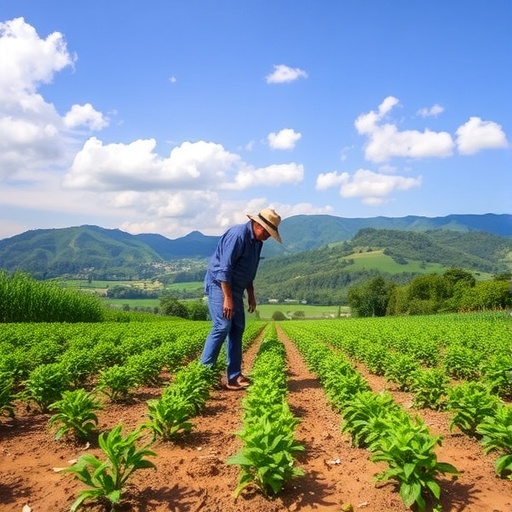
In a pivotal study conducted in the Adami Tullu Jido Kombolcha district of Ethiopia, researchers have uncovered the significant impact of adopting climate-smart agricultural practices (CSAP) on the incomes of smallholder farmers. This research comes at a crucial time when the effects of climate change are putting immense pressure on agricultural systems around the world. Climate-smart agriculture aims to enhance productivity, increase resilience to climate change, and reduce greenhouse gas emissions, making it a promising avenue for sustainable farming.
In the context of Ethiopia, where agriculture is the backbone of the economy, the need for innovative farming techniques that address climate challenges is more pressing than ever. Despite the importance of this sector, smallholder farmers often struggle to increase their income due to various limitations including climate variability, market access, and resource constraints. The introduction of CSAP seeks not only to mitigate these challenges but also to propel farmers towards a more sustainable future.
The findings of the study underscore that CSAP can significantly boost farmers’ productivity and, consequently, their income levels. Researchers engaged with farmers in the district to understand their experiences and the economic outcomes of implementing climate-smart techniques. The evidence gathered indicates that farmers who adopted these practices reported an impressive increase in their annual income. This can be attributed to a combination of improved crop yields, diversified farming systems, and better management of resources.
Moreover, the study highlighted several specific CSAP techniques that have shown tangible benefits. For instance, practices such as intercropping, agroforestry, and the use of drought-resistant crop varieties have not only increased agricultural output but have also enhanced soil fertility. As smallholder farmers in the area adapted to these methods, many noted a reduced dependency on chemical fertilizers and pesticides, further reducing their farming costs.
The significance of CSAP extends beyond immediate financial gains. The long-term environmental sustainability associated with these practices is equally vital. Farmers have reported improvements in local biodiversity and soil health, resulting in a more resilient agricultural landscape. Climate-smart farming encourages practices that conserve water and soil, making farmers better equipped to handle climate-induced stresses such as droughts and floods, which have become increasingly common.
Educating farmers about these practices is critical for successful implementation. Training programs and workshops have been essential in disseminating knowledge about climate-smart techniques. Farmers have been introduced to the scientific rationale behind these practices, which has helped to foster a deeper understanding of the benefits. This educational outreach is crucial—not only does it empower farmers to make informed decisions, but it also encourages community involvement and collaboration around sustainable agricultural goals.
The increased income from CSAP adoption has led to improvements in the overall quality of life for participating farmers. Enhanced financial stability allows families to invest in education, health care, and other essentials that contribute to their well-being. The ripple effects are profound; as farm incomes rise, entire communities can experience economic upliftment, leading to broader social improvements.
Despite the promising outcomes, there remain challenges to widespread adoption. The initial investment required for implementing climate-smart agricultural practices can be a barrier for some smallholders. Access to financing and resources continues to be a significant hurdle that needs to be addressed. Partnerships with local governments, NGOs, and the private sector could play a critical role in overcoming these obstacles by facilitating access to credit and providing necessary training.
Government policies also have a role to play in creating an enabling environment for the adoption of CSAP. Supportive policies that encourage sustainable agricultural practices can catalyze change and drive the broader adoption of these techniques among smallholder farmers. This support can take many forms, including subsidies for climate-smart technologies, investment in infrastructure, and research into best practices tailored to the local context.
Collaboration among stakeholders is essential for scaling up the adoption of climate-smart practices. Engaging farmers, researchers, private sector actors, and policymakers in a cohesive strategy can lead to sustained improvements in agricultural productivity and income. By forging these collaborations, the benefits of CSAP can be amplified, leading to greater food security and resilience against climate change in rural communities.
To assess the persistent impact of CSAP, ongoing monitoring and evaluation will be critical. Establishing metrics to evaluate progress and adapting strategies based on data-driven insights can ensure that the positive effects continue over the long term. Sustainability in agriculture should not only be seen through an economic lens but should also consider social and environmental dimensions to foster truly resilient farming systems.
The adoption of climate-smart agricultural practices is not just an isolated initiative but part of a broader global movement towards sustainable development. As such, the insights gained from the Ethiopian context can have implications for similar agricultural landscapes worldwide. The lessons learned from this research could inform strategies in other regions grappling with climate-induced agricultural challenges, ultimately reinforcing a collective effort towards sustainable food systems.
In conclusion, the findings of the study underscore the transformative potential of climate-smart agricultural practices in enhancing the livelihoods of smallholder farmers. With continued support, education, and cooperation among various stakeholders, CSAP could serve as a cornerstone for resilience in agriculture amid the ever-evolving challenges posed by climate change. The path forward involves an unwavering commitment to innovation, sustainability, and community engagement.
This research serves as a clarion call for action and underscores the urgent need to integrate climate-smart techniques into farming practices worldwide. It invites policymakers, agricultural researchers, and communities to rally together for a common cause that holds the promise of not just improving incomes, but safeguarding our planet for future generations.
Subject of Research: Impact of adoption of climate-smart agricultural practices (CSAP) on small-holder farmers’ income
Article Title: Impact of adoption of climate-smart agricultural practices (CSAP) on small-holder farmers’ income: in Adami Tullu Jido Kombolcha district, Ethiopia
Article References:
Gacheno, D., Seyoum, C. & Lemma, T. Impact of adoption of climate-smart agricultural practices (CSAP) on small-holder farmers’ income: in Adami Tullu Jido Kombolcha district, Ethiopia. Discov Agric 3, 185 (2025). https://doi.org/10.1007/s44279-025-00334-0
Image Credits: AI Generated
DOI: 10.1007/s44279-025-00334-0
Keywords: Climate-smart agriculture, smallholder farmers, Ethiopia, agricultural practices, sustainability, income enhancement, climate change resilience, agricultural productivity, community collaboration.
Tags: Adami Tullu Jido Kombolcha district studyagricultural sustainability in Ethiopiaboosting productivity in agriculturechallenges for smallholder farmersclimate change resilience in farmingclimate-smart agriculture practiceseconomic outcomes of climate-smart practicesEthiopia agricultural innovationmitigating climate variability effectsresource constraints in farmingsmallholder farmers income improvementsustainable farming techniques