The global challenge of waste management continues to escalate as urbanization and industrial activities generate an increasing volume of organic waste. A groundbreaking study has emerged, revealing the transformative potential of vermicomposting in converting organic waste into a nutrient-rich substrate essential for sustainable seedling production. This new avenue not only addresses the issue of waste disposal but also enhances agricultural productivity, showcasing an innovative interplay between waste management and agriculture.
Vermicomposting harnesses the power of earthworms to break down organic materials, such as food scraps and yard waste, into a valuable product known as vermicompost. The process involves the aerobic decomposition of organic matter, during which earthworms feed on the waste and excrete a nutrient-dense material teeming with beneficial microbes. The implications of this process are monumental; not only do we mitigate waste-related issues, but we also create a high-quality input for agricultural practices, thereby promoting circular economies.
In the context of seedling production, the quality of growing substrates is paramount. Traditionally, growers have relied on synthetic substrates that, while effective, often contribute to environmental harm through the depletion of natural resources. Vermicompost presents a sustainable alternative, rich in macronutrients like nitrogen, phosphorus, and potassium, along with essential micronutrients. The complexity of nutrients within vermicompost is a result of the earthworm’s digestive process, which transforms inert materials into readily absorbable forms for plants.
The conversion of organic waste through vermicomposting subtly promotes soil health, fostering a living ecosystem. Beneficial microbes found in vermicompost enhance soil structure, improve water retention, and boost the soil’s biochemical properties. These attributes are crucial not only for seedling growth but also for the overall resilience of plant systems against pests and diseases. The presence of a diverse microbial population encourages plant vitality and contributes to sustainable agricultural practices.
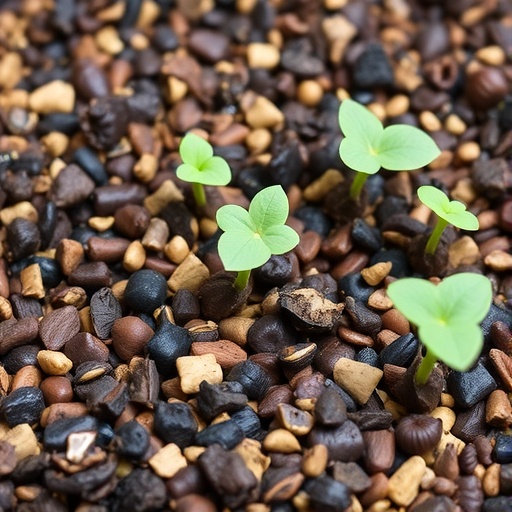
Research has demonstrated that seedlings grown in vermicompost have exhibited superior growth compared to those cultivated in conventional substrates. The enhanced availability of nutrients, coupled with improved soil aeration and drainage, serves as a catalyst for vigorous root development and healthier plant structure. This aligns with a growing body of literature advocating for organic practices in agriculture, thus paving the way for a new standard in seedling production.
Adaptations to these findings could transform nursery operations and agricultural practices worldwide. By incorporating vermicompost into seedling production, stakeholders can achieve more environmentally sustainable outcomes. The simplicity of the vermicomposting process makes it accessible to smallholder farmers and large-scale producers alike, democratizing the approach to sustainable agriculture.
As we delve further into eco-friendly alternatives, the role of technology in enhancing vermicomposting cannot be overlooked. The integration of sensors and automated systems could optimize conditions for earthworm activity and nutrient breakdown, accelerating the vermicomposting process. Such advancements would make it possible to establish larger-scale operations that can transform significant volumes of organic waste, turning potential pollutants into agricultural gold.
The implications for reducing greenhouse gas emissions are profound. Landfills are notorious for releasing methane, a potent greenhouse gas that contributes to climate change. By diverting organic waste to vermicomposting systems, we are not only decreasing landfill contributions but also sequestering carbon in the soil, thus combating climate change in another dimension. This symbiotic relationship reinforces the notion that waste management and environmental preservation are interconnected.
However, a successful transition to vermicomposting practices requires collaboration across sectors. Policymakers, agricultural innovators, and community leaders must identify and implement solutions that promote the widespread adoption of vermicomposting. Education and awareness campaigns can help demystify the process for both producers and consumers, emphasizing the significance of sustainable practices that benefit the environment and economy.
In conclusion, the findings presented in the study underscore vermicomposting as more than just a waste management solution; it is a transformative approach that aligns agricultural production with environmental stewardship. By converting organic waste into nutrient-rich substrates, we are paving the way towards sustainable agriculture that honors both the earth and the food systems it nourishes.
As we reflect on the potential of vermicomposting, it becomes imperative to share these insights within global communities. The future of agriculture lies in our hands, and embracing sustainable practices such as vermicomposting could be the key to building resilient and productive food systems. The journey begins with awareness, education, and a commitment to change—steps that will ultimately lead us toward a greener future.
The narrative around organic waste is evolving, and vermicomposting is right at its heart. As we harness this method, we weave a narrative of sustainability that can diminish waste, foster agriculture, and ultimately serve the needs of our planet. The science is clear, the potential is vast, and the time for action is now.
In summary, as we advance into a future where climate change and resource depletion dominate our concerns, embracing innovative solutions like vermicomposting could lead to a significant shift in how we manage waste and produce food. With growing acknowledgment of environmental imperatives, the study highlights the necessity not just for technological advancements but also for a cultural shift towards sustainable practices. Together, we can pave a new way forward for agriculture, ensuring food security while safeguarding our planet’s health for generations to come.
Subject of Research: Vermicomposting as a Sustainable Method for Organic Waste Transformation and Seedling Production
Article Title: Vermicompost: a pathway to transform organic waste into substrate for seedling production
Article References:
Frata, P.H.F., Cruz, V.H., Frias, Y.A. et al. Vermicompost: a pathway to transform organic waste into substrate for seedling production.
Discov Agric 3, 166 (2025). https://doi.org/10.1007/s44279-025-00326-0
Image Credits: AI Generated
DOI: 10.1007/s44279-025-00326-0
Keywords: vermicomposting, organic waste management, seedling production, sustainable agriculture, nutrient-rich substrate, soil health.
Tags: circular economy in waste managementearthworms in organic waste decompositionenhancing seedling growth with vermicompostenvironmental impact of organic wastehigh-quality vermicompost productioninnovative waste-to-resource solutionsnutrient-rich seedling substratesorganic waste managementreducing synthetic substrates in farmingsustainable agricultural practicessustainable practices in urban agriculturevermicomposting benefits for agriculture