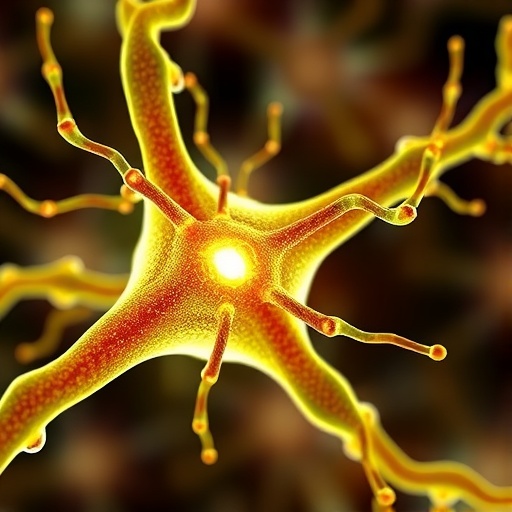
In a groundbreaking advancement that challenges long-standing assumptions in neuroscience, researchers have unveiled a molecular mechanism underpinning the remarkable ability of peripheral nerves to regenerate after injury—a capacity notably absent in the central nervous system. Published recently in the prestigious journal Cell, this study identifies specific non-coding RNAs derived from genomic repeat sequences as key players in facilitating nerve repair. These findings hold transformative potential for therapeutic strategies aimed at treating debilitating conditions such as spinal cord injuries, brain trauma, and even neurodegenerative diseases like Alzheimer’s and ALS.
Peripheral nerves are uniquely endowed with the remarkable capacity to regrow after damage, often restoring lost function and connectivity. In stark contrast, injuries to the brain or spinal cord result in permanent deficits, a phenomenon that has vexed scientists and clinicians for decades. Understanding why such divergent regenerative responses exist between these two nervous system compartments has become a central quest in neuronal repair research. The recent work led by molecular neurobiologists at the Weizmann Institute of Science, in collaboration with Estonian researchers, sheds light on this very mystery by revealing a previously unappreciated role of certain repetitive DNA elements.
The team focused on short interspersed nuclear elements (SINEs), a class of repetitive sequences that constitute more than ten percent of the human genome. Historically dismissed as “junk DNA,” SINEs have long been pegged as parasitic or functionally inert remnants of evolutionary history. Indrek Koppel, an Assistant Professor at Tallinn University of Technology and co-first author of this study, reflected on this preconception: “SINE elements were considered genomic freeloaders with minimal utility, merely replicating selfishly without benefit to the host. Our research turns this understanding on its head by demonstrating that they produce non-coding RNAs crucial for nerve regeneration.”
Using a combination of advanced molecular biology techniques and experimental nerve injury models in animals, the researchers discovered that peripheral neurons activate the transcription of SINE-derived non-coding RNAs in response to injury. These RNAs do not code for proteins but instead modulate gene expression pathways pivotal for neuronal growth and repair. Intriguingly, this upregulation was tightly correlated with the neurons’ regrowth capacity, establishing a direct link between repeat-element RNA production and functional nerve regeneration.
To probe causality, the team employed targeted molecular interventions to inhibit the production of these SINE-derived RNAs. The results were striking: blocking the RNA synthesis led to a significant decrease in axonal regrowth rates and overall nerve recovery. This definitive evidence underscored that these non-coding RNAs are not mere byproducts but active molecular drivers of repair processes in peripheral neurons.
Having illuminated this mechanism in the peripheral nervous system, the researchers then inquired whether the central nervous system might retain the latent potential for similar RNA-mediated repair. Through clever experimental activation, they artificially induced the production of repeat-element non-coding RNAs in central neurons, which traditionally have virtually no regenerative capacity. Remarkably, an enhancement of neuronal growth and regenerative markers was observed, suggesting that the CNS can be coaxed into initiating repair by harnessing this ancient genomic toolkit.
This revelation offers a paradigm shift in our understanding of the genome’s so-called “dark matter.” The vast tracts of repetitive DNA, previously overlooked as evolutionary detritus, harbor sequences that can be selectively mobilized to orchestrate complex biological responses such as neuronal regeneration. This functional repurposing of genomic repeats paints a more dynamic picture of DNA architecture, where repetitive elements serve as reservoirs of regulatory potential.
From a translational perspective, the implications could be profound. Central nervous system injuries, including spinal cord trauma and stroke, currently lack effective regenerative treatments, leading to lifelong disabilities. By discovering that inducing SINE-derived RNA production enhances CNS regeneration, new molecular therapies aiming to activate these pathways could revolutionize treatment landscapes. Beyond acute injuries, such approaches might also be applicable to chronic neurodegenerative diseases by fostering neuronal resilience and repair.
The study was spearheaded by Professor Mike Fainzilber’s team, who bring extensive expertise in molecular neurobiology and nerve regeneration. The collaboration showcased an impressive blend of cross-disciplinary science, integrating genomics, RNA biology, and neurophysiology to solve a fundamental biological problem with high clinical relevance. Co-first authors Dr. Eitan Erez Zahavi and Dr. Indrek Koppel contributed significantly to experimental design and data analysis, enhancing the study’s robustness.
Future research directions entail delineating the precise molecular pathways through which SINE-derived RNAs exert their regenerative effects. Understanding their interaction with intracellular signaling networks, chromatin remodeling complexes, and other regulatory factors will be critical to harnessing their full therapeutic potential. Additionally, exploring whether similar mechanisms exist in human CNS neurons and devising safe delivery methods for RNA-inducing agents will be crucial next steps toward clinical translation.
This discovery ultimately challenges the long-held dogma that the central nervous system is irreparably limited in its capacity to heal. By unveiling a hidden genomic asset in the form of SINE repeat sequences, scientists have opened a promising avenue for regenerative neuroscience. The integration of repeat-element RNAs into the neuronal growth circuit not only enriches our conceptual framework of gene regulation but also provides hope for patients suffering from devastating nervous system injuries.
The study stands as a testament to the power of revisiting genomic “junk” with fresh eyes and innovative methodologies, revealing treasures of biological function previously concealed. As research continues to unravel the intricate layers of RNA-mediated regulation, therapies built on this knowledge could usher in a new era of nervous system repair and recovery, transforming lives worldwide.
Subject of Research: Animals
Article Title: Repeat-element RNAs integrate a neuronal growth circuit
News Publication Date: 16-May-2025
Web References: http://dx.doi.org/10.1016/j.cell.2025.04.030
References: Zahavi, Eitan Erez et al. Cell, Volume 188, Issue 16, 4350 – 4365.e22
Image Credits: Zahavi, Eitan Erez et al. Cell, Volume 188, Issue 16, 4350 – 4365.e22
Keywords: Peripheral nervous system, central nervous system, nerve regeneration, non-coding RNA, SINE elements, genomic repeats, neuronal growth, neurodegenerative diseases, spinal cord injury, RNA biology
Tags: central nervous system injury challengesgenomic repeat sequences in biologygroundbreaking neuroscience research findingsjunk DNA role in nerve regenerationmolecular mechanisms of nerve repairneurodegenerative disease research breakthroughsnon-coding RNAs in peripheral nervesperipheral vs central nerve regenerationSINEs in neuronal repairSpinal cord injury treatment advancementstransformative therapeutic strategies in neuroscienceunderstanding neuronal repair processes