• HOME
  • NEWS
  • EXPLORE
    • CAREER
      • Companies
      • Jobs
    • EVENTS
    • iGEM
      • News
      • Team
    • PHOTOS
    • VIDEO
    • WIKI
  • BLOG
  • COMMUNITY
    • FACEBOOK
    • INSTAGRAM
    • TWITTER
Saturday, February 7, 2026
BIOENGINEER.ORG
No Result
View All Result
  • Login
  • HOME
  • NEWS
  • EXPLORE
    • CAREER
      • Companies
      • Jobs
        • Lecturer
        • PhD Studentship
        • Postdoc
        • Research Assistant
    • EVENTS
    • iGEM
      • News
      • Team
    • PHOTOS
    • VIDEO
    • WIKI
  • BLOG
  • COMMUNITY
    • FACEBOOK
    • INSTAGRAM
    • TWITTER
  • HOME
  • NEWS
  • EXPLORE
    • CAREER
      • Companies
      • Jobs
        • Lecturer
        • PhD Studentship
        • Postdoc
        • Research Assistant
    • EVENTS
    • iGEM
      • News
      • Team
    • PHOTOS
    • VIDEO
    • WIKI
  • BLOG
  • COMMUNITY
    • FACEBOOK
    • INSTAGRAM
    • TWITTER
No Result
View All Result
Bioengineer.org
No Result
View All Result
Home NEWS Science News

Testing effects of ‘noise’ on the decision-making abilities of slime mold

Bioengineer by Bioengineer
March 29, 2017
in Science News
Reading Time: 2 mins read
0
Share on FacebookShare on TwitterShare on LinkedinShare on RedditShare on Telegram
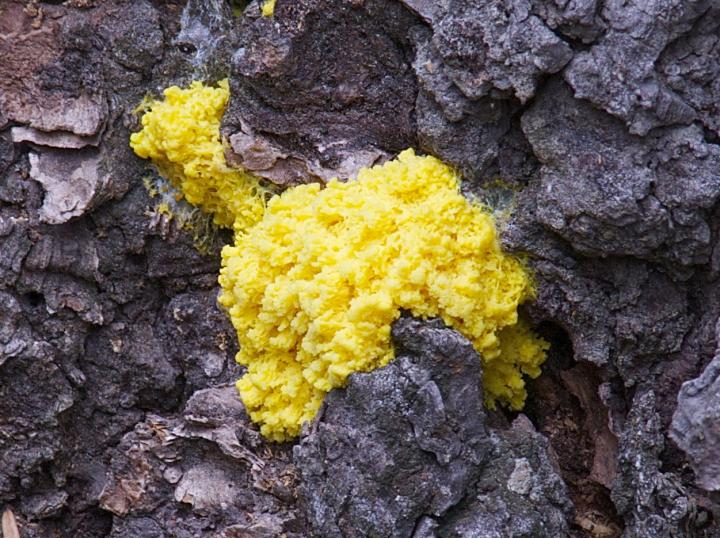
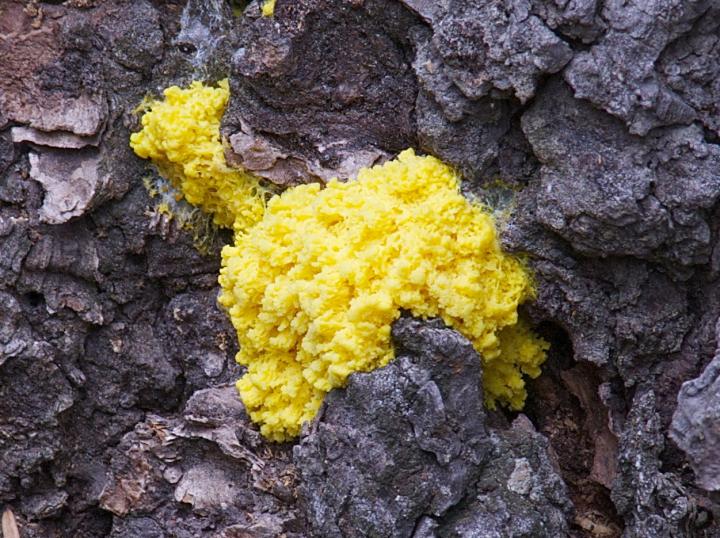
IMAGE

Credit: Jerry Kirkhart, Flickr

Foraging abilities of the amoeboid slime mold Physarum polycephalum may be improved by "noise" in the form of intermittent light exposure, according to a study published March 29, 2017, in the open-access journal PLOS ONE by Bernd Meyer from Monash University, Australia, and colleagues.

In the study, the researchers used a mathematical model to test how the slime mold would react to changing environments. To do this, a maze was created with two alternate pathways connecting two food sources. The researchers then used intermittent exposure to visible light, which slime molds try to avoid, as "noise" to see how the slime mold would react. In this environment, the model predicted that the slime mold was able to find an optimal physical distribution through the maze that balances its needs for chemical communication, food absorption, and avoidance of the light.

This paper builds on observations of slime molds foraging in stable environments, and extends research insights by proposing how a dynamic setting, one that mimics ever-changing conditions of the real world, may influence the adaptive abilities of this self-organized biological system. Further research is needed, but if this prediction is confirmed, the finding will align with mathematical properties that describe decision making in other self-organized social systems, such as bacterial and ant colonies, honey bee hives, and even human communities.

"Our work investigates decision making in the true slime mold, Physarum polycephalum, one of the most widely used model organism to study self-organization in biological systems," says Bernd Meyer. "It reveals that noise in self-organized decision making is a fundamental driver for the ability to flexibly adapt behavior in changing environments."

###

In your coverage please use this URL to provide access to the freely available article in PLOS ONE: http://journals.plos.org/plosone/article?id=10.1371/journal.pone.0172933

Citation: Meyer B, Ansorge C, Nakagaki T (2017) The role of noise in self-organized decision making by the true slime mold Physarum polycephalum. PLoS ONE 12(3): e0172933. doi:10.1371/journal.pone.0172933

Funding: BM and TN received funding from the Australian Research Council (http://www.arc.gov.au/) under grant no. DP110101413. The funders had no role in study design, data collection and analysis, decision to publish, or preparation of the manuscript.

Competing Interests: The authors have declared that no competing interests exist.

Media Contact

Beth Jones
[email protected]

Home

############

Story Source: Materials provided by Scienmag

Share12Tweet8Share2ShareShareShare2

Related Posts

Barriers and Boosters of Seniors’ Physical Activity in Karachi

February 7, 2026

Evaluating Pediatric Emergency Care Quality in Ethiopia

February 7, 2026

TPMT Expression Predictions Linked to Azathioprine Side Effects

February 7, 2026

Improving Dementia Care with Enhanced Activity Kits

February 7, 2026
Please login to join discussion

POPULAR NEWS

  • Robotic Ureteral Reconstruction: A Novel Approach

    Robotic Ureteral Reconstruction: A Novel Approach

    82 shares
    Share 33 Tweet 21
  • Digital Privacy: Health Data Control in Incarceration

    63 shares
    Share 25 Tweet 16
  • Study Reveals Lipid Accumulation in ME/CFS Cells

    57 shares
    Share 23 Tweet 14
  • Breakthrough in RNA Research Accelerates Medical Innovations Timeline

    53 shares
    Share 21 Tweet 13

About

We bring you the latest biotechnology news from best research centers and universities around the world. Check our website.

Follow us

Recent News

Barriers and Boosters of Seniors’ Physical Activity in Karachi

Evaluating Pediatric Emergency Care Quality in Ethiopia

TPMT Expression Predictions Linked to Azathioprine Side Effects

Subscribe to Blog via Email

Enter your email address to subscribe to this blog and receive notifications of new posts by email.

Join 73 other subscribers
  • Contact Us

Bioengineer.org © Copyright 2023 All Rights Reserved.

Welcome Back!

Login to your account below

Forgotten Password?

Retrieve your password

Please enter your username or email address to reset your password.

Log In
No Result
View All Result
  • Homepages
    • Home Page 1
    • Home Page 2
  • News
  • National
  • Business
  • Health
  • Lifestyle
  • Science

Bioengineer.org © Copyright 2023 All Rights Reserved.