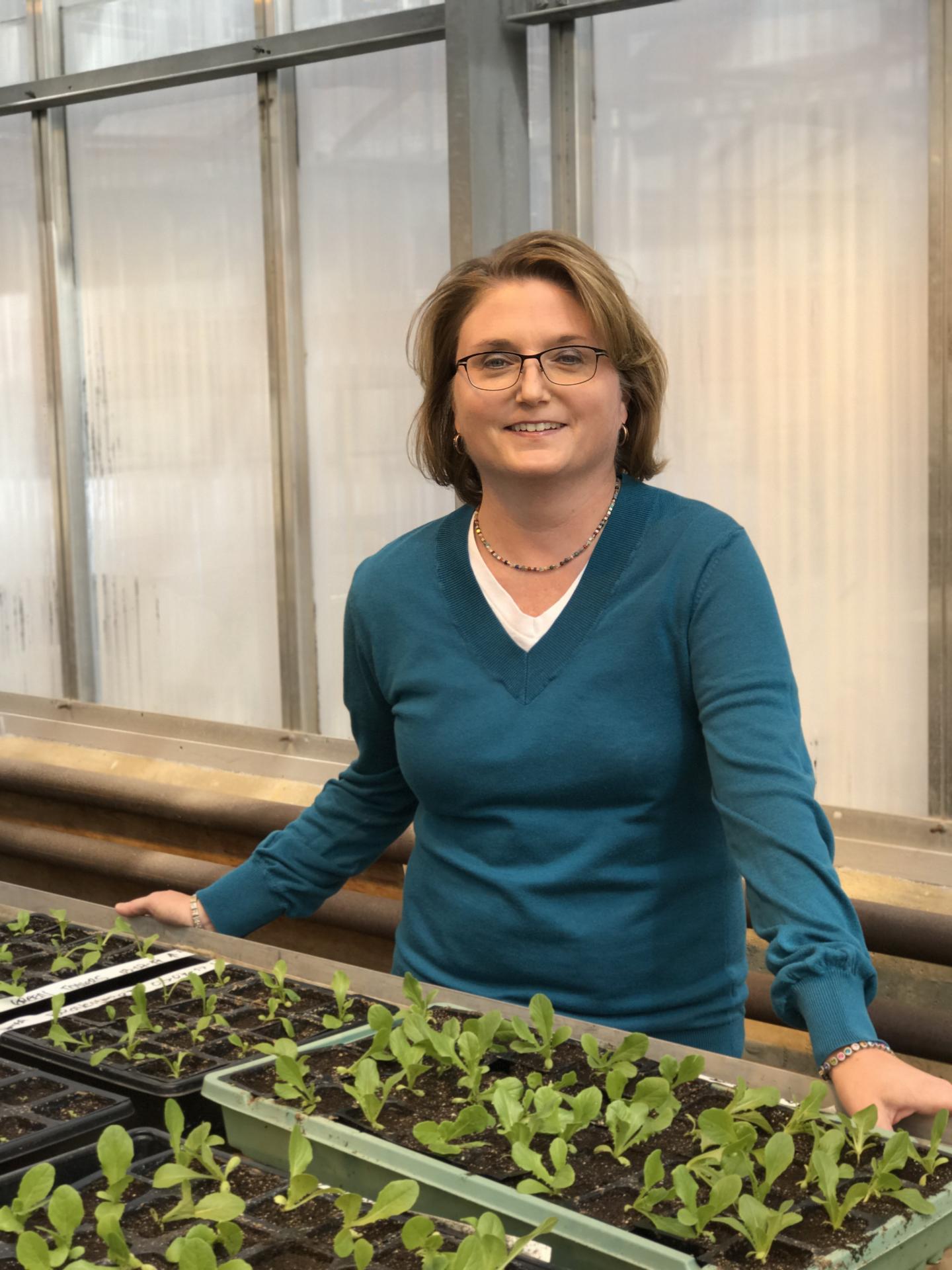
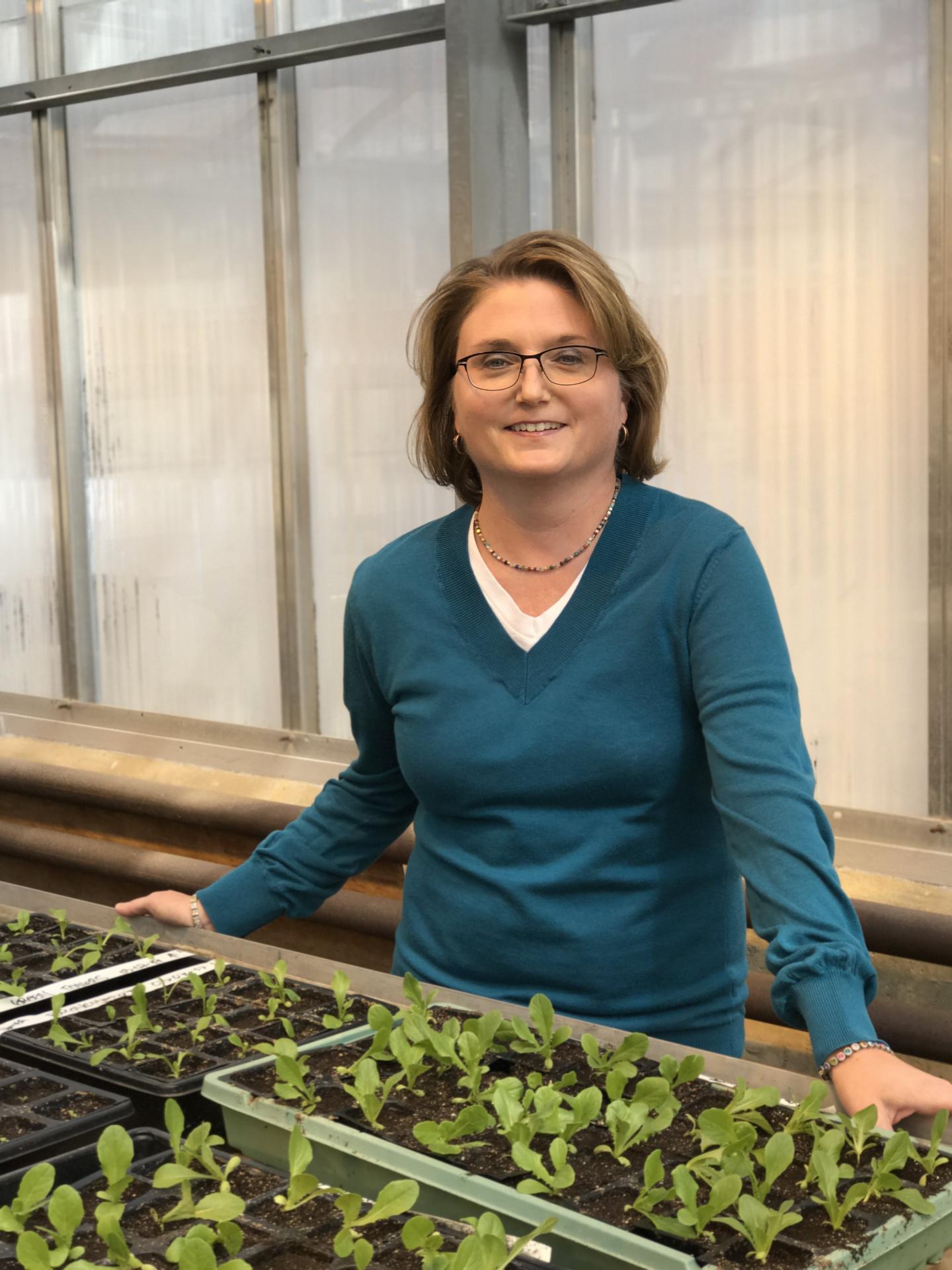
Credit: Purdue University
WEST LAFAYETTE, Ind. – A Purdue University study shows that the bacteria Listeria monocytogenes can live inside the tissue of romaine lettuce, suggesting that conventional post-harvest sanitization practices might not be sufficient to kill the potentially lethal pathogen.
Research led by Amanda Deering, clinical assistant professor in the Department of Food Science, showed that the bacteria could live within lettuce in every stage of the plant growth process, residing inside the plant tissue. L. monocytogenes can gain entry into the plant through cracked seed coats, small tears in root tissue during germination and damaged plant tissue. The researchers found that exposing lettuce to the bacteria could lead to infection of plant tissue in as little as 30 minutes.
"Knowing this can happen, we need to keep it on our radar as we continue to follow good agricultural practices," Deering said.
When ingested, the bacteria can be deadly to those with vulnerable immune systems, including pregnant women, the elderly, infants, or those with HIV. L. monocytogenes can also cross the placental barrier in pregnant women, which can trigger a miscarriage.
"For immune-compromised consumers, it's important to remember, that canned or cooked produce is better," Deering said.
While commonly associated with ready-to-eat deli meat and hot dogs, outbreaks of listeriosis – the disease associated with the bacteria – have also been caused by contaminated celery, cantaloupe, sprouts and apples. A 2011 outbreak from cantaloupe was the second most deadly foodborne bacterial outbreak in U.S. history. The bacteria can only be killed by heat and the contaminated fruit that was minimally processed and consumed raw.
Symptoms of listeriosis may take as long as two months to appear, and by that time, most people don't connect the illness to something they ate, Deering said.
After the 2016 recall of contaminated packaged salads, Deering, Haley Oliver, associate professor of food science, and Archana Shenoy, a graduate research assistant, began to investigate the persistence and internalization of L. monocytogenes in romaine lettuce, the fastest growing crop in the U.S. in terms of production, export and consumption.
Their research showed L. monocytogenes in romaine lettuce can persist up to 60 days or until the time of harvest. The bacteria could be found throughout the plant tissue, indicating yet another way foodborne pathogens can reach consumers, especially in ready-to-eat foods.
At the Purdue Center for Food Safety Engineering, researchers are working on detection technologies as they shift their focus to what can happen to the seed and seedlings before planting. They aim to find pre-harvest control strategies to prevent produce contamination, particularly as sanitizers can only treat produce externally.
"Continued education, training and research to minimize exposure of human foodborne pathogens in our soil, water, seeds, plants and produce have become my priority in research," said Deering.
###
The paper is available here.
The study was conducted with support from research funds from the U.S. Department of Agriculture, Agricultural Research Service, under Project No.1935-42000-072.
Writer: Cheri Frederick, 765-494-2406, [email protected]
Source: Amanda Deering, 765-494-0512, [email protected]
Media Contact
Cheri Frederick
[email protected]
765-494-2406
@PurdueUnivNews
http://www.purdue.edu/
############
Story Source: Materials provided by Scienmag