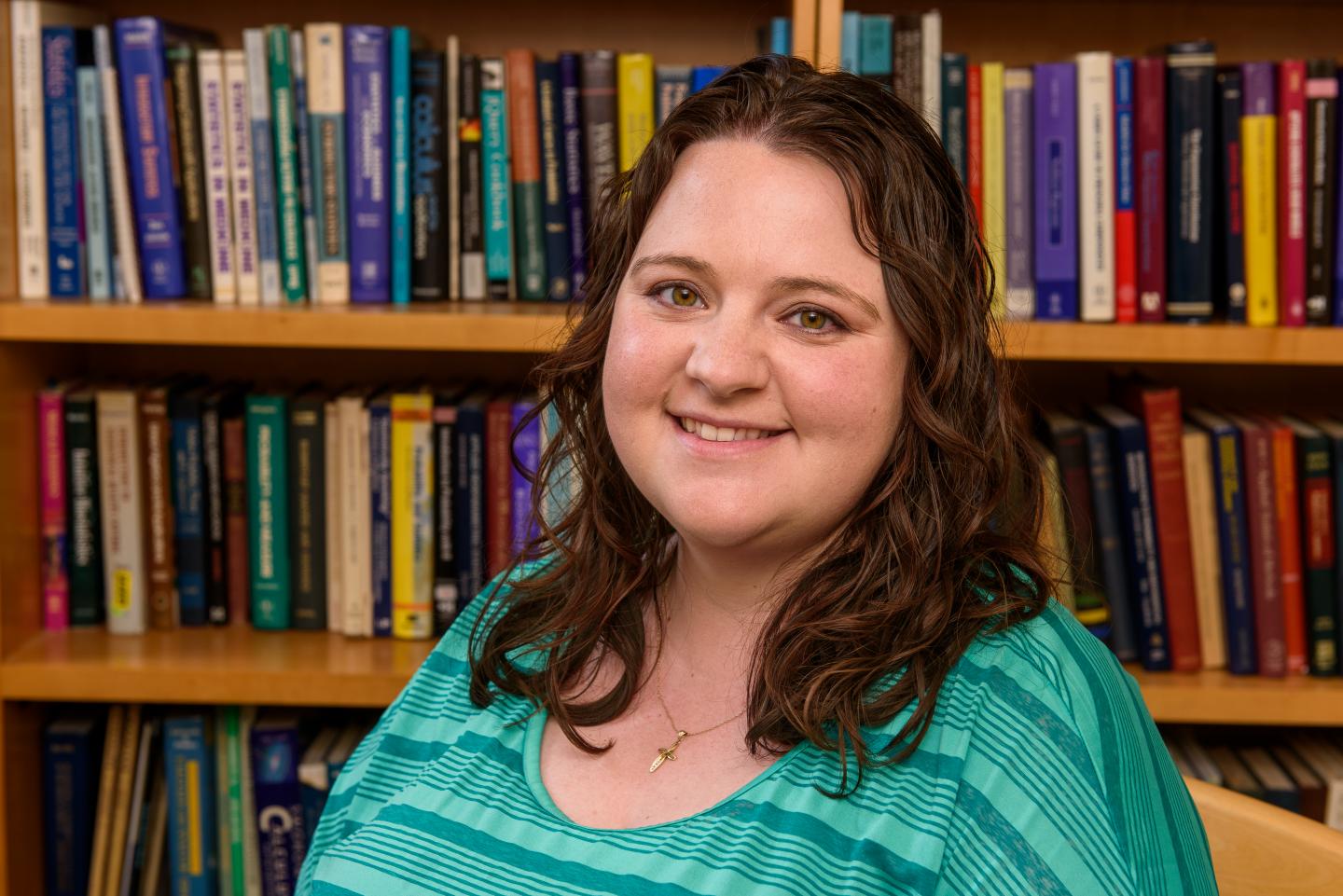
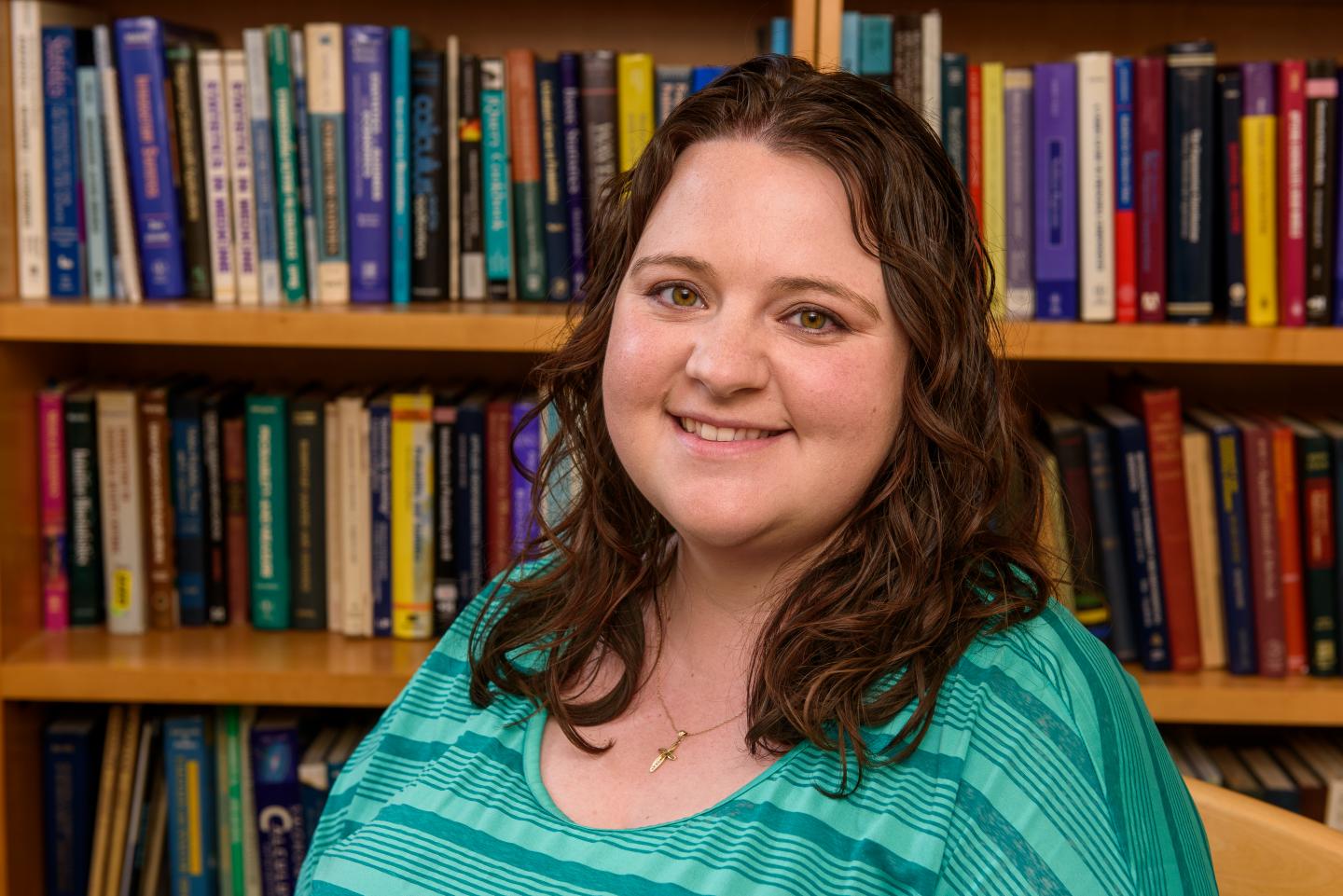
Credit: Justin Kelley/MU Health
COLUMBIA, Mo. (March 29, 2017) — Colorectal cancer is the fourth most common type of cancer in the United States, with nearly 135,000 cases reported in 2016. The likelihood of surviving colorectal cancer is strongly related to the stage in which it is diagnosed. Researchers from the University of Missouri School of Medicine looked at screening adherence rates and found that individuals with certain disabilities are less likely to receive recommended preventive screenings. The researchers hope the finding will lead to targeted interventions and increased awareness for these individuals.
"Colorectal cancer is the second leading cause of cancer deaths in the U.S.," said Chelsea Deroche, Ph.D., assistant professor of biostatistics in the MU Department of Health Management and Informatics and in the Biostatistics and Research Design Unit. "However, almost 60 percent of these deaths could be prevented if people ages 50 years or older received routine screenings. When studying adherence rates to recommended screenings, we found that individuals with blindness or low vision, an intellectual disability or a spinal cord injury are less likely to receive screenings than those without these disabilities."
The U.S. Preventive Services Task Force currently recommends that individuals ages 50 to 75 be screened by one of the following methods:
- fecal occult blood test every year;
- sigmoidoscopy every five years, plus a fecal occult blood test every three years; or
- colonoscopy every 10 years.
In their observational study, researchers reviewed data from South Carolina Medicaid and Medicare claims, state health plan claims and hospital discharge data between 2000 and 2009. The researchers compared colorectal screening adherence rates of individuals with either blindness or low vision, an intellectual disability or a spinal cord injury to the general U.S. population.
About 48 percent of the general population reported receiving routine screenings, compared to 34 percent of individuals with an intellectual disability, 44 percent of individuals with spinal cord injuries and 46 percent of individuals with blindness or low vision.
"These individuals may not be routinely screened for colorectal cancer due to a lack of education and awareness, transportation challenges or other barriers," Deroche said. "These findings support the need for increased awareness and targeted advocacy outreach efforts to both physicians and caregivers to ensure all individuals are screened appropriately."
###
The study, "Colorectal Cancer Screening Adherence in Selected Disabilities Over 10 Years," recently was published online in the American Journal of Preventive Medicine. Research reported in this publication was supported by the Centers for Disease Control and Prevention (U01 RFA-DD-12-006). The researchers have no conflicts of interest to declare related to this study. The content is solely the responsibility of the authors and does not necessarily represent the official views of the funding agency.
About the MU School of Medicine
The MU School of Medicine has improved health, education and research in Missouri and beyond for more than 165 years. MU physicians treat patients from every county in the state, and more Missouri physicians received their medical degrees from MU than from any other university. For more information, visit http://medicine.missouri.edu/.
Media Contact
Derek Thompson
[email protected]
573-882-3323
@mizzounews
http://www.missouri.edu
############
Story Source: Materials provided by Scienmag