• HOME
  • NEWS
  • EXPLORE
    • CAREER
      • Companies
      • Jobs
    • EVENTS
    • iGEM
      • News
      • Team
    • PHOTOS
    • VIDEO
    • WIKI
  • BLOG
  • COMMUNITY
    • FACEBOOK
    • INSTAGRAM
    • TWITTER
Saturday, February 7, 2026
BIOENGINEER.ORG
No Result
View All Result
  • Login
  • HOME
  • NEWS
  • EXPLORE
    • CAREER
      • Companies
      • Jobs
        • Lecturer
        • PhD Studentship
        • Postdoc
        • Research Assistant
    • EVENTS
    • iGEM
      • News
      • Team
    • PHOTOS
    • VIDEO
    • WIKI
  • BLOG
  • COMMUNITY
    • FACEBOOK
    • INSTAGRAM
    • TWITTER
  • HOME
  • NEWS
  • EXPLORE
    • CAREER
      • Companies
      • Jobs
        • Lecturer
        • PhD Studentship
        • Postdoc
        • Research Assistant
    • EVENTS
    • iGEM
      • News
      • Team
    • PHOTOS
    • VIDEO
    • WIKI
  • BLOG
  • COMMUNITY
    • FACEBOOK
    • INSTAGRAM
    • TWITTER
No Result
View All Result
Bioengineer.org
No Result
View All Result
Home NEWS Science News

Gold standards for nanoparticles

Bioengineer by Bioengineer
March 28, 2017
in Science News
Reading Time: 2 mins read
0
Share on FacebookShare on TwitterShare on LinkedinShare on RedditShare on Telegram
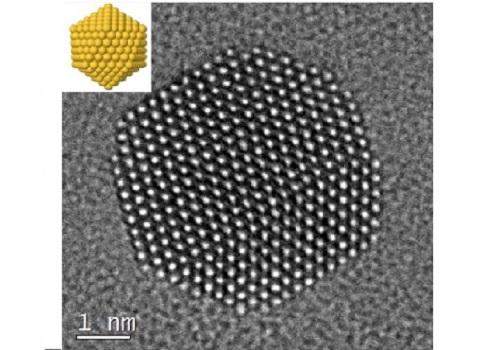
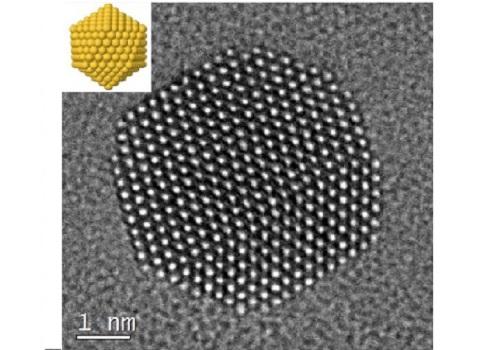
IMAGE

Credit: Reproduced with permission from ref 1. © 2017 Nature Publishing Group

Expanding the potential of gold nanoparticles for a range of uses requires methods to stabilize the clusters and control their size. Researchers at KAUST reveal how simple organic citrate ions, derived from readily available citric acid, can interact with the gold atoms to yield the stable nanoparticles needed for further research.

Such clusters of gold atoms are proving increasingly useful as catalysts, drug delivery systems, anti-cancer agents and components of solar cells among other applications.

"The potential applications of gold nanoparticles could have a huge impact on society, and understanding stabilizers like citrate might be crucial to progress," said Jean-Marie Basset, Director of the KAUST Catalysis Center and Distinguished Professor of Chemical Science, and a member of the research team, Professor Luigi Cavallo.

Along with colleagues at The University's Core Labs and coworkers in UK, Switzerland and France, the researchers have shown different ways that citrate ions can bind to gold atoms at the surface of nanoparticles1. They also discovered how to influence the binding mode by controlling the ratio of the nanoparticle/citrate ions. Different modes can influence the structures and properties of nanoparticles.

"The experimental and theoretical characterization of these systems is challenging due to the flexible nature of the interaction between citrate and gold," said Basset. He explained that collaboration between KAUST teams was essential for meeting the challenges, allowing creation of the stabilized nanoparticles and their analysis and imaging at high resolution (see image).

One reason for gold's usefulness in medical applications is its chemically stable nature. Other researchers have shown that this stability allows gold to carry drugs through the body without causing chemical side effects.

Controlling the structure of gold nanoparticles could also fine tune their interaction with light to exploit a phenomenon known as surface plasmon resonance. This may allow the energy of light to be harnessed to kill cancer cells. Attaching antibodies can guide the nanoparticles to the specific cells that need treatment. The type of interaction with light depends on nanoparticle structure and could also yield applications in solar cells and micro-electronics.

The researchers consider that the insights from this work at KAUST may also be applicable to some other metals and plan to explore this as the next phase of the research. "We want to take on that wider challenge," said Basset.

###

Media Contact

Michelle D'Antoni
[email protected]

http://kaust.edu.sa/

############

Story Source: Materials provided by Scienmag

Share12Tweet8Share2ShareShareShare2

Related Posts

Inflammasome Protein ASC Drives Pancreatic Cancer Metabolism

February 7, 2026

Phage-Antibiotic Combo Beats Resistant Peritoneal Infection

February 7, 2026

Boosting Remote Healthcare: Stepped-Wedge Trial Insights

February 7, 2026

Barriers and Boosters of Seniors’ Physical Activity in Karachi

February 7, 2026
Please login to join discussion

POPULAR NEWS

  • Robotic Ureteral Reconstruction: A Novel Approach

    Robotic Ureteral Reconstruction: A Novel Approach

    82 shares
    Share 33 Tweet 21
  • Digital Privacy: Health Data Control in Incarceration

    63 shares
    Share 25 Tweet 16
  • Study Reveals Lipid Accumulation in ME/CFS Cells

    57 shares
    Share 23 Tweet 14
  • Breakthrough in RNA Research Accelerates Medical Innovations Timeline

    53 shares
    Share 21 Tweet 13

About

We bring you the latest biotechnology news from best research centers and universities around the world. Check our website.

Follow us

Recent News

Inflammasome Protein ASC Drives Pancreatic Cancer Metabolism

Phage-Antibiotic Combo Beats Resistant Peritoneal Infection

Boosting Remote Healthcare: Stepped-Wedge Trial Insights

Subscribe to Blog via Email

Enter your email address to subscribe to this blog and receive notifications of new posts by email.

Join 73 other subscribers
  • Contact Us

Bioengineer.org © Copyright 2023 All Rights Reserved.

Welcome Back!

Login to your account below

Forgotten Password?

Retrieve your password

Please enter your username or email address to reset your password.

Log In
No Result
View All Result
  • Homepages
    • Home Page 1
    • Home Page 2
  • News
  • National
  • Business
  • Health
  • Lifestyle
  • Science

Bioengineer.org © Copyright 2023 All Rights Reserved.