• HOME
  • NEWS
  • EXPLORE
    • CAREER
      • Companies
      • Jobs
    • EVENTS
    • iGEM
      • News
      • Team
    • PHOTOS
    • VIDEO
    • WIKI
  • BLOG
  • COMMUNITY
    • FACEBOOK
    • INSTAGRAM
    • TWITTER
Saturday, December 20, 2025
BIOENGINEER.ORG
No Result
View All Result
  • Login
  • HOME
  • NEWS
  • EXPLORE
    • CAREER
      • Companies
      • Jobs
        • Lecturer
        • PhD Studentship
        • Postdoc
        • Research Assistant
    • EVENTS
    • iGEM
      • News
      • Team
    • PHOTOS
    • VIDEO
    • WIKI
  • BLOG
  • COMMUNITY
    • FACEBOOK
    • INSTAGRAM
    • TWITTER
  • HOME
  • NEWS
  • EXPLORE
    • CAREER
      • Companies
      • Jobs
        • Lecturer
        • PhD Studentship
        • Postdoc
        • Research Assistant
    • EVENTS
    • iGEM
      • News
      • Team
    • PHOTOS
    • VIDEO
    • WIKI
  • BLOG
  • COMMUNITY
    • FACEBOOK
    • INSTAGRAM
    • TWITTER
No Result
View All Result
Bioengineer.org
No Result
View All Result
Home NEWS Science News

NASA sees tiny Tropical Cyclone Caleb fading

Bioengineer by Bioengineer
March 27, 2017
in Science News
Reading Time: 1 min read
0
Share on FacebookShare on TwitterShare on LinkedinShare on RedditShare on Telegram
IMAGE

Credit: Credit: NASA / NRL

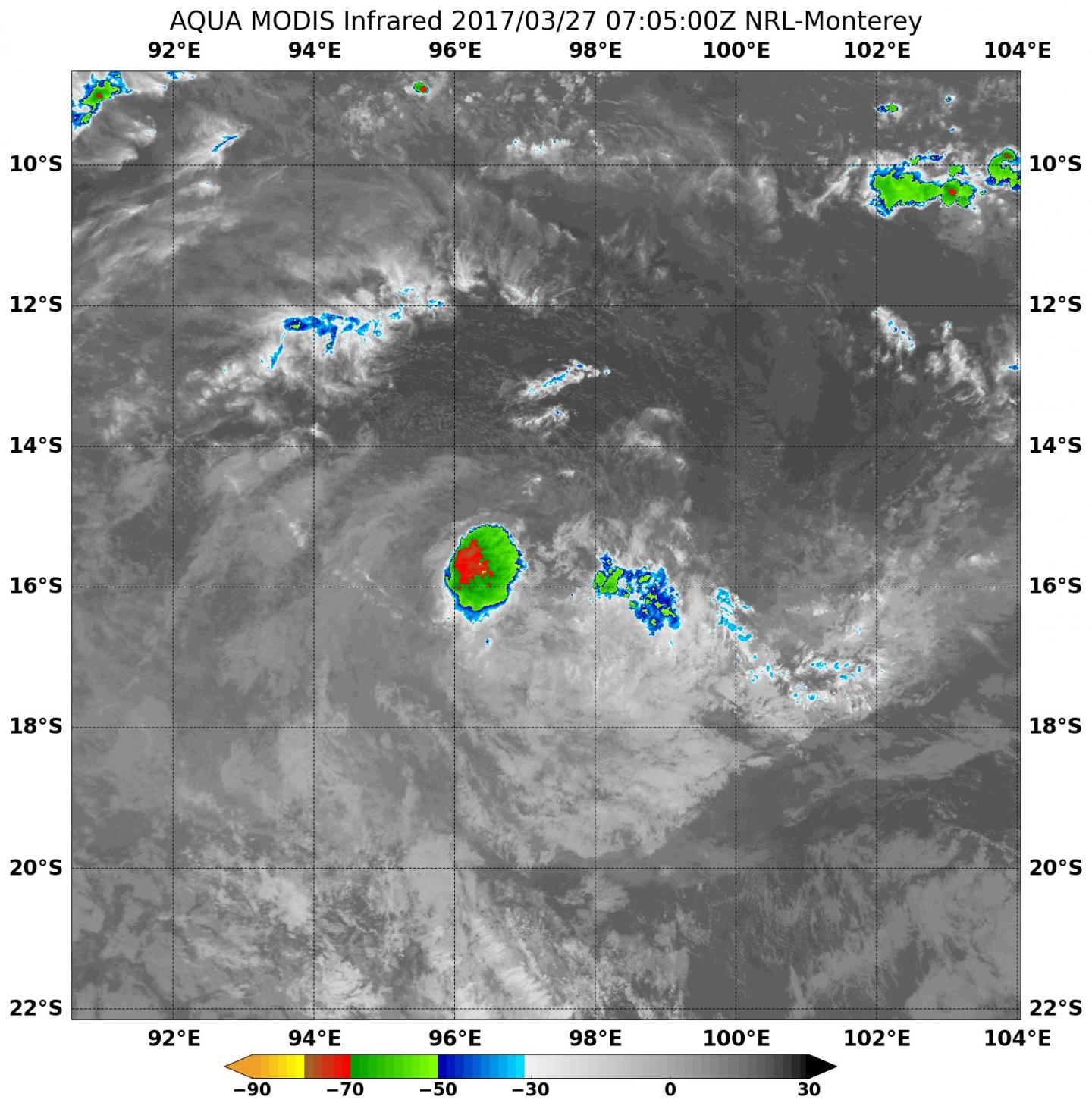
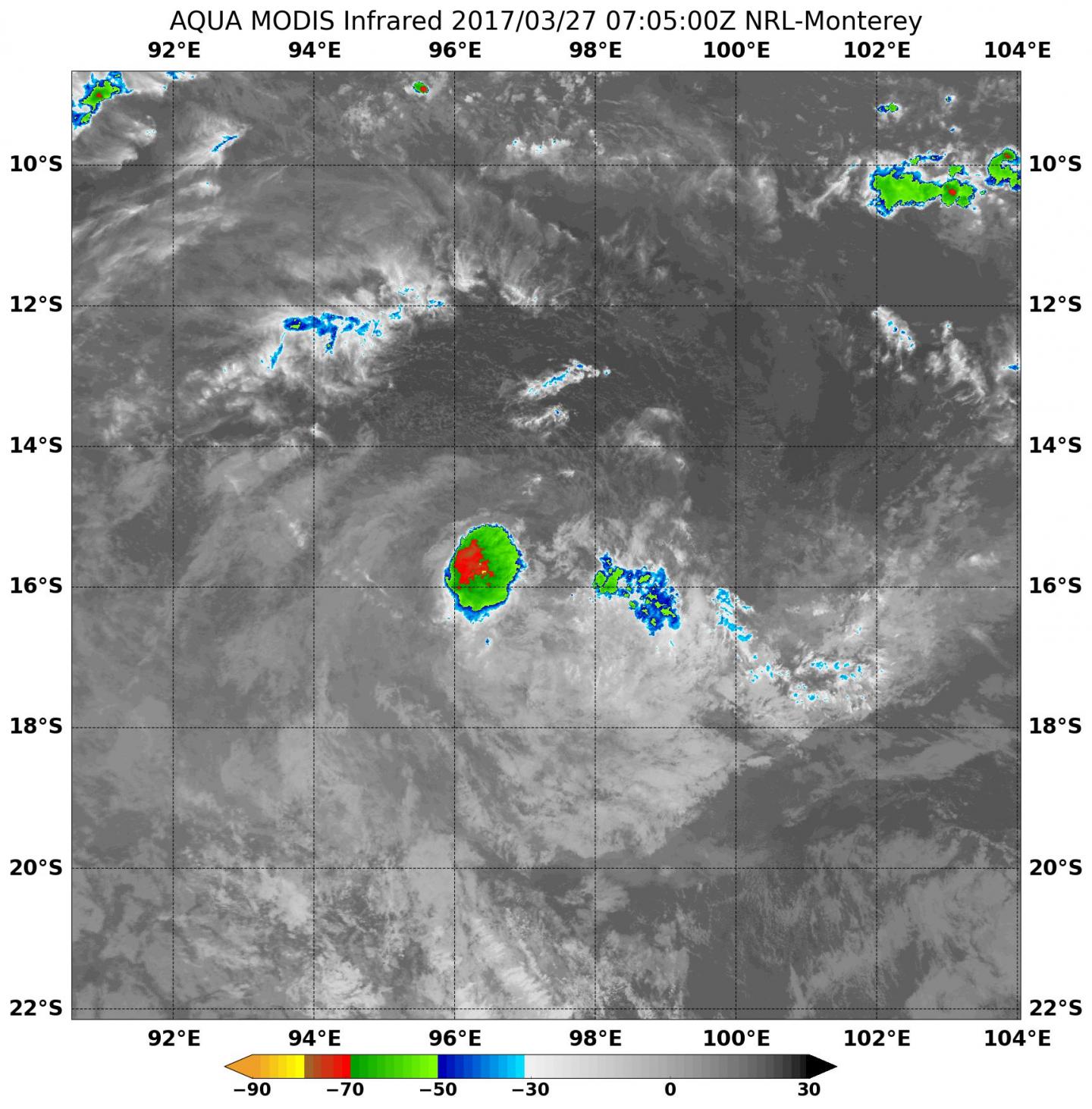
Tropical Cyclone Caleb is weakening in the Southern Indian Ocean and NASA's Aqua satellite caught one of the last bursts of strength as it passed overhead.

On Mar. 27 at 0705 UTC (3:05 a.m. EST) the MODIS instrument aboard NASA's Aqua satellite analyzed Caleb in infrared light. The infrared data measured cloud top temperatures and revealed a small area of strong thunderstorms that remained in the small storm at that time. Those storms, located in Caleb's northwestern quadrant, had cloud top temperatures as cold as near minus 56.6 degrees Celsius or minus 70 degrees Fahrenheit. Hours later, however, by 0900 UTC (5 a.m. EST), those strong storms had weakened and the system was devoid of any persistent convection (rising air that forms the thunderstorms that make up a tropical cyclone).

At 0900 UTC (5 a.m. EST) on March 27, 2017 the Joint Typhoon Warning Center issued their final warning on Caleb. At that time Caleb's maximum sustained winds dropped to 35 knots (40 mph/62 mph). Caleb was located near 15.4 degrees south latitude and 97.16 degrees east longitude. That's about 200 nautical miles (230 miles/370 km) south of Cocos Island. Caleb was moving to the west at 6 knots (6.9 mph/11.1 kph).

The Joint Typhoon Warning Center expects Caleb to dissipate late today, March 27, 2017.

###

Media Contact

Rob Gutro
[email protected]
@NASAGoddard

http://www.nasa.gov/goddard

############

Story Source: Materials provided by Scienmag

Share12Tweet8Share2ShareShareShare2

Related Posts

Revamping Long COVID Rehab: Insights from Realist Study

December 20, 2025
Dual-Polarization Radar Enhances Typhoon Precipitation Warnings

Dual-Polarization Radar Enhances Typhoon Precipitation Warnings

December 20, 2025

Efficient Synthesis of Imidazo[2,1-a]Isoquinolin-5-ones Unveiled

December 20, 2025

Unveiling Genomes: Vincetoxicum Pycnostelma Revealed

December 20, 2025
Please login to join discussion

POPULAR NEWS

  • Nurses’ Views on Online Learning: Effects on Performance

    Nurses’ Views on Online Learning: Effects on Performance

    70 shares
    Share 28 Tweet 18
  • NSF funds machine-learning research at UNO and UNL to study energy requirements of walking in older adults

    71 shares
    Share 28 Tweet 18
  • Unraveling Levofloxacin’s Impact on Brain Function

    53 shares
    Share 21 Tweet 13
  • Exploring Audiology Accessibility in Johannesburg, South Africa

    51 shares
    Share 20 Tweet 13

About

We bring you the latest biotechnology news from best research centers and universities around the world. Check our website.

Follow us

Recent News

Revamping Long COVID Rehab: Insights from Realist Study

Dual-Polarization Radar Enhances Typhoon Precipitation Warnings

Efficient Synthesis of Imidazo[2,1-a]Isoquinolin-5-ones Unveiled

Subscribe to Blog via Email

Enter your email address to subscribe to this blog and receive notifications of new posts by email.

Join 70 other subscribers
  • Contact Us

Bioengineer.org © Copyright 2023 All Rights Reserved.

Welcome Back!

Login to your account below

Forgotten Password?

Retrieve your password

Please enter your username or email address to reset your password.

Log In
No Result
View All Result
  • Homepages
    • Home Page 1
    • Home Page 2
  • News
  • National
  • Business
  • Health
  • Lifestyle
  • Science

Bioengineer.org © Copyright 2023 All Rights Reserved.