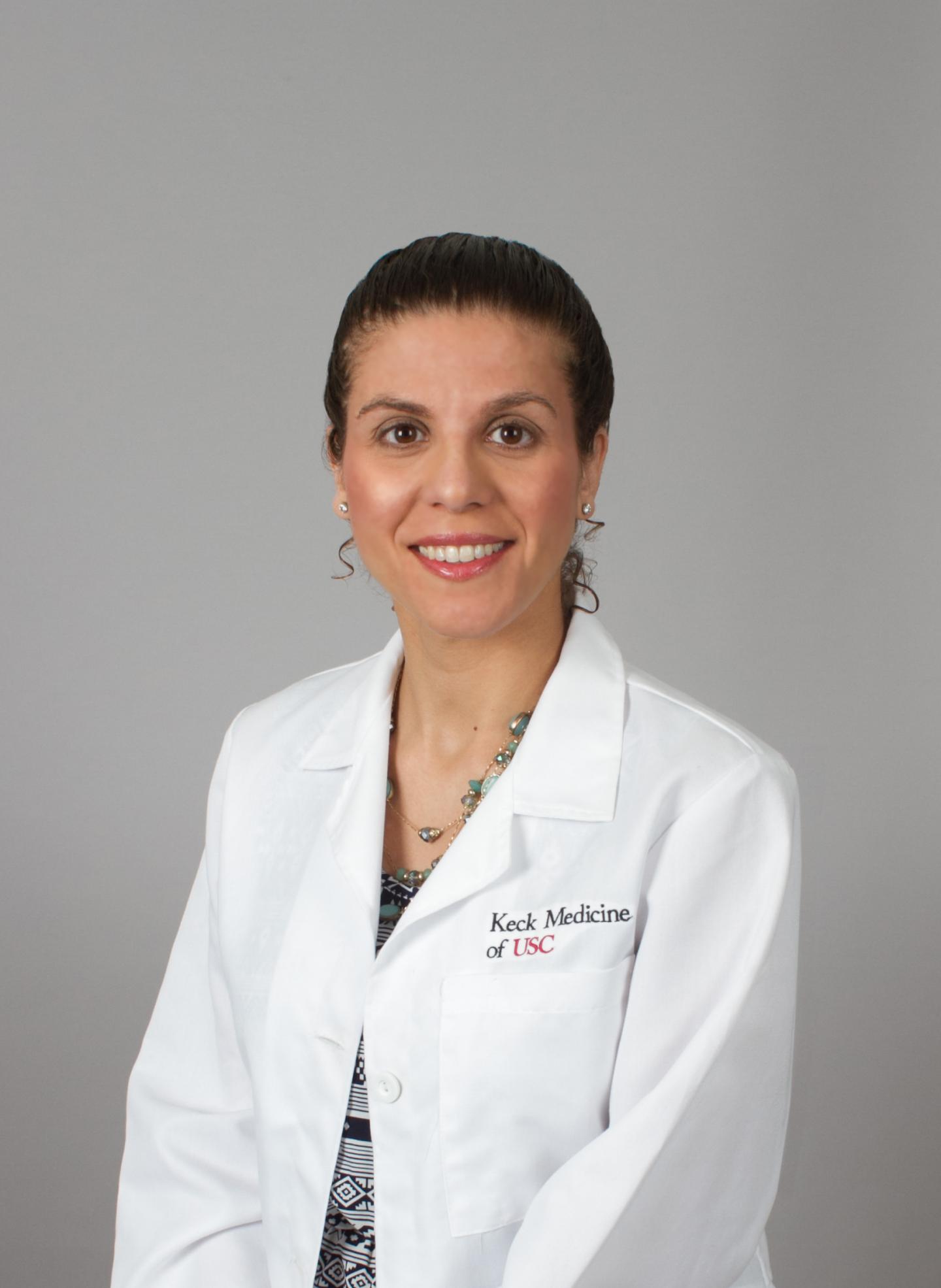
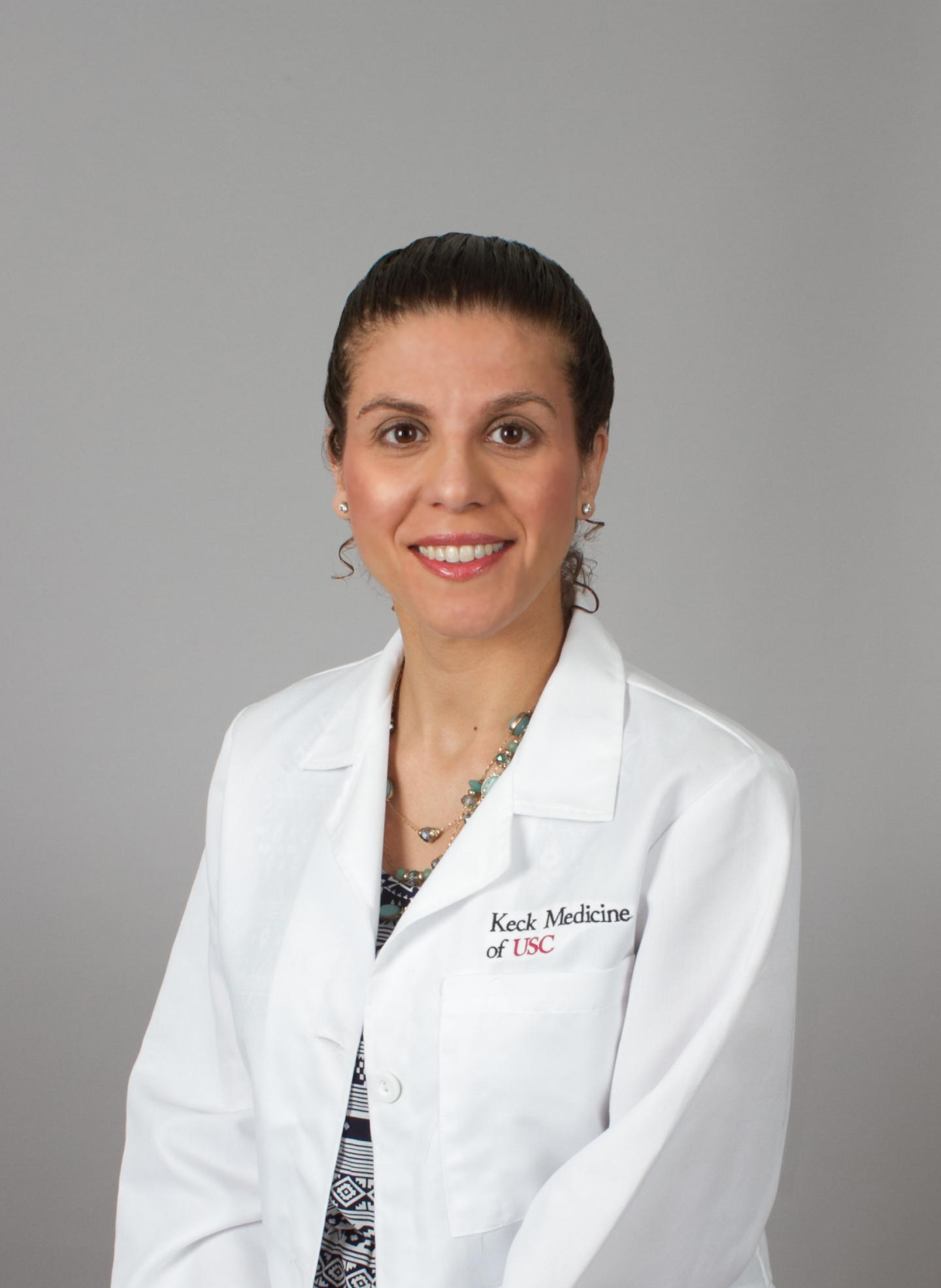
Credit: Ricardo Carrasco III
LOS ANGELES — Keck School of Medicine of the University of Southern California (USC) has been awarded a $175,000 grant from the DeGregorio Family Foundation and Price Family Foundation to support research aimed at gaining a deeper understanding of how gastroesophageal reflux disease (GERD) increases the risk of developing esophageal cancer.
Grant recipient Anisa Shaker, MD, assistant professor of medicine, is exploring how a certain type of cell called a myofibroblast controls inflammation, injury and repair in the esophagus.
"Myofibroblasts can be found throughout the digestive system, including the lining of the esophagus. We believe that they may play an important role in the development of esophageal cancer," Shaker said. "This grant will allow us to adapt myofibroblasts from patients with GERD into a 3-D model of the esophageal lining, which is where esophageal cancer begins."
GERD is a common disorder that affects up to one in five people in the United States. It occurs when the contents of the stomach back up into the esophagus and/or mouth over a prolonged period of time, which can sometimes cause tissue damage.
Having GERD can significantly increase a person's risk for developing esophageal adenocarcinoma, the predominant type of esophageal cancer in the Western world. The risk of developing esophageal adenocarcinoma is almost eight times higher in patients with symptomatic GERD than in those who do not have GERD.
Esophageal adenocarcinoma primarily affects middle-aged or older adults and is more common in men than women. It is frequently diagnosed at an advanced stage because there are usually no warning signs or symptoms early on.
"Esophageal adenocarcinoma is the fastest-growing lethal malignancy in the West," Shaker said. "There is an urgency to better understand how it occurs so that we can work toward preventing or curing it. The grant from the DeGregorio Family Foundation and Price Family Foundation will help us get a step closer to achieving that goal."
The DeGregorio Family Foundation is dedicated to promoting research on esophageal and stomach cancer.
"Our hope with this grant is to spur collaboration among physician researchers that will advance their research goals and help them secure larger grants," Lynn Gregorio, president and founder of the DeGregorio Family Foundation, said.
Since 2006, the foundation has given $2 million in grants to researchers who have gone on to obtain an additional $11 million in National Institute of Health and Star Foundation grants.
###
ABOUT THE KECK SCHOOL OF MEDICINE OF USC
Founded in 1885, the Keck School of Medicine of USC is among the nation's leaders in innovative patient care, scientific discovery, education, and community service. It is part of Keck Medicine of USC, the University of Southern California's medical enterprise, one of only two university-owned academic medical centers in the Los Angeles area. This includes the Keck Medical Center of USC, composed of the Keck Hospital of USC and the USC Norris Cancer Hospital. The two world-class, USC-owned hospitals are staffed by more than 500 physicians who are faculty at the Keck School. The school today has approximately 1,650 full-time faculty members and voluntary faculty of more than 2,400 physicians. These faculty direct the education of approximately 700 medical students and 1,000 students pursuing graduate and post-graduate degrees. The school trains more than 900 resident physicians in more than 50 specialty or subspecialty programs and is the largest educator of physicians practicing in Southern California. Together, the school's faculty and residents serve more than 1.5 million patients each year at Keck Hospital of USC and USC Norris Cancer Hospital, as well as USC-affiliated hospitals Children's Hospital Los Angeles and Los Angeles County + USC Medical Center. Keck School faculty also conduct research and teach at several research centers and institutes, including the USC Norris Comprehensive Cancer Center, the Zilkha Neurogenetic Institute, the Eli and Edythe Broad Center for Stem Cell Research and Regenerative Medicine at USC, the USC Cardiovascular Thoracic Institute, the USC Roski Eye Institute and the USC Institute of Urology.
In 2017, U.S. News & World Report ranked Keck School of Medicine among the Top 40 medical schools in the country.
For more information, go to keck.usc.edu.
For more information about the DeGregorio Family Foundation, go to www.degregorio.org.
Media Contact
Meg Aldrich
[email protected]
323-442-3941
@USCEye
http://www.usceye.org
############
Story Source: Materials provided by Scienmag