• HOME
  • NEWS
  • EXPLORE
    • CAREER
      • Companies
      • Jobs
    • EVENTS
    • iGEM
      • News
      • Team
    • PHOTOS
    • VIDEO
    • WIKI
  • BLOG
  • COMMUNITY
    • FACEBOOK
    • INSTAGRAM
    • TWITTER
Friday, August 7, 2026
BIOENGINEER.ORG
No Result
View All Result
  • Login
  • HOME
  • NEWS
  • EXPLORE
    • CAREER
      • Companies
      • Jobs
        • Lecturer
        • PhD Studentship
        • Postdoc
        • Research Assistant
    • EVENTS
    • iGEM
      • News
      • Team
    • PHOTOS
    • VIDEO
    • WIKI
  • BLOG
  • COMMUNITY
    • FACEBOOK
    • INSTAGRAM
    • TWITTER
  • HOME
  • NEWS
  • EXPLORE
    • CAREER
      • Companies
      • Jobs
        • Lecturer
        • PhD Studentship
        • Postdoc
        • Research Assistant
    • EVENTS
    • iGEM
      • News
      • Team
    • PHOTOS
    • VIDEO
    • WIKI
  • BLOG
  • COMMUNITY
    • FACEBOOK
    • INSTAGRAM
    • TWITTER
No Result
View All Result
Bioengineer.org
No Result
View All Result
Home NEWS Science News

Strong interaction between herbivores and plants

Bioengineer by Bioengineer
March 23, 2017
in Science News
Reading Time: 2 mins read
0
Share on FacebookShare on TwitterShare on LinkedinShare on RedditShare on Telegram
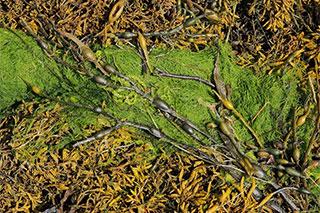
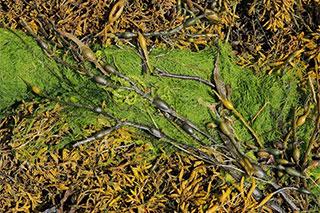
IMAGE

Credit: commonfree

In the past decades, we have seen a dramatic decline in biodiversity around the world. Every day, species are irrecoverably lost on an unprecedented scale. This also has an impact on the stability and productivity of ecosystems. Hence it is indispensable to understand the mechanisms that impact biodiversity, particularly in the case of primary producers such as algae and plants that form the basis of nearly all natural food webs and ecosystems.

Sophie Gröndahl is a doctoral researcher in the working group of Dr Patrick Fink at the University of Cologne's Zoological Institute. In an experimental study on algae from freshwater biofilms, she was able to show that both the availability of nutrients and the diversity of consumer species (herbivores) have a significant positive impact on the diversity of photosynthetic organisms. This means that a high degree of biodiversity on one level of the food chain has a positive impact on biodiversity on the level directly below it.

Fink and Gröndahl moreover found out that nutrient availability and the diversity of consumer species do not impact the biodiversity of the algae population separately, but rather interact and mutually influence each other. For example, if nutrient pollution is high – which is often the case in the overfertilization of freshwater caused by humans – the positive effect of the greater diversity of herbivorous consumers on the biodiversity of the algae population is lost. In an overfertilized system, it appears that one of the most important mechanisms sustaining producer diversity no longer functions correctly, which has far-reaching ramifications for our understanding of how to maintain biodiversity – not only in freshwater environments, but in all kinds of ecosystems.

The study 'Consumer species richness and nutrients interact in determining producer diversity' was published in the current issue of Scientific Reports. It is part of the research project 'Interactions between consumer and resource diversity under changing environmental conditions' at the University of Cologne, which is funded by the German Research Foundation (DFG).

###

Original publication: http://www.nature.com/articles/srep44869

Working group: http://www.uni-koeln.de/math-nat-fak/zoologie/oekologie/agvonelert/

Media Contact

Dr. Patrick Fink
[email protected]
49-221-470-6637
@UniCologne

http://www.uni-koeln.de

############

Story Source: Materials provided by Scienmag

Share12Tweet8Share2ShareShareShare2

Related Posts

How Somatic Mutations and Genome Mosaicism Shape Aging and Disease

August 7, 2026
Empire AI Beta Goes Online as Washington Adopts New York’s Hub Blueprint

Empire AI Beta Goes Online as Washington Adopts New York’s Hub Blueprint

August 7, 2026

Steatotic Liver Disease’s Global Spectrum Reveals a Dynamic Health Challenge

August 7, 2026

Targeting 4EBP1/HSP90β/Nrf2 Sensitizes β-Catenin-Mutant Liver Cancer to mTOR Inhibitors Through Ferroptosis

August 7, 2026
Please login to join discussion

POPULAR NEWS

  • How Somatic Mutations and Genome Mosaicism Shape Aging and Disease

    29 shares
    Share 12 Tweet 7
  • Empire AI Beta Goes Online as Washington Adopts New York’s Hub Blueprint

    29 shares
    Share 12 Tweet 7
  • Steatotic Liver Disease’s Global Spectrum Reveals a Dynamic Health Challenge

    29 shares
    Share 12 Tweet 7
  • Targeting 4EBP1/HSP90β/Nrf2 Sensitizes β-Catenin-Mutant Liver Cancer to mTOR Inhibitors Through Ferroptosis

    29 shares
    Share 12 Tweet 7

About

We bring you the latest biotechnology news from best research centers and universities around the world. Check our website.

Follow us

Recent News

How Somatic Mutations and Genome Mosaicism Shape Aging and Disease

Empire AI Beta Goes Online as Washington Adopts New York’s Hub Blueprint

Steatotic Liver Disease’s Global Spectrum Reveals a Dynamic Health Challenge

Subscribe to Blog via Email

Enter your email address to subscribe to this blog and receive notifications of new posts by email.

Join 86 other subscribers
  • Contact Us

Bioengineer.org © Copyright 2023 All Rights Reserved.

Welcome Back!

Login to your account below

Forgotten Password?

Retrieve your password

Please enter your username or email address to reset your password.

Log In
No Result
View All Result
  • Homepages
    • Home Page 1
    • Home Page 2
  • News
  • National
  • Business
  • Health
  • Lifestyle
  • Science

Bioengineer.org © Copyright 2023 All Rights Reserved.