• HOME
  • NEWS
  • EXPLORE
    • CAREER
      • Companies
      • Jobs
    • EVENTS
    • iGEM
      • News
      • Team
    • PHOTOS
    • VIDEO
    • WIKI
  • BLOG
  • COMMUNITY
    • FACEBOOK
    • INSTAGRAM
    • TWITTER
Sunday, February 8, 2026
BIOENGINEER.ORG
No Result
View All Result
  • Login
  • HOME
  • NEWS
  • EXPLORE
    • CAREER
      • Companies
      • Jobs
        • Lecturer
        • PhD Studentship
        • Postdoc
        • Research Assistant
    • EVENTS
    • iGEM
      • News
      • Team
    • PHOTOS
    • VIDEO
    • WIKI
  • BLOG
  • COMMUNITY
    • FACEBOOK
    • INSTAGRAM
    • TWITTER
  • HOME
  • NEWS
  • EXPLORE
    • CAREER
      • Companies
      • Jobs
        • Lecturer
        • PhD Studentship
        • Postdoc
        • Research Assistant
    • EVENTS
    • iGEM
      • News
      • Team
    • PHOTOS
    • VIDEO
    • WIKI
  • BLOG
  • COMMUNITY
    • FACEBOOK
    • INSTAGRAM
    • TWITTER
No Result
View All Result
Bioengineer.org
No Result
View All Result
Home NEWS Science News

Portland State U research shows some viruses can infect even after major mutations

Bioengineer by Bioengineer
March 23, 2017
in Science News
Reading Time: 2 mins read
0
Share on FacebookShare on TwitterShare on LinkedinShare on RedditShare on Telegram
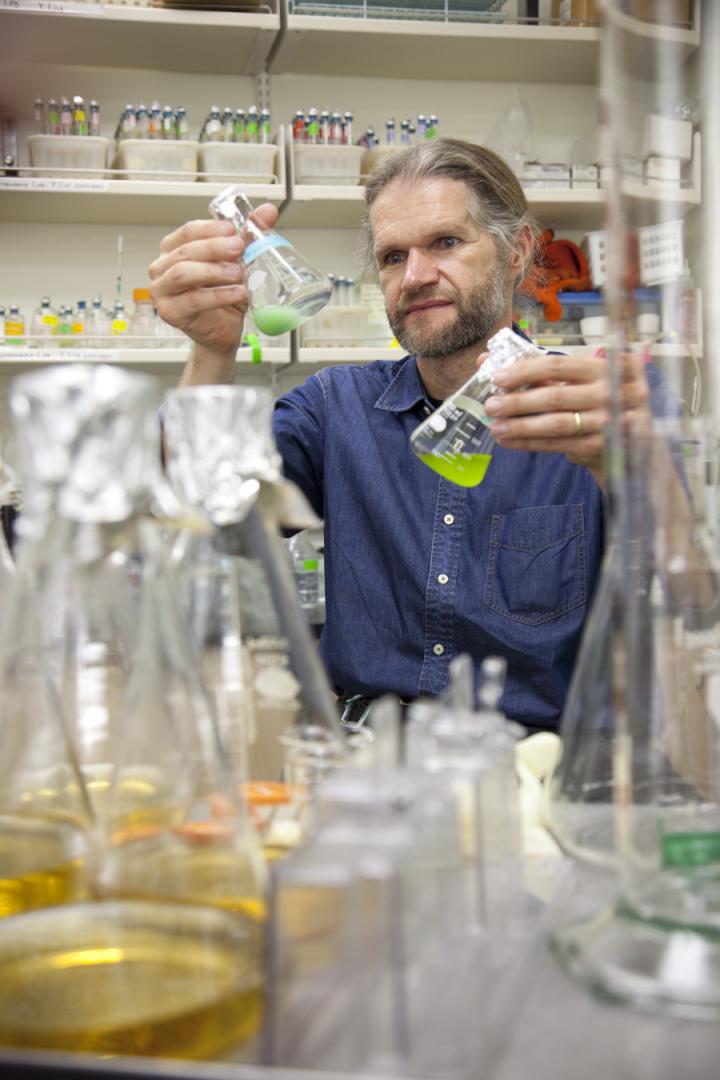
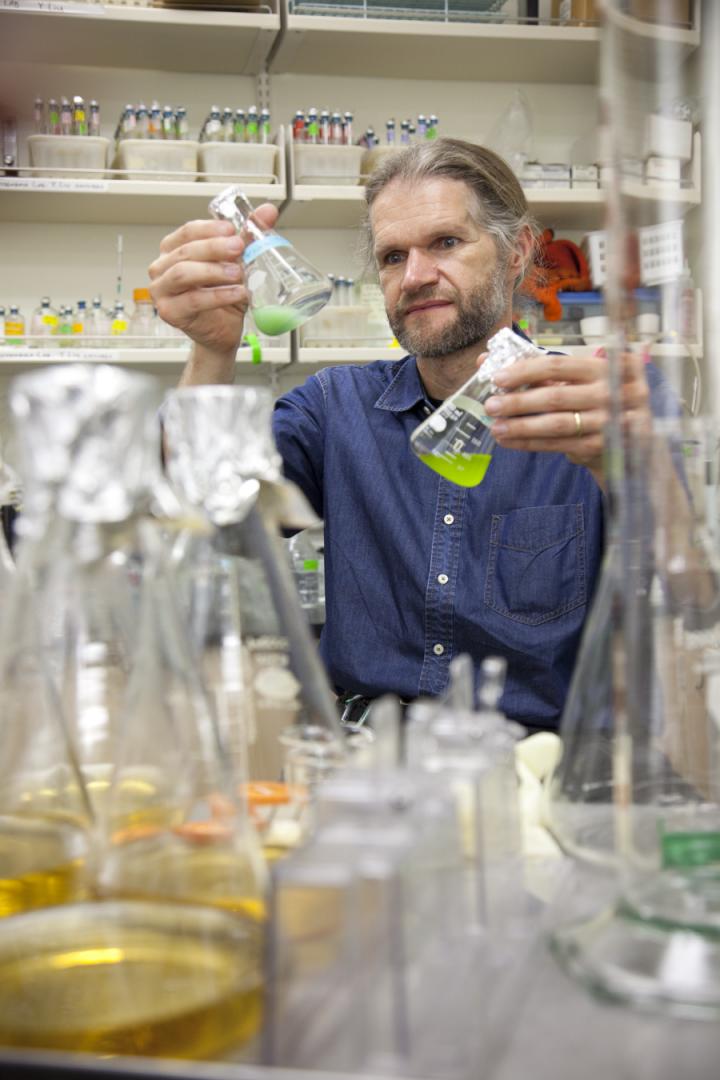
IMAGE

Credit: Portland State University

Portland State University researchers have found that only about half the genes in a specific virus affecting single cell organisms is needed to infect a host. This means the virus can undergo major mutations without losing its ability to survive and infect.

The research, headed by PSU biology professor Kenneth Stedman, shows how resilient and stable viruses can be. It also gives new insights into the structure of HIV and other viruses, how they are made and the challenges of fighting them.

"If you get rid of some of a virus's genes, you change the structure but it can still infect," Stedman said. "Our next step will be to find out what makes these viruses so stable, and that will give us insights into all kinds of diseases, from AIDS to Alzheimer's."

The viruses Stedman studied were taken from highly acidic, near-boiling volcanic hot springs. Stedman, co-founder of PSU's Center for Life in Extreme Environments, said studying organisms from such hostile conditions helps scientists understand the molecular basis of survivability under extreme conditions and maybe the origins of life itself.

###

Stedman's study, funded by the National Science Foundation, will be featured as a Spotlight in the May 2017 issue of the Journal of Virology. The accepted manuscript is available online at http://jvi.asm.org/content/early/2017/01/26/JVI.02406-16.full.pdf.

Media Contact

Kenneth Stedman
[email protected]
503-725-3253

http://www.pdx.edu

############

Story Source: Materials provided by Scienmag

Share12Tweet8Share2ShareShareShare2

Related Posts

Attitudes Toward Aging Impact Early Nursing Home Quality

February 8, 2026

Transforming Healthcare: Just Culture and Restorative Practices

February 8, 2026

Guiding Patients Through Obesity Diagnosis: A Primer

February 8, 2026

Evaluating a Self-Care App for Chest Trauma Patients

February 8, 2026
Please login to join discussion

POPULAR NEWS

  • Robotic Ureteral Reconstruction: A Novel Approach

    Robotic Ureteral Reconstruction: A Novel Approach

    82 shares
    Share 33 Tweet 21
  • Digital Privacy: Health Data Control in Incarceration

    63 shares
    Share 25 Tweet 16
  • Breakthrough in RNA Research Accelerates Medical Innovations Timeline

    53 shares
    Share 21 Tweet 13
  • Mapping Tertiary Lymphoid Structures for Kidney Cancer Biomarkers

    50 shares
    Share 20 Tweet 13

About

We bring you the latest biotechnology news from best research centers and universities around the world. Check our website.

Follow us

Recent News

Attitudes Toward Aging Impact Early Nursing Home Quality

Transforming Healthcare: Just Culture and Restorative Practices

Guiding Patients Through Obesity Diagnosis: A Primer

Subscribe to Blog via Email

Enter your email address to subscribe to this blog and receive notifications of new posts by email.

Join 73 other subscribers
  • Contact Us

Bioengineer.org © Copyright 2023 All Rights Reserved.

Welcome Back!

Login to your account below

Forgotten Password?

Retrieve your password

Please enter your username or email address to reset your password.

Log In
No Result
View All Result
  • Homepages
    • Home Page 1
    • Home Page 2
  • News
  • National
  • Business
  • Health
  • Lifestyle
  • Science

Bioengineer.org © Copyright 2023 All Rights Reserved.