In the face of intensifying global climate challenges, securing food production for a rapidly expanding population remains one of the most pressing scientific quests of our time. As global temperatures soar and fresh water becomes increasingly scarce, staple crops such as wheat, rice, and maize suffer devastating yield reductions, sometimes plummeting by up to 80 percent under conditions of heat, drought, and salinity stress. Addressing this dire agricultural dilemma demands a profound molecular understanding of plant stress responses, coupled with innovative biotechnological interventions to breed resilient crop varieties capable of thriving in hostile environments.
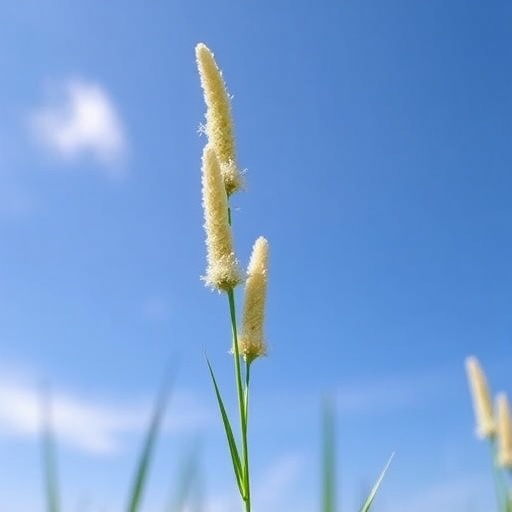
In this landmark study, a team led by Linkai Huang at Sichuan Agricultural University has deployed high-resolution transcriptomic profiling to dissect the complex, tissue-specific gene regulatory networks underpinning abiotic stress tolerance in pearl millet (Pennisetum glaucum), a robust C4 cereal indigenous to arid regions of Africa and Asia. Despite its exceptional resilience to heat and marginal soils, pearl millet’s molecular adaptations have evaded detailed scrutiny until now, leaving a vital reservoir of genetic potential largely untapped. Huang’s research, published in the July 2025 issue of Tropical Plants, unravels the multi-layered transcriptional dynamics that orchestrate pearl millet’s survival under heat, drought, and salinity stresses.
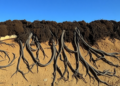
The study took an integrative approach, analyzing both leaf and root tissues across eight sequential time points under each stress condition. A striking observation emerged: roots manifested a more vigorous and sustained transcriptional response than leaves, underscoring the critical, yet often underappreciated, role roots play as the first line of defense against environmental perturbations. For example, heat stress induced over 14,000 differentially expressed genes (DEGs) in roots, compared to roughly 11,500 in leaves. This differential was accompanied by a pronounced activation of key transcription factors (TFs) such as heat shock factors (HSFs), WRKY, NAC, and ethylene response factors (ERFs) predominantly within root tissues, suggesting a sophisticated regulatory hierarchy tailored to root-specific protective mechanisms.
Further functional annotation revealed an enrichment of pathways related to cutin, suberin, and wax biosynthesis uniquely in roots under heat stress. These pathways contribute to enhancing the hydrophobic barrier properties of root surfaces, thereby reducing water loss and limiting heat damage. Concurrently, the mitogen-activated protein kinase (MAPK) signaling pathway surged in activity, indicating its pivotal role in transducing environmental signals into adaptive responses. Such tissue-specific signaling offers a compelling blueprint for dissecting the molecular intricacies of stress resilience.
Drought stress elicited a distinctive transcriptional signature characterized by upregulation of abscisic acid (ABA) biosynthetic genes—specifically ZEP, NCED, ABA2, and AAO—in roots. The activation of the ABA pathway is crucial for stomatal regulation, enabling plants to modulate transpiration and conserve water during prolonged dry spells. Parallel to this, both roots and leaves exhibited significant enrichment of ATP-binding cassette (ABC) transporter genes and hormone signal transduction components, underscoring the interconnectedness of hormonal crosstalk and transport mechanisms in maintaining homeostasis under arid conditions.
Salt stress imposed the highest transcriptional load, generating over 14,000 DEGs in roots. Here, auxin response factors (ARFs) prominently surfaced, hinting at a key role for auxin-mediated signaling pathways in managing ionic balance and cellular osmoprotection. The induction of 19 genes implicated in phosphoinositide synthesis—including INO1, PIK3, and PIP5K—highlighted activation of the phosphatidylinositol signaling pathway. This lipid signaling system is known to govern vesicle trafficking and endocytosis, processes essential for salt stress adaptation by mediating ion homeostasis and membrane remodeling.
Perhaps most intriguing was the identification of a core subset of 9,024 DEGs shared across all three stress conditions. These genes were enriched in fundamental pathways such as MAPK signaling, photosynthesis, and phenylpropanoid biosynthesis. Despite their conserved nature, the functional roles of these pathways displayed remarkable stress-specific modulation: for instance, ABC transporters orchestrated stomatal closure under heat stress, regulated ABA transport during drought, and facilitated ion transport in saline environments. This fine-tuned plasticity exemplifies the molecular versatility plants employ to endure multifaceted environmental challenges.
By mapping these complex, tissue-dependent transcriptional landscapes, Huang’s team provides a foundational framework to harness candidate genes and pathways for crop improvement. The study’s revelations open avenues for targeted genetic engineering or precision breeding strategies aimed not only at pearl millet but also at related cereal crops such as maize and sorghum, which share conserved stress response architectures.
Moreover, this research accentuates the functional diversity embedded within conserved signaling modules, spotlighting their differential deployment under distinct stress regimes. Such insights enhance our conceptual understanding of plant adaptive flexibility, informing the design of bespoke biotechnological tools that can toggle specific molecular circuits according to environmental cues.
Given the global urgency to curtail yield losses attributable to climate change, this study’s comprehensive analysis offers a timely contribution toward constructing more resilient agricultural systems. The integration of transcriptomic data across temporal and tissue-specific dimensions marks a paradigm shift from reductionist to holistic plant stress biology, underscoring the importance of root-centric research in the era of crop climate adaptation.
Ultimately, linking molecular insights from non-model, stress-resilient plants like pearl millet to major cereal crops presents an exciting frontier. As researchers mine these genetic reservoirs and translate discoveries into field-ready cultivars, food security can be fortified against an uncertain climatic future. The confluence of fundamental plant science and applied breeding empowered by studies such as this heralds a new chapter in sustainable agriculture.
The advances reported by Huang and colleagues epitomize the power of integrative –omics technologies to unravel the complexity of plant-environment interactions. Their elucidation of key gene regulatory networks and biochemical pathways provides invaluable molecular targets that might be exploited via genome editing or marker-assisted selection, expediting the development of crops tailored for resilience.
In summary, this study represents a major leap forward in decoding the molecular circuitry of abiotic stress adaptation in pearl millet and beyond. It underscores the imperative to explore underutilized crops with exceptional stress tolerance as genetic reservoirs and demonstrates how systems biology can inform translational strategies toward global food security.
Subject of Research: Abiotic stress responses in pearl millet (Pennisetum glaucum)
Article Title: Critical gene networks mapping pearl millet’s resilient response to heat, drought, and salt stress
News Publication Date: 4 July 2025
References:
DOI: 10.48130/tp-0025-0017
Web References:
https://www.maxapress.com/tp
Keywords: Plant sciences, Technology, Agriculture, Abiotic stress, Transcriptomics, Pearl millet, Gene regulation, Heat stress, Drought tolerance, Salt stress, ABA signaling, MAPK pathway
Tags: biotechnological interventions in farmingbreeding resilient crop varietiesclimate change and agriculturefood security and climate resiliencegene regulatory networks in plantsheat and drought stress in agriculturehigh-resolution transcriptomic profilingmolecular adaptations in cropspearl millet abiotic stress tolerancePennisetum glaucum researchsalinity stress effects on cropsstress response mechanisms