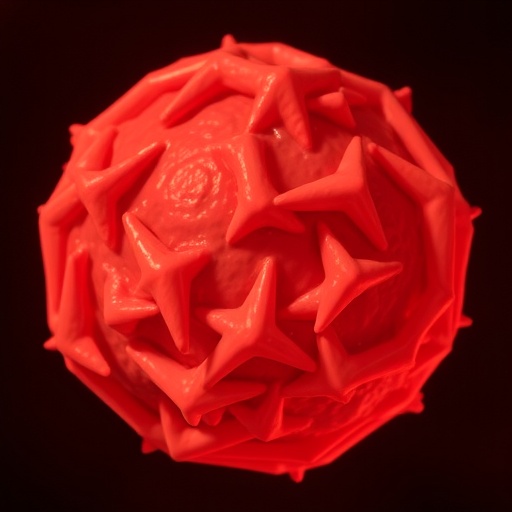
In a groundbreaking study that highlights the nuanced interactions between bacteria and dental surfaces, researchers have uncovered new insights into the susceptibility levels of Streptococcus dentisani. This bacterium has been the subject of intense scrutiny in the field of dental microbiology due to its potential implications for oral health. Using advanced atomic force microscopy, the study elucidates how Streptococcus dentisani exhibits varying degrees of adherence to different dental materials, paving the way for more informed approaches to dental care and the prevention of oral diseases.
The research was spearheaded by a team of scientists led by B.K. Félix-Sicairos, who aimed to illuminate the intricate mechanisms of bacterial adhesion and the factors influencing them. This is particularly important in the context of dental health, as the accumulation of bacteria on dental surfaces can lead to biofilm formation, cavities, and other oral diseases. With the rise of antibiotic resistance, understanding these microbial interactions is more crucial than ever.
At the heart of this investigation lies atomic force microscopy (AFM), a highly sophisticated imaging technology that allows researchers to observe microbial behavior at the nanoscale. This powerful technique enables the visualization of bacterial structures and their interaction with various materials, revealing critical information about how Streptococcus dentisani adheres to surfaces typically used in dental procedures. The study provides a unique view into the cellular mechanisms that enable these bacteria to attach themselves to teeth and other dental materials.
.adsslot_Xuo3xDwO7q{width:728px !important;height:90px !important;}
@media(max-width:1199px){ .adsslot_Xuo3xDwO7q{width:468px !important;height:60px !important;}
}
@media(max-width:767px){ .adsslot_Xuo3xDwO7q{width:320px !important;height:50px !important;}
}
ADVERTISEMENT
A significant aspect of the research is the differential susceptibility of Streptococcus dentisani to various dental surfaces. Different materials, such as composite resins, ceramics, and metals, exhibit varied properties that can either promote or inhibit the adhesion of bacteria. By identifying these differences, the team seeks to develop better dental materials that minimize the risk of bacterial adhesion, thus reducing the chances of plaque build-up and related dental issues. The implications for composite material development are profound, offering the promise of enhanced oral health outcomes.
The study found that the physical properties of dental surfaces, including roughness and hydrophilicity, played a pivotal role in the adhesion of Streptococcus dentisani. Surfaces that are smoother and more hydrophilic tended to reduce bacterial adhesion, while rougher surfaces presented greater challenges in terms of biofilm formation. These findings underscore the importance of material selection in dental treatments and highlight the need for ongoing improvements in dental product manufacturing.
Moreover, the significance of bacterial adherence cannot be overstated. Once bacteria attach to a surface, they can proliferate and form a biofilm, a structured community of microorganisms that are notoriously difficult to eradicate. By understanding how specific surfaces affect bacterial adhesion, dental professionals can better strategize on preventive measures and treatment protocols aimed at plaque control. This could lead to a paradigm shift in dental practices that traditionally focus on reactive solutions, such as cleaning and antibiotics.
In the broader context of public health, the findings from this research could have far-reaching ramifications. Oral health is closely linked to overall health, with poor dental hygiene associated with systemic issues such as cardiovascular disease and diabetes. By developing dental materials that can minimize bacterial adhesion, we can help improve oral hygiene, which in turn could lead to better health outcomes across populations.
While the research has made significant strides in understanding the behaviors of Streptococcus dentisani, it raises additional questions that warrant further investigation. For instance, what are the long-term effects of these materials on bacterial evolution and resistance? As dental practices evolve, continuous monitoring of bacteria and their interactions with new surfaces will be essential to safeguard public health.
The comprehensive nature of this study serves as a springboard for future research in dental microbiology. It lays the groundwork for more extensive studies that could investigate the microbial communities present in oral biofilms and their responses to various dental treatments. This ongoing research is critical to staying a step ahead of emerging challenges associated with dental caries and systemic health issues linked to oral bacteria.
As we move forward, it is imperative that scientists, dental professionals, and materials engineers collaborate to translate these findings into practical applications. The integration of scientific research into clinical practices will help ensure that advancements in material science directly benefit patients and improve oral health standards. This approach could lead to innovative dental solutions capable of significantly reducing the prevalence of oral diseases.
It is essential for ongoing education and updates in dental practices to include findings from cutting-edge research studies like this one. Dental professionals need to stay informed about the latest advancements in materials science and microbiology, as this knowledge can enhance patient care and inform better clinical decisions. Continued interdisciplinary efforts in research and practice will be integral to advancing the field of dentistry.
In conclusion, the atomic force microscopy study on Streptococcus dentisani marks a significant milestone in understanding bacterial interactions with dental materials. By exploring the differential susceptibility of this bacterium, the research opens new avenues for developing dental products that mitigate biofilm formation and enhance oral health. As science continues to evolve, so too must our approaches to health care—embracing innovation will be crucial to tackling the challenges of tomorrow.
Subject of Research: Differential susceptibility of Streptococcus dentisani to dental surfaces
Article Title: Differential susceptibility of Streptococcus dentisani to dental surfaces: An atomic force microscopy study
Article References: Félix-Sicairos, B.K., Martínez Martínez, R.E., Kolosovas-Machuca, E.S. et al. Differential susceptibility of Streptococcus dentisani to dental surfaces: An atomic force microscopy study. Int Microbiol (2025). https://doi.org/10.1007/s10123-025-00696-x
Image Credits: AI Generated
DOI: https://doi.org/10.1007/s10123-025-00696-x
Keywords: Streptococcus dentisani, atomic force microscopy, dental surfaces, bacterial adhesion, oral health
Tags: advanced imaging techniques in microbiologyantibiotic resistance in oral pathogensatomic force microscopy applicationsbacterial interactions with dental surfacesbiofilm formation in dentistrydental material susceptibility studiesdental microbiology researchfactors influencing bacterial adherencenanoscale observation of bacteriaoral health implicationsprevention of oral diseasesStreptococcus dentisani bacterial adhesion