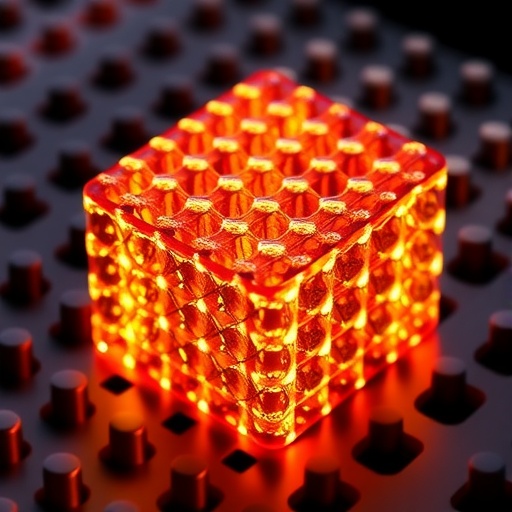
Sodium-ion batteries represent a promising alternative to the more conventional lithium-ion batteries, primarily due to the earth-abundant nature of sodium. In recent developments, a research team led by Li et al. has unveiled a new material, Lamellar P2-Na0.7CoO2, which has demonstrated exceptional potential for enhancing the longevity and performance of sodium-ion batteries. This groundbreaking work promises to reshape the landscape of energy storage technology as we know it.
One of the principal characteristics of Lamellar P2-Na0.7CoO2 is its unique structural configuration. It is essential to understand that the layered structure of this material allows for greater intercalation of sodium ions, facilitating an efficient reversible reaction during charge and discharge cycles. This structural feature not only enhances the electrochemical performance but also contributes to the material’s stability over prolonged usage.
.adsslot_jMNu6UQT0o{width:728px !important;height:90px !important;}
@media(max-width:1199px){ .adsslot_jMNu6UQT0o{width:468px !important;height:60px !important;}
}
@media(max-width:767px){ .adsslot_jMNu6UQT0o{width:320px !important;height:50px !important;}
}
ADVERTISEMENT
In laboratory conditions, the performance metrics of Lamellar P2-Na0.7CoO2 have shown remarkable results. Cyclic voltammetry tests reveal a high capacity retention rate, demonstrating that this material can withstand extensive cycling without significant degradation. The implications of this finding are monumental, particularly for applications requiring longevity, such as in electric vehicles and grid storage systems, where reliability is paramount.
The electrochemical properties of Lamellar P2-Na0.7CoO2 have been meticulously analyzed. Various studies indicated that this cathode material exhibits a high specific capacity, coupled with excellent rate capability. When compared to traditional cathodes used in sodium-ion batteries, the performance of Lamellar P2-Na0.7CoO2 is groundbreaking and positions it as a frontrunner in the race for next-generation battery technologies.
Another significant advantage of this material is its environmental impact. The use of sodium over lithium not only contributes to lower production costs but minimizes the ecological footprint associated with lithium mining. This shift towards more sustainable materials resonates well with the growing demands for greener technologies and materials in energy storage systems, aligning seamlessly with global sustainability goals.
Through the rigorous testing and analysis conducted by the team, it has become apparent that Lamellar P2-Na0.7CoO2 not only meets the benchmarks set by current battery technologies but exceeds them in many respects. This shift in cathode material signifies a turning point for sodium-ion batteries, marking a pathway towards greater acceptance and integration into various sectors.
The implications of integrating Lamellar P2-Na0.7CoO2 into sodium-ion batteries extend beyond performance. Stakeholders in the electric vehicle industry, renewable energy sector, and beyond will witness significant advancements in battery longevity and reliability. As these industries increasingly turn to alternative energy storage solutions, the research conducted by Li and colleagues stands to have far-reaching impacts.
Building on this progress, future research may explore further optimization of this cathode material. The potential modifications and enhancements could lead to even greater efficiency and performance, driving the sodium-ion battery technology to new heights. This ongoing journey is bound to attract the attention of researchers and companies alike, eager to harness the capabilities of this innovative material.
The promise of Lamellar P2-Na0.7CoO2 reinforces the notion that the future of energy storage may not rely exclusively on lithium. By broadening the landscape of battery chemistry, it opens doors for diversification of technology that could mitigate shortages and disruptions in supply chains commonly associated with lithium resources.
In conclusion, the research led by Li et al. in developing Lamellar P2-Na0.7CoO2 heralds a new chapter in sodium-ion battery technology. The advancements in cycle life, capacity retention, and environmental sustainability align with pressing global demands. As the world continues to evolve towards renewable energy solutions, the innovations driven by this research underscore the essential role of scientific inquiry in forging the path ahead.
This last point cannot be overstated: with the rapid advancement in technology and the urgent need for sustainable energy solutions, the research team’s contributions significantly impact the future of sodium-ion battery technology. A wider acceptance and implementation of these batteries may soon follow, thanks to the significant findings presented in their work.
Ultimately, the development of Lamellar P2-Na0.7CoO2 stands as a testament to the power of innovation in materials science, offering hope for a more sustainable future in energy storage.
Subject of Research: Enhancements in sodium-ion battery longevity using Lamellar P2-Na0.7CoO2.
Article Title: Lamellar P2-Na0.7CoO2 enables long-cycle life of sodium-ion batteries.
Article References:
Li, J., Xiong, S., Liu, J. et al. Lamellar P2-Na0.7CoO2 enables long-cycle life of sodium-ion batteries.
Ionics (2025). https://doi.org/10.1007/s11581-025-06532-6
Image Credits: AI Generated.
DOI: https://doi.org/10.1007/s11581-025-06532-6
Keywords: Sodium-ion batteries, Lamellar P2-Na0.7CoO2, energy storage, battery longevity, electrochemical performance, sustainability.
Tags: alternative to lithium-ion batteriescycle life optimizationearth-abundant battery materialselectrochemical performance improvementsenergy storage innovationsenhanced battery longevityLamellar P2-Na0.7CoO2 materialrenewable energy storage advancementsresearch in battery materialssodium ion intercalationsodium-ion battery technologysustainable energy solutions