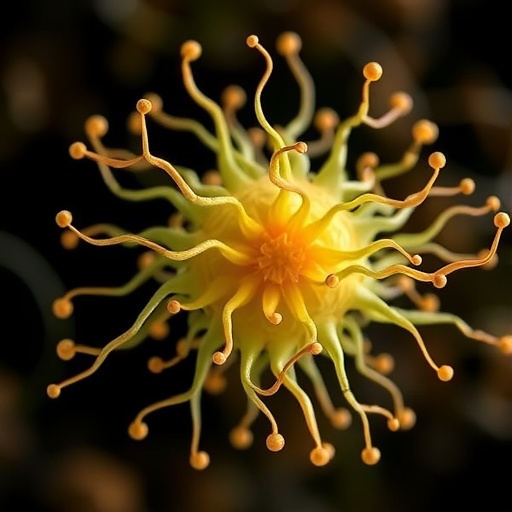
The foundational concept behind this breakthrough is the application of advanced synthetic biology tools to remodel Saccharomyces cerevisiae, a widely studied yeast species and a workhorse organism in industrial biotechnology. Unlike conventional methods that rely on slow, laborious extraction and purification of active ingredients from harvested plants, the engineered yeast strain can now produce three distinct medicinal chemical classes simultaneously: notoginsenosides (specifically protopanaxadiol), tanshinone diterpenoids (primarily miltiradiene), and borneol, a key monoterpenoid. These compounds are known for their pivotal role in TCM, particularly in Compound Danshen formulations renowned for cardiovascular benefits.
.adsslot_pTU8SFKBDV{ width:728px !important; height:90px !important; }
@media (max-width:1199px) { .adsslot_pTU8SFKBDV{ width:468px !important; height:60px !important; } }
@media (max-width:767px) { .adsslot_pTU8SFKBDV{ width:320px !important; height:50px !important; } }
ADVERTISEMENT
One of the most striking advances embodied in Compound Danshen Yeast 1.0 is its ability to perform “one-step fermentation” starting from basic carbon sources such as glucose and ethanol. This capability stands in stark contrast with conventional agricultural methods that require months to years to cultivate medicinal herbs under specific conditions. By leveraging fermentation, large-scale production can be more easily controlled, standardized, and environmentally sustainable. Additionally, fermentation reduces dependency on geographical and seasonal factors that often limit the availability and quality of medicinal herbs.
At the molecular level, the biosynthesis of notoginsenosides in yeast entails the engineered expression of enzymes involved in the mevalonate pathway to synthesize protopanaxadiol, a critical triterpenoid saponin that imparts anti-inflammatory and neuroprotective properties. In parallel, synthesis of tanshinone diterpenoids involves engineering diterpene synthases and tailoring enzymes, such as cytochrome P450 monooxygenases, to convert precursors into miltiradiene derivatives with potent antioxidant and cardiovascular activity. Crucially, the team also introduced pathways for borneol biosynthesis, a volatile monoterpene, by incorporating genes encoding terpene synthases that efficiently channel precursors towards this bioactive compound.
Beyond the metabolic engineering feats, the implications of this innovation extend significantly to the pharmaceutical and herbal medicine sectors. The capacity to produce Compound Danshen formulations through scalable fermentation circumvents challenges associated with environmental sustainability, such as the overharvesting of wild Danshen populations, which has threatened biodiversity. It also facilitates consistency in quality control—a persistent limitation in herb-based therapeutics where compound concentrations can vary widely depending on growth conditions. With a defined microbial production platform, products can be rigorously standardized, ensuring dose reliability and regulatory acceptance.
Moreover, the methodology enables rapid prototyping and combinatorial biosynthesis to generate derivative compounds or novel analogs with potentially enhanced therapeutic profiles. The synthetic biology platform provides a flexible chassis where genetic circuits can be further tweaked to optimize pharmacokinetic attributes, bioavailability, or target specificity—a realm that traditional plant breeding cannot match in speed or precision.
The research also marks a significant stride in bridging ancient herbal medicine knowledge with modern biotechnology. By harnessing the biosynthetic logic embedded within medicinal plants and recapitulating it in a tractable microbial host, it represents a synthesis of centuries-old empirical wisdom with cutting-edge genetic engineering. This fusion expands the accessibility of TCM formulations worldwide, tapping into synthetic biology’s promise to democratize drug production pathways.
Nonetheless, challenges remain before microbial production of complex TCM formulations becomes mainstream. Scaling up fermentation while maintaining yield and purity, navigating regulatory pathways that classify biologically derived herbal medicines, and ensuring public acceptance of bioengineered products are pivotal next steps. Additionally, further studies to confirm the pharmacodynamics and efficacy of microbial-derived herbal extracts compared to traditional plant extracts will be necessary.
As synthetic biology continues to advance, the scope for engineering more sophisticated artificial herbal cells encompassing broader arrays of phytochemicals is within reach. The ability to customize microbial strains to produce diverse herbal formulations in a predictable, scalable manner may soon transform global medicine supply chains and offer potent new tools against chronic diseases. Compound Danshen Yeast 1.0 stands as a testament to how integrative scientific ingenuity can unlock nature’s molecular treasure trove in a sustainable and innovative fashion.
Subject of Research: Microbial synthetic biology for production of traditional Chinese medicine formulations
Article Title: Not provided
News Publication Date: Not provided
Web References: Not provided
References: Not provided
Image Credits: Courtesy of Science of Traditional Chinese Medicine (STCM)
Keywords: Synthetic biology, traditional Chinese medicine, artificial herbal cell, Saccharomyces cerevisiae, Compound Danshen Yeast 1.0, protopanaxadiol, tanshinone diterpenoids, borneol, metabolic engineering, fermentation, biosynthesis, natural products
Tags: advanced biotechnology applicationsartificial herbal cellsbiosynthesis of medicinal ingredientscardiovascular health in traditional medicineCompound Danshen Yeast 1.0engineered yeast for herbal compoundsmicrobial fermentation in TCMnovel yeast strain developmentreducing dependence on wild harvestingsynthetic biology in medicineTCM formulation productiontraditional Chinese medicine innovations