Credit: Laura Marek
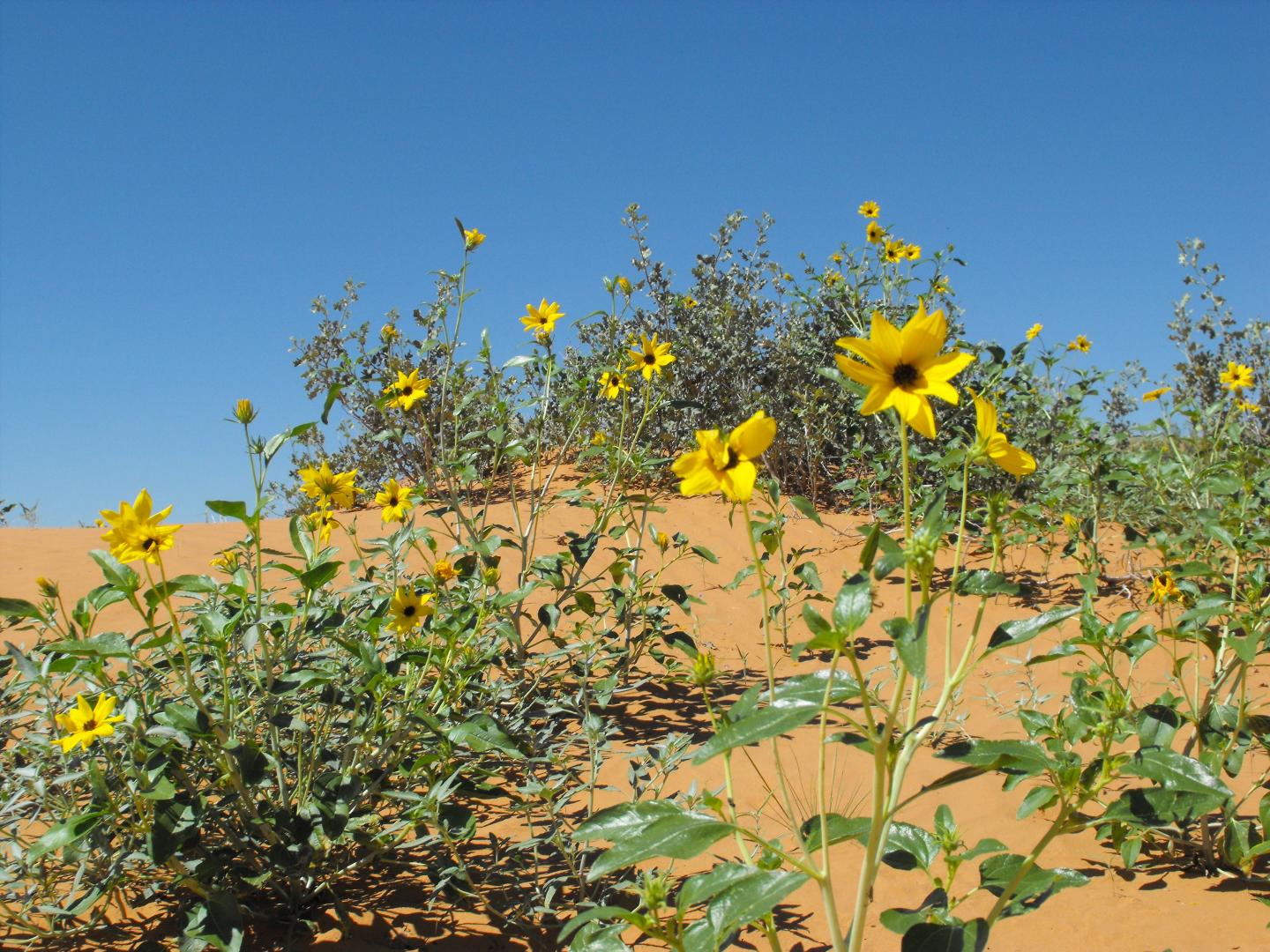
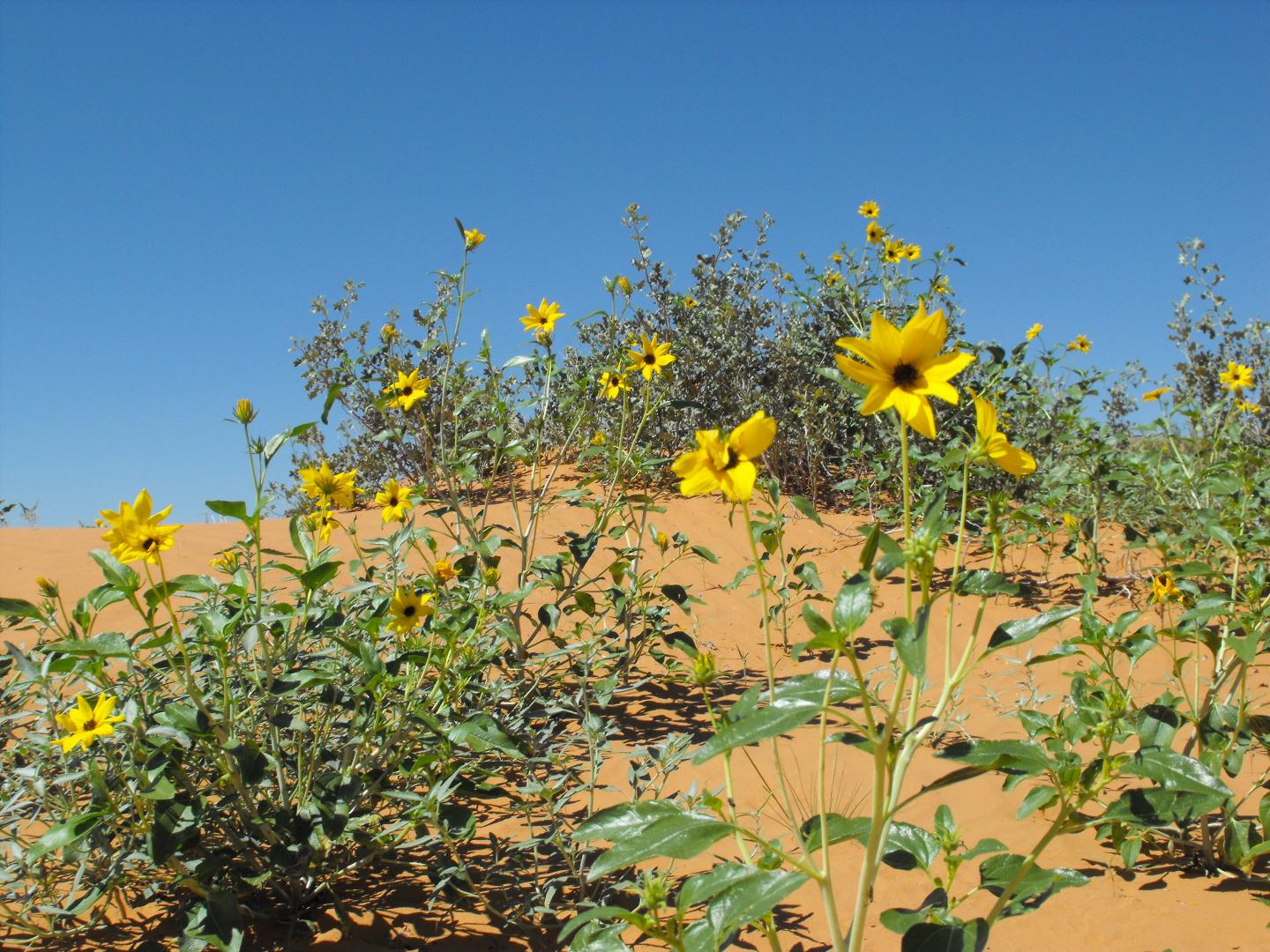
Beauty and utility in one bright package, sunflowers are one of just a few commercial crops with origins in the United States.
Today, sunflowers are grown in more than 70 countries. The value of the global sunflower crop is estimated to be over $20 billion.
But the world's fifth largest oilseed crop is facing a genetic challenge. As sunflowers were domesticated, breeders selected traits such as higher yield and uniform height. Over time, other desirable traits, like resistance to specific pests, were lost. Annually, diseases, weeds, and insects are estimated to cause more than $1.3 billion in losses for sunflower growers.
One way plant breeders can reduce the vulnerability of crops is to breed them with wild relatives. The U.S. Department of Agriculture maintains the world's largest collection of sunflower wild relatives. A recent study outlines the importance of better annotating the wealth of genetic information in this enormous collection.
"Think of crop wild relatives as the 'ancestry' of the crop," says Gerald Seiler, a USDA researcher and lead author of the study. "It's like family genealogy, but for plants we have the ability to preserve the 'ancestors' in collections for current and future use."
These wild relatives are vital resources for plant breeders. In the wild, species coevolve with native diseases and insects. They adapt to face different environmental stresses, such as drought. Wild plants retain the genes needed to resist pests and survive in different environments.
"Crop wild relatives are an integral part of the sunflower industry," says Seiler. "They provide traits from wild ancestors. These traits can sustain the crop's productivity, which is constantly being challenged by pests and the environment."
Researchers can breed varieties of crop sunflower with wild relatives. They can then select hybrid plants with desired traits, such as disease resistance. But as global populations expand and land use patterns change, several sunflower relatives may face extinction. That makes it crucial that researchers preserve them while they are still available.
But simply preserving the wild relatives is not enough. To make the best use of the collections, researchers need detailed information about their genetic diversity. "Having readily available information about multiple genetic traits in the collections is vital," says Seiler. "It provides opportunities for researchers to be proactive, instead of reactive."
Researchers have actively used sunflower wild relatives in many ways. They have developed cultivated varieties resistant to diseases such as powdery mildew and sunflower rust. Breeders can also create varieties of sunflower that can grow in adverse conditions.
According to Seiler, new techniques in genetics and molecular biology make it vital to know more about the genetic diversity in wild relative collections. "This genetic information and the new molecular tools can help tremendously," he says. "We can become more efficient and precise in how we select for specific traits. We can also improve how we transfer genes into crop varieties."
Sunflower ranks fifth among crops important for global food security in the use of traits from wild relatives. Researchers estimate that the wild relatives contribute between $267 and $384 million annually towards the value of the global sunflower crop.
"Maintaining genetic diversity is the key to sustainable agriculture," says Seiler. "That's vital to feeding the ever-increasing world population." Disease agents and pests are continuously evolving.. Researchers will need the help of wild relatives to develop new varieties of sunflower that can thrive in an ever-changing world.
"Sunflower relatives in our collection are ready for whatever challenges sunflower production might face, now and in the future," says Seiler.
###
Read more about Seiler's research in Crop Science.
Media Contact
Susan Fisk
[email protected]
608-273-8091
@ASA_CSSA_SSSA
http://www.agronomy.org
############
Story Source: Materials provided by Scienmag