• HOME
  • NEWS
  • EXPLORE
    • CAREER
      • Companies
      • Jobs
    • EVENTS
    • iGEM
      • News
      • Team
    • PHOTOS
    • VIDEO
    • WIKI
  • BLOG
  • COMMUNITY
    • FACEBOOK
    • INSTAGRAM
    • TWITTER
Saturday, September 5, 2026
BIOENGINEER.ORG
No Result
View All Result
  • Login
  • HOME
  • NEWS
  • EXPLORE
    • CAREER
      • Companies
      • Jobs
        • Lecturer
        • PhD Studentship
        • Postdoc
        • Research Assistant
    • EVENTS
    • iGEM
      • News
      • Team
    • PHOTOS
    • VIDEO
    • WIKI
  • BLOG
  • COMMUNITY
    • FACEBOOK
    • INSTAGRAM
    • TWITTER
  • HOME
  • NEWS
  • EXPLORE
    • CAREER
      • Companies
      • Jobs
        • Lecturer
        • PhD Studentship
        • Postdoc
        • Research Assistant
    • EVENTS
    • iGEM
      • News
      • Team
    • PHOTOS
    • VIDEO
    • WIKI
  • BLOG
  • COMMUNITY
    • FACEBOOK
    • INSTAGRAM
    • TWITTER
No Result
View All Result
Bioengineer.org
No Result
View All Result
Home NEWS Science News

Creation of highly magnetic material could improve computer technologies

Bioengineer by Bioengineer
March 13, 2017
in Science News
Reading Time: 2 mins read
0
Share on FacebookShare on TwitterShare on LinkedinShare on RedditShare on Telegram
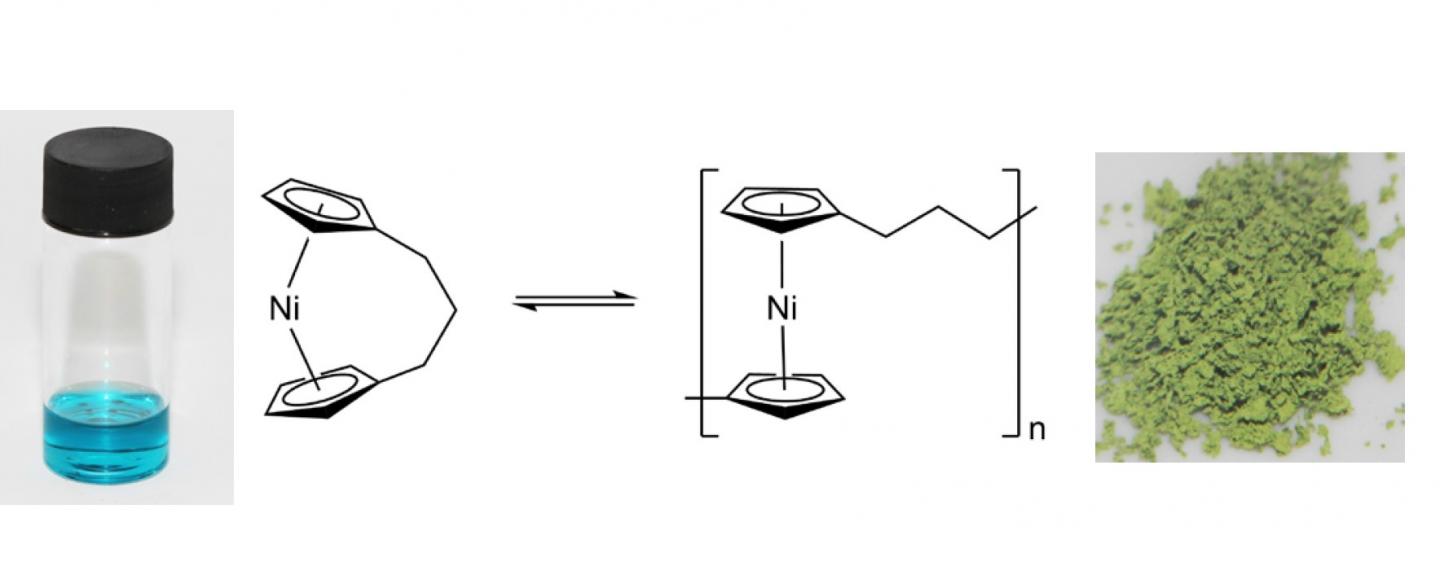
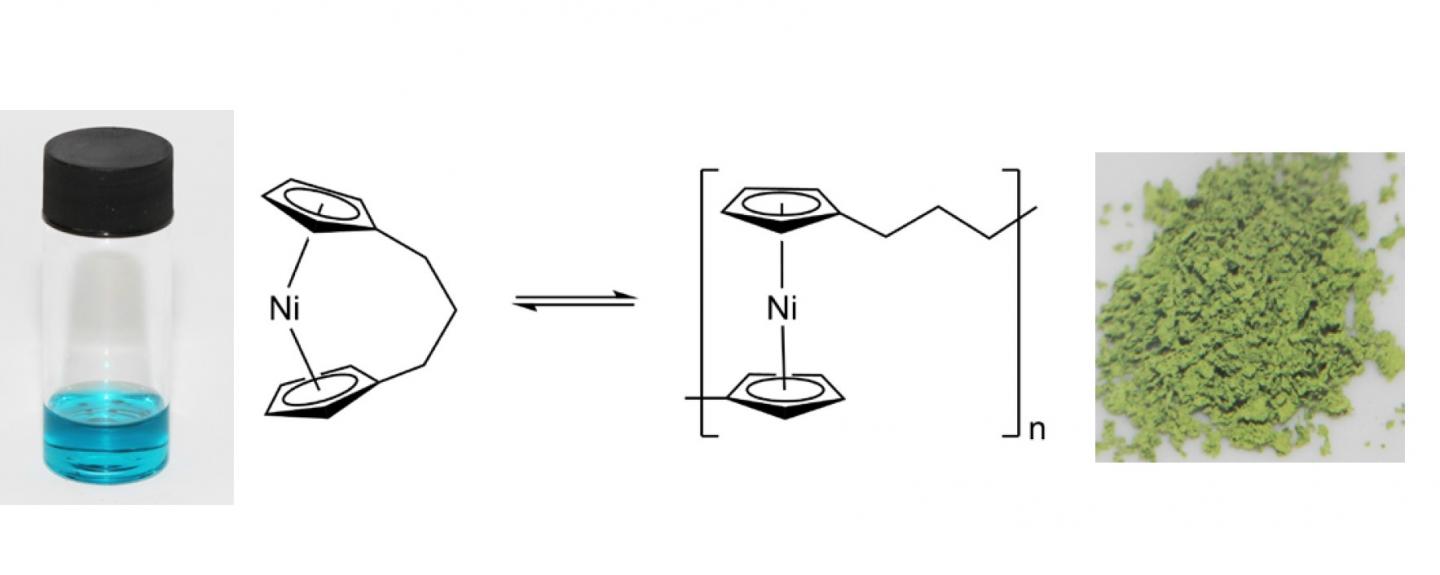
IMAGE

Credit: Manners Group, University of Bristol

Scientists, led by Professor Ian Manners from the University of Bristol's School of Chemistry, have developed a facile route to a highly magnetic material that could provide fundamental improvements to the performance of current computer technologies.

Polymers, or plastics, which feature metal atoms in their structure have been a focus of much research in recent decades, and have found application in self-healing materials, photovoltaic technology, and information storage.

Metal sandwich complexes, commonly termed 'metallocenes' have also been incorporated into polymeric materials – most commonly using iron.

Now, researchers from the University of Bristol, together with colleagues from the University of Oxford have created a polymer in which nickel (as 'nickelocene' units) is built into the structure, affording a bright green, highly magnetic material.

The study's first author Rebecca Musgrave said: "Remarkably, we also have the ability to create and destroy this dynamic magnetic polymer using only changes in temperature (via a process called depolymerisation).

"Most materials with cooperative magnetic properties are insoluble or difficult to process, and this nickel-based polymer is a rare example of a readily accessible, easily handled, soluble magnetic polymer."

The interesting electronic and magnetic properties of this polymer will continue to be explored, with the aim of making highly magnetic materials for use in data storage applications, key to improving the performance of current computer technologies.

###

Media Contact

Rebecca Musgrave
[email protected]
@BristolUni

http://www.bristol.ac.uk

############

Story Source: Materials provided by Scienmag
Share12Tweet8Share2ShareShareShare2

Related Posts

Opioid dependence adds heavy burden for hospitalized cancer patients, study finds

September 5, 2026

B-cell profiles reveal clinical differences in childhood-onset lupus patients

September 5, 2026

Mangosteen peel extract and α-mangostin curb blood clot formation

September 5, 2026

Electrodermal responses depend on task demands, not internet addiction severity

September 5, 2026
Please login to join discussion

POPULAR NEWS

  • Opioid dependence adds heavy burden for hospitalized cancer patients, study finds

    29 shares
    Share 12 Tweet 7
  • B-cell profiles reveal clinical differences in childhood-onset lupus patients

    29 shares
    Share 12 Tweet 7
  • Mangosteen peel extract and α-mangostin curb blood clot formation

    29 shares
    Share 12 Tweet 7
  • Electrodermal responses depend on task demands, not internet addiction severity

    29 shares
    Share 12 Tweet 7

About

We bring you the latest biotechnology news from best research centers and universities around the world. Check our website.

Follow us

Recent News

Opioid dependence adds heavy burden for hospitalized cancer patients, study finds

B-cell profiles reveal clinical differences in childhood-onset lupus patients

Mangosteen peel extract and α-mangostin curb blood clot formation

Subscribe to Blog via Email

Enter your email address to subscribe to this blog and receive notifications of new posts by email.

Join 85 other subscribers
  • Contact Us

Bioengineer.org © Copyright 2023 All Rights Reserved.

Welcome Back!

Login to your account below

Forgotten Password?

Retrieve your password

Please enter your username or email address to reset your password.

Log In
No Result
View All Result
  • Homepages
    • Home Page 1
    • Home Page 2
  • News
  • National
  • Business
  • Health
  • Lifestyle
  • Science

Bioengineer.org © Copyright 2023 All Rights Reserved.