When the planet plunged into a global deep freeze more than 600 million years ago, the question of life’s persistence through this cataclysmic era has long puzzled scientists. Known as the “Snowball Earth” periods, these extreme glaciation events shrouded much of the Earth’s surface in ice, with global temperatures plummeting to averages near –50 degrees Celsius. Yet, despite the overwhelming cold and ice cover, life endured. Recent research led by scientists at MIT proposes a compelling refuge for early complex life forms: meltwater ponds atop the ice sheets, environments that may have provided vital habitats for the ancestors of modern eukaryotic life.
The Snowball Earth hypothesis refers to intervals during the Cryogenian Period, approximately between 720 and 635 million years ago, when glacial ice is believed to have covered much of the planet from poles to equator. While the precise nature of the ice coverage—whether a rigid, global snowball or a looser slushball—is still debated, the survival of early eukaryotes during these times poses a biological enigma. Eukaryotes, characterized by their compartmentalized cells with nuclei and organelles, represent a crucial evolutionary milestone, giving rise to diverse multicellular organisms including plants, animals, and fungi.
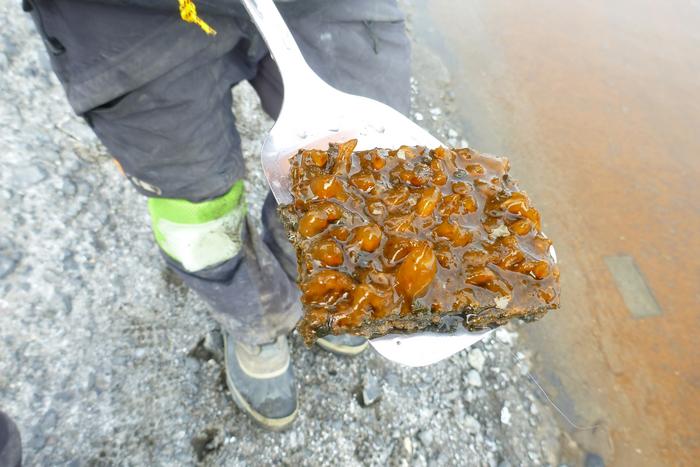
To unravel where such complex cells might have found sanctuary amidst this planetary freeze, an interdisciplinary team investigated analog environments on Earth today. Their primary focus was on meltwater ponds located on the McMurdo Ice Shelf in Antarctica. These small bodies of liquid water, formed seasonally on the surface of ice sheets, offer an accessible natural laboratory that may mirror conditions on Snowball Earth. The Antarctic ponds are shallow and often just a few meters across, their waters enriched and stratified by sediments and trapped biological materials, providing niches for microbial communities.
.adsslot_7hUj06gOdJ{ width:728px !important; height:90px !important; }
@media (max-width:1199px) { .adsslot_7hUj06gOdJ{ width:468px !important; height:60px !important; } }
@media (max-width:767px) { .adsslot_7hUj06gOdJ{ width:320px !important; height:50px !important; } }
ADVERTISEMENT
The researchers concentrated on biological signatures preserved in microbial mats lining the pond floors. These mats consist largely of cyanobacteria, a group of prokaryotic photosynthetic organisms capable of thriving in extreme conditions. However, beyond these ancient bacteria, the team sought evidence for eukaryotic life—organisms possessing the defining cellular complexity unavailable to prokaryotes. To detect these microscopic inhabitants, the scientists employed sophisticated biochemical techniques focusing on sterols, a class of lipids integral to eukaryotic cell membranes, as well as genetic markers such as ribosomal RNA sequences.
Their analyses yielded a remarkable discovery: diverse assemblages of eukaryotes were present in every meltwater pond studied. These included a wide variety of algae, protists, and microscopic multicellular animals, each displaying distinct lipid profiles and genetic fingerprints that corroborated their identity. Intriguingly, the composition of these communities varied significantly from pond to pond, influenced in part by the salinity gradients of the waters. Brackish or saltier ponds tended to house more similar eukaryotic populations, which contrasted with the assemblages found in fresher meltwaters, hinting at environmental controls on community structure.
These findings support the hypothesis that the shallow meltwater ponds of Snowball Earth could have served as dynamic microhabitats, preserving biodiversity and allowing evolutionary processes to continue despite widespread glaciation. The presence of eukaryotes in these isolated and variable systems demonstrates the resilience and adaptability of early complex life, suggesting that such life was not merely surviving in refugia beneath the ice or near hydrothermal vents but thriving above the surface in sunlit, albeit frigid, oases.
This research bridges paleobiology and modern ecology by drawing parallels between present Antarctic environments and those of deep geological time. The team’s approach utilized complementary biosignatures—chemical lipids and genetic material—to establish the existence and diversity of eukaryotic life. These biomarkers are especially valuable given the scarcity of fossil evidence from Snowball Earth epochs, offering fresh insights into the ecological dynamics of these ancient icy worlds.
Moreover, the study highlights the significance of environmental heterogeneity in supporting life during global-scale climatic extremes. The seasonal formation of meltwater ponds, modulated by factors such as dust deposition on ice surfaces and underlying sediment disturbances, created patchy pockets of habitability. The accumulation of dark-colored particulates on ice enhanced melting, generating these microhabitats that could absorb solar energy, maintain liquid water, and shelter biological communities.
Understanding the survival strategies of early complex life during Snowball Earth has profound implications for evolutionary biology and astrobiology. It informs models of life’s persistence under extreme conditions, aiding in the identification of biosignatures on Earth and potentially other icy worlds. The resilience exhibited by these ancient eukaryotes foreshadows the evolutionary success that would culminate in the Cambrian explosion of biodiversity hundreds of millions of years later.
The research team, which includes experts from MIT, Cardiff University, the Natural History Museum London, and the University of Waikato in New Zealand, emphasizes that the presence of diverse eukaryotic life in Antarctic meltwater ponds today serves as an analogue for similar environments that could have existed during these cryogenic episodes. The integration of lipidomics and molecular genetics in environmental samples represents a powerful toolkit to decipher ancient ecological mysteries often inaccessible by paleontological methods alone.
In sum, these studies provide compelling evidence that not all life was consigned beneath or within the ice during Snowball Earth. Instead, shallow ponds of melted ice atop vast glacial expanses could have offered crucial refuges, enabling eukaryotic cells to survive, diversify, and lay the foundations for future multicellular organisms. This research not only rewrites a chapter of Earth’s evolutionary history but also underscores the astonishing capability of life to persist against seemingly insurmountable odds.
Subject of Research: Early eukaryotic life survival and biodiversity during Snowball Earth glaciations
Article Title: “Biosignatures of Diverse Eukaryotic Life from a Snowball Earth Analogue Environment in Antarctica”
Web References: DOI: 10.1038/s41467-025-60713-5
Image Credits: Roger Summons
Keywords: Earth sciences, evolutionary biology, eukaryotes, biological systematics, cell biology, biochemical analysis, chemical biology, molecular biology, climatology, environmental sciences
Tags: biological enigma of early lifeCryogenian Period eukaryotesearly life survivalenvironmental refuge during ice ageevolution of multicellular organismsextreme glaciation eventsice-covered planet ecosystemsmeltwater ponds habitatsMIT study on ancient lifeorigins of complex life formspersistence of life in harsh conditionsSnowball Earth hypothesis