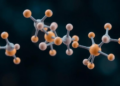

Renowned chemist Professor Frank Würthner of the University of Würzburg is embarking on a scientific quest to synthesize schwarzites—complex, three-dimensional carbon nanostructures that could redefine the landscape of materials science. These novel carbon allotropes hold promise as highly conductive porous frameworks, potentially revolutionizing next-generation energy storage devices and advanced filtration technologies. Supported by the prestigious European Research Council (ERC) through a substantial Advanced Grant of 2.5 million euros, Würthner’s groundbreaking project aims to turn theoretical constructs into tangible materials with unprecedented electronic and structural properties.
Schwarzites are named after Hermann Schwarz, the 19th-century German mathematician who first described these intriguing periodic minimal surfaces characterized by intricate curvature and large surface area combined with remarkably low density. Despite their appealing mathematical elegance and theoretical allure, the physical synthesis of schwarzites has proven elusive. Unlike more familiar carbon nanostructures such as graphene and carbon nanotubes, schwarzites feature a complex arrangement of polygons that create a saddle-shaped, negatively curved surface. This inherent geometric complexity has posed a formidable challenge to chemists attempting to assemble such structures from sp²-hybridized carbon atoms.
Professor Würthner’s team has developed an innovative supramolecular approach to tackle this challenge, leveraging the unique properties of nanographene molecules incorporating heptagonal rings. Whereas standard graphene is composed purely of hexagonal carbon rings generating flat sheets, the introduction of heptagons induces curvature, creating the negative Gaussian curvature that is the hallmark of schwarzite structures. This method was recently demonstrated through assembling nanographene units around C60 fullerenes, achieving schwarzite-like arrangements exhibiting the targeted three-dimensional architecture.
.adsslot_WRVSJgCv1s{width:728px !important;height:90px !important;}
@media(max-width:1199px){ .adsslot_WRVSJgCv1s{width:468px !important;height:60px !important;}
}
@media(max-width:767px){ .adsslot_WRVSJgCv1s{width:320px !important;height:50px !important;}
}
ADVERTISEMENT
A central element of this endeavor is the polymerization of these heptagon-containing nanographene building blocks into extended three-dimensional pi-conjugated frameworks. By advancing the synthetic sophistication of these components and fine-tuning their chemical environment, the research seeks to generate bulk schwarzite materials that embody the theorized electronic and mechanical properties. Such materials could offer exceptional electrical conductivity due to their fully delocalized electron systems spanning multiple dimensions, a feat unachieved by planar graphene or tubular nanotubes.
From a physical standpoint, schwarzites distinguish themselves through their unique topological electronic characteristics. Theorists predict that certain schwarzite lattices host Dirac cones—linear energy-momentum dispersions that are foundational to phenomena such as high electron mobility and exotic quantum phases of matter. If experimentally realized, these properties could unlock new physics and potential applications in quantum materials and electronic devices, positioning schwarzites as the next frontier for carbon-based nanotechnology.
The University of Würzburg’s Center for Nanosystems Chemistry, under Würthner’s leadership, is at the heart of this ambitious project. The center benefits from cutting-edge instrumentation and advanced facilities, courtesy of prior investments by the Free State of Bavaria. These resources will facilitate detailed characterization of newly synthesized schwarzites, ranging from structural analysis via electron microscopy to probing electronic behavior through spectroscopic methods. Understanding structure-property relationships in such novel materials is essential to harness their potential for practical applications.
This ERC-funded project represents Würthner’s second Advanced Grant, underscoring his position as a leading figure in organic and supramolecular chemistry. His earlier grant supported pioneering work in artificial photosynthesis, focusing on developing catalysts capable of splitting water molecules efficiently to produce clean hydrogen fuel. That success demonstrates his team’s capacity to address major scientific challenges by melding fundamental chemistry with visionary technological goals.
Würthner’s strategic approach integrates molecular design, supramolecular assembly, and polymer chemistry, pushing the boundary where synthetic chemistry meets materials science. By meticulously controlling the molecular architecture of nanographenes and their assembly into three-dimensional networks, the research aims to fabricate schwarzites with customizable properties. Such control over curvature and electronic conjugation could herald a new class of carbon materials tailored for specific applications in energy, filtration, and electronics.
The implications of successfully synthesizing schwarzites extend far beyond academic curiosity. Porous three-dimensional carbon frameworks with superior electrical conductivity and stability may revolutionize battery electrodes by enhancing charge transport and enabling faster ion diffusion. Similarly, their large internal surface area combined with tunable chemical functionality could make them ideal candidates for selective gas separation or water purification systems, addressing urgent environmental needs.
Yet, despite these exciting prospects, challenges remain immense. The synthetic routes to carefully incorporate heptagonal defects into extended carbon networks must be exquisitely precise to ensure desired curvature and connectivity. Additionally, ensuring the scalability and reproducibility of such complex materials will be crucial for transitioning from laboratory samples to practical technological components.
Professor Würthner’s vision exemplifies the synergy between mathematical theory and chemical innovation. By translating Schwarz’s 19th-century geometric abstractions into real, functional materials, this project blurs the boundary between abstract science and applicative technology. The successful realization of schwarzite materials would not only validate decades of theoretical predictions but also open transformative pathways in nanomaterial design and functional carbon architectures.
As the SCHWARZITE project unfolds over the coming five years, the scientific community will keenly watch Würthner’s progress. With robust ERC funding and a pioneering research team, the prospects for overcoming longstanding obstacles to schwarzite synthesis have never looked more promising. This work heralds a new era in carbon nanomaterials, potentially reshaping technologies across sectors from sustainable energy to environmental remediation.
In sum, Professor Frank Würthner’s ERC-funded pursuit of schwarzite carbon materials epitomizes cutting-edge research at the interface of chemistry, physics, and materials science. Harnessing molecular design and supramolecular chemistry, his project aspires to manifest exotic carbon allotropes long confined to mathematical theory into the tangible realm of high-performance nanomaterials. Their realization would mark a milestone in carbon materials science, paving the way for unprecedented technological innovations.
Subject of Research:
Synthesis and characterization of schwarzite carbon nanomaterials through supramolecular chemistry approaches for advanced energy and filtration applications.
Article Title:
Professor Frank Würthner’s Quest to Synthesize Schwarzite Carbon Nanostructures Powered by ERC Advanced Grant
News Publication Date:
Not provided
Web References:
https://mediasvc.eurekalert.org/Api/v1/Multimedia/43b03666-166c-477c-949e-8eb612c9e6af/Rendition/low-res/Content/Public
Image Credits:
Christoph Weiss / University of Würzburg
Keywords
Supramolecular chemistry, Nanostructures, Carbon allotropes
Tags: advanced filtration solutionscarbon nanostructures researchcomplex carbon allotropesenergy storage technologyERC Advanced GrantFrank Würthnermaterials science innovationnanographene applicationsnext-generation materials developmentschwarzites synthesissupramolecular chemistrytheoretical constructs in chemistry