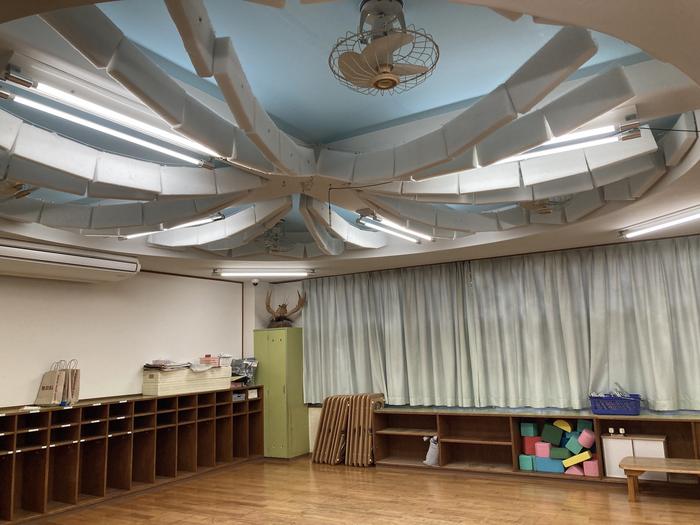

In early childhood education settings across Japan, the architectural design of classrooms is emerging as a critical factor in shaping the auditory environment, directly influencing children’s ability to communicate and cope with their new surroundings. Recent research conducted by Ikuri Matsuoka, a master’s student at Kumamoto University, has shed new light on the profound impact of sound absorption materials in early learning classrooms, particularly their role in mitigating noise-related stress and supporting clearer verbal communication among preschool children.
The acoustic landscape within classrooms can significantly affect children’s behavior and speech development. Unlike many countries that have strict guidelines governing classroom acoustics, Japan lacks formal standards to regulate sound absorption in educational environments. This absence of regulation means many classrooms are characterized by hard, reflective surfaces, such as bare ceilings, where sound reverberates freely, creating a noisy atmosphere that can be disruptive to both teaching and learning. Matsuoka’s investigation aimed to address this gap by experimentally introducing sound-absorbing polyester fiberboard tiles to classroom ceilings and monitoring their effects on ambient noise levels and children’s responses.
Young children, who are in the crucial stages of speech and language acquisition, are particularly vulnerable to environments with high reverberation and background noise. Excessive noise not only hinders their ability to listen and comprehend but also prompts compensatory behaviors such as speaking louder, which can exacerbate the noise problem in a feedback loop. Furthermore, the initial separation anxiety experienced during the transition into school settings is often intensified by overwhelming auditory stimuli, which can manifest in crying and general distress. Matsuoka’s work investigates whether acoustic modifications can alleviate some of these negative experiences.
The study involved equipping one classroom with polyester fiberboard panels designed to absorb sound waves, thereby reducing reverberation time, while a comparable classroom remained untreated for control purposes. Over a six-month period, video and audio data were meticulously collected and analyzed to quantify noise levels and the frequency of crying incidents within both environments. This longitudinal analysis was crucial for capturing the nuanced effects of acoustic treatment over an extended timeframe, allowing for the assessment of sustained behavioral changes rather than transient fluctuations.
One of the remarkable outcomes of the study was the demonstrable reduction in overall noise levels in the classroom fitted with sound-absorbing materials. The treated environment consistently exhibited lower decibel readings during typical indoor activities. Beyond numerical data, qualitative feedback from teachers played an essential role in contextualizing the findings. Most educators involved perceived a noticeable difference in reverberation, with one veteran teacher emphasizing an enhanced ease of communication with children in the acoustically treated space, underscoring the importance of such interventions for practical daily use.
In addition to traditional observational methods, Matsuoka’s team embraced advanced computational techniques to analyze the vast dataset. Machine learning algorithms were employed for acoustic event detection, specifically programmed to automatically identify instances of children crying from audio recordings. This innovative approach significantly reduced the labor-intensive task of manual data processing and added an objective layer to the evaluation, offering a scalable model for future long-term acoustic studies within educational environments.
The implications of this research extend beyond simply creating quieter classrooms. By minimizing background noise and reverberation, sound-absorbing materials foster an environment conducive to clearer verbal communication, which is vital for language acquisition and cognitive development in early childhood. This environment also alleviates stress for both children and educators, potentially enhancing educational engagement and overall well-being. Thus, the study advocates for a paradigm shift in how educational spaces in Japan—and potentially elsewhere—address acoustic design.
Architecturally, this research challenges the prevalent norms of classroom construction where functionality often prioritizes cost and aesthetics over acoustic comfort. The integration of polyester fiberboard tiles represents a cost-effective, retrofit-friendly solution that can be implemented without major structural modifications. Such material choices exemplify how targeted architectural interventions can have disproportionately large benefits on the users’ psychological and educational experience.
Moreover, Matsuoka’s findings resonate with broader global movements toward creating sensory-friendly environments for children, particularly as awareness grows regarding the impact of environmental stressors on learning disabilities and developmental disorders. The reduction of auditory stressors in classrooms aligns with inclusive education principles and supports the diverse needs of all students, including those with heightened sensitivity to noise.
The presentation of this research at the 188th Meeting of the Acoustical Society of America, concurrently with the 25th International Congress on Acoustics, underscores the interdisciplinary importance of acoustic science, educational psychology, and architectural design. By fostering dialogue between these disciplines, the study catalyzes innovative approaches to optimizing learning environments.
Looking forward, the study emphasizes the potential of machine learning and artificial intelligence as indispensable tools for long-term monitoring of acoustic environments in educational settings. As data collection methods become increasingly sophisticated, the possibility of real-time acoustic feedback and automated adjustments within classrooms could revolutionize how educational spaces are managed to support optimal auditory experiences for children.
Ultimately, this body of work advocates for the integration of acoustic standards into educational policies in Japan, highlighting the pressing need to consider sound design as a foundational element of classroom architecture. The benefits span not only the enhancement of communication and learning but also the emotional comfort of children entering new social and verbal milieus during a sensitive developmental period.
This investigation offers a compelling case for educators, architects, policymakers, and researchers to collaborate on designing learning environments that embrace acoustic science to nurture healthier, more effective educational experiences. As such, it stands as a model for future initiatives seeking to harmonize architectural innovation with developmental psychology in the service of fundamental human needs for communication and comfort.
Subject of Research: Acoustic design and sound absorption in early childhood classrooms and its impact on children’s verbal communication and emotional well-being.
Article Title: Acoustic Interventions in Japanese Classrooms: Reducing Noise to Enhance Early Childhood Communication
News Publication Date: May 23, 2025
Web References:
https://acoustics.org/asa-press-room/
https://acoustics.org/lay-language-papers/
https://acousticalsociety.org/
https://www.icacommission.org/
Image Credits: Ikuri Matsuoka
Keywords
Acoustics, Sound, Applied acoustics, Noise control
Tags: acoustic landscape in educational settingsclassroom acoustics standards in Japanclassroom design for better learningcommunication development in preschoolersearly childhood education acousticseffects of reverberation on speechimpact of noise on childrennoise reduction in schoolsnoise-related stress in childrenpolyester fiberboard tiles in classroomssound absorption materials in educationsound insulation tiles in classrooms