• HOME
  • NEWS
  • EXPLORE
    • CAREER
      • Companies
      • Jobs
    • EVENTS
    • iGEM
      • News
      • Team
    • PHOTOS
    • VIDEO
    • WIKI
  • BLOG
  • COMMUNITY
    • FACEBOOK
    • INSTAGRAM
    • TWITTER
Saturday, February 7, 2026
BIOENGINEER.ORG
No Result
View All Result
  • Login
  • HOME
  • NEWS
  • EXPLORE
    • CAREER
      • Companies
      • Jobs
        • Lecturer
        • PhD Studentship
        • Postdoc
        • Research Assistant
    • EVENTS
    • iGEM
      • News
      • Team
    • PHOTOS
    • VIDEO
    • WIKI
  • BLOG
  • COMMUNITY
    • FACEBOOK
    • INSTAGRAM
    • TWITTER
  • HOME
  • NEWS
  • EXPLORE
    • CAREER
      • Companies
      • Jobs
        • Lecturer
        • PhD Studentship
        • Postdoc
        • Research Assistant
    • EVENTS
    • iGEM
      • News
      • Team
    • PHOTOS
    • VIDEO
    • WIKI
  • BLOG
  • COMMUNITY
    • FACEBOOK
    • INSTAGRAM
    • TWITTER
No Result
View All Result
Bioengineer.org
No Result
View All Result
Home NEWS Science News

NASA takes a double-look at Tropical Cyclone Blanche

Bioengineer by Bioengineer
March 6, 2017
in Science News
Reading Time: 2 mins read
0
Share on FacebookShare on TwitterShare on LinkedinShare on RedditShare on Telegram
IMAGE

Credit: Credits: NASA Goddard MODIS Rapid Response Team

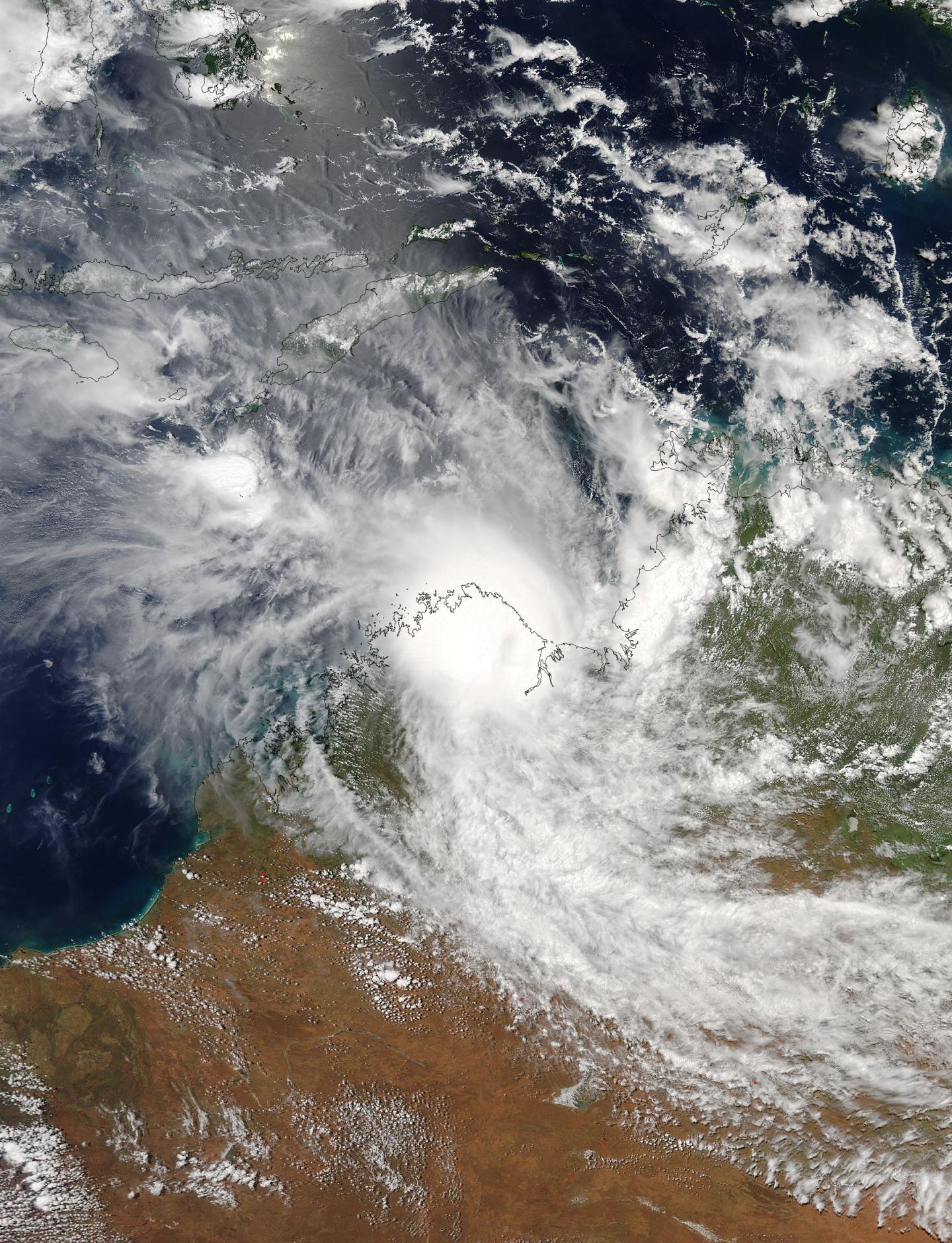
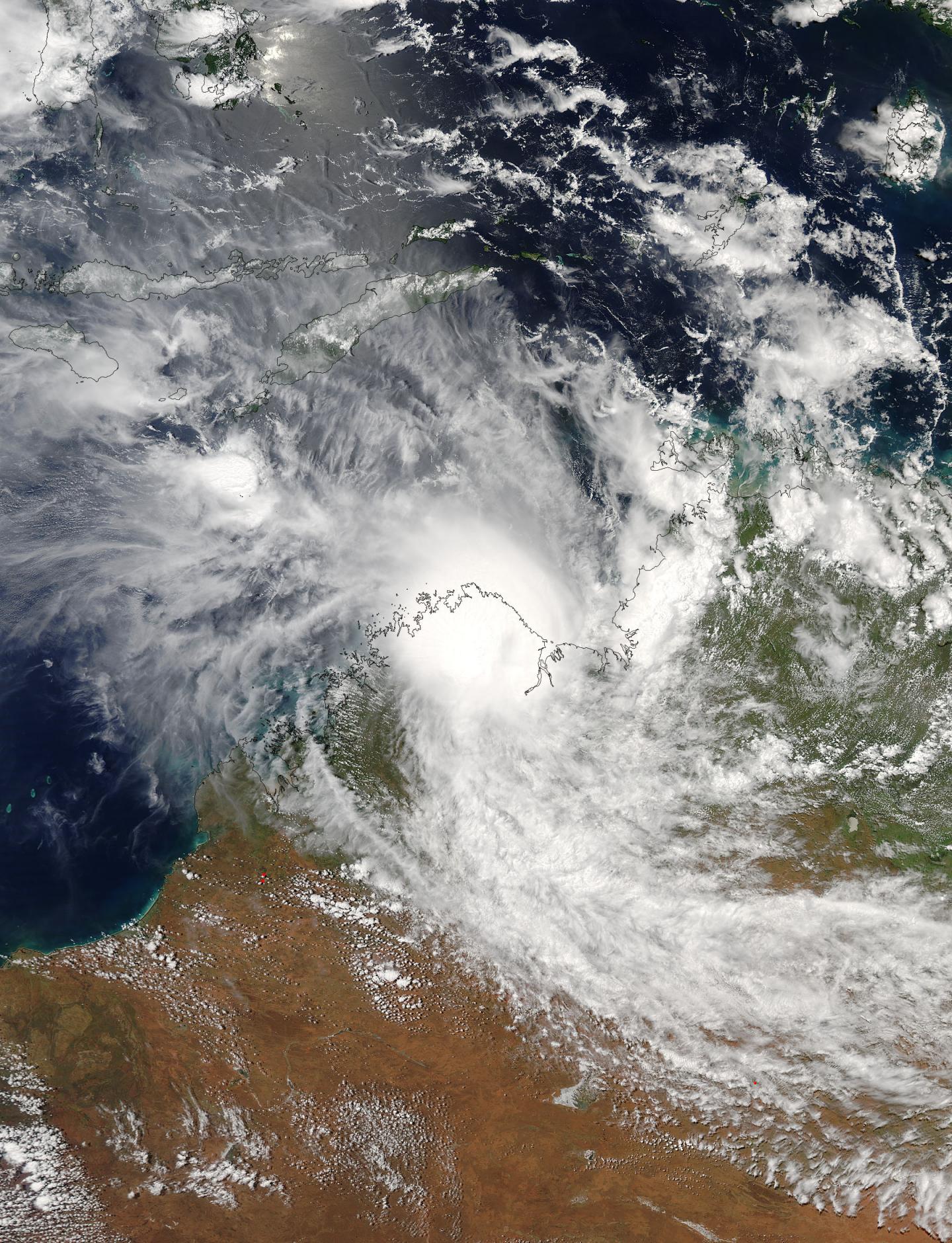
Tropical Cyclone Blanche formed on March 5 near Australia's Top End, and made landfall the next day as NASA's Aqua satellite passed overhead gathering images in visible and infrared light.

Top End is the northernmost geographical region of Australia's Northern Territory.

The Atmospheric Infrared Sounder or AIRS instrument aboard NASA's Aqua satellite looked at Tropical Cyclone Blanche in infrared light while the Moderate Resolution Imaging Spectroradiometer or MODIS instrument aboard the satellite captured a visible image of the storm. Blanche is located over Australia's Top End.

The AIRS image was taken on Mar. 6 at 05:11 UTC (12:11 a.m. EST) and showed some cloud top temperatures of thunderstorms within Blanche were as cold as minus 63 degrees Fahrenheit (minus 53 degrees Celsius). Those powerful storms surrounded Blanche's low-level center of circulation. NASA research has shown the storms with cloud tops that cold have the potential to generate heavy rainfall.

Four minutes after AIRS analyzed the storm the MODIS instrument provided a visible picture of Tropical Cyclone Blanche at 05:15 UTC (12:15 a.m. EST). The MODIS image showed that most of Blanche had already moved over land and its northeastern quadrant stretched into the Joseph Bonaparte Gulf.

On March 6 at 1500 UTC (10 a.m. EST), Tropical Cyclone Blanche made landfall on the Kimberley Coast and is dissipating. It was located about 182 nautical miles west-southwest of Darwin, Australia. It was centered near 16.0 degrees south latitude and 127.2 degrees east longitude.

The Joint Typhoon Warning Center's final warning at that time noted that Blanche had maximum sustained winds near 34.5 mph (30 knots/55.5 kph) and was a depression. The storm was moving to the south-southwest at 12.6 mph (11 knots/20.3 kph) and further inland in Top End.

The Australian Bureau of Meteorology noted on March 6 (EDT) to "Expect scattered showers and storms to continue over western Top End with falls of 30 to 80 mm. Heavier rainfall may extend to the Gregory District on Tuesday. Some roads may remain impassable for some time until conditions improve."

###

See http://www.bom.gov.au/australia/warnings/ to view all of the Bureau's current warning products.

Media Contact

Rob Gutro
[email protected]
@NASAGoddard

http://www.nasa.gov/goddard

############

Story Source: Materials provided by Scienmag

Share12Tweet8Share2ShareShareShare2

Related Posts

Evaluating Pediatric Emergency Care Quality in Ethiopia

February 7, 2026

TPMT Expression Predictions Linked to Azathioprine Side Effects

February 7, 2026

Improving Dementia Care with Enhanced Activity Kits

February 7, 2026

Decoding Prostate Cancer Origins via snFLARE-seq, mxFRIZNGRND

February 7, 2026
Please login to join discussion

POPULAR NEWS

  • Robotic Ureteral Reconstruction: A Novel Approach

    Robotic Ureteral Reconstruction: A Novel Approach

    82 shares
    Share 33 Tweet 21
  • Digital Privacy: Health Data Control in Incarceration

    63 shares
    Share 25 Tweet 16
  • Study Reveals Lipid Accumulation in ME/CFS Cells

    57 shares
    Share 23 Tweet 14
  • Breakthrough in RNA Research Accelerates Medical Innovations Timeline

    53 shares
    Share 21 Tweet 13

About

We bring you the latest biotechnology news from best research centers and universities around the world. Check our website.

Follow us

Recent News

Evaluating Pediatric Emergency Care Quality in Ethiopia

TPMT Expression Predictions Linked to Azathioprine Side Effects

Improving Dementia Care with Enhanced Activity Kits

Subscribe to Blog via Email

Enter your email address to subscribe to this blog and receive notifications of new posts by email.

Join 73 other subscribers
  • Contact Us

Bioengineer.org © Copyright 2023 All Rights Reserved.

Welcome Back!

Login to your account below

Forgotten Password?

Retrieve your password

Please enter your username or email address to reset your password.

Log In
No Result
View All Result
  • Homepages
    • Home Page 1
    • Home Page 2
  • News
  • National
  • Business
  • Health
  • Lifestyle
  • Science

Bioengineer.org © Copyright 2023 All Rights Reserved.